 Save to Pinterest
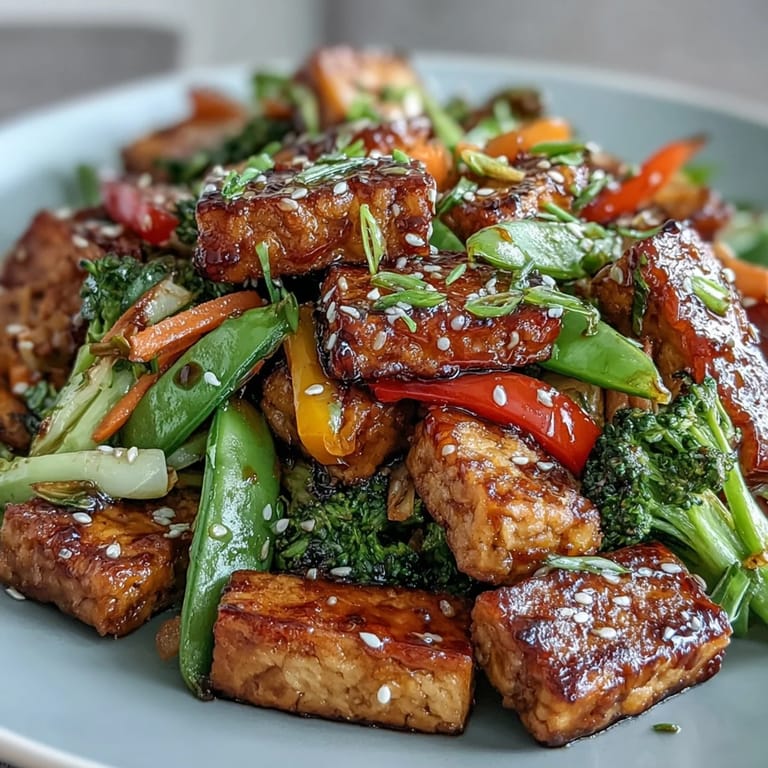
 There was a Tuesday evening when my fridge held nothing but tempeh, half a bag of snap peas, and the lingering hope of a decent dinner. I'd bought tempeh weeks earlier with ambitious plans that never materialized, watching it sit in the back like a forgotten promise. But that night, something clicked—I remembered how nutty and substantial it becomes when you give it a proper sear, and within twenty minutes I had a vibrant stir-fry that tasted nothing like resignation. My partner came home to the smell of ginger and toasted sesame oil filling the kitchen, and suddenly that reluctant tempeh became the star of the meal.
I made this for my sister who'd recently gone vegan, and I was nervous about whether she'd actually enjoy it or just be polite about it. But watching her eyes light up when she tasted the sauce—that perfect balance of sweet, salty, and tangy coating the vegetables and tempeh—told me everything. She asked for the recipe before she'd even finished her plate, and now it's become something she makes for her own friends.
Ingredients
- Tempeh, 250 g cut into 1 cm cubes: This fermented soy product has a firmer texture and nuttier flavor than tofu, and it benefits from that initial high-heat sear to develop a golden crust that locks in flavor.
- Red bell pepper, 1 sliced: The sweetness balances the umami of the sauce, and it stays crisp if you don't overcook it.
- Yellow bell pepper, 1 sliced: A purely optional substitution if you prefer green peppers or want to match what's in season at your market.
- Carrot, 1 medium julienned: Cut thin so it softens just enough during cooking without becoming mushy.
- Sugar snap peas, 100 g trimmed: These are the vegetables that remind you why eating should be a pleasure—they stay snappy even with heat.
- Broccoli florets, 100 g: Keep them bite-sized so they cook evenly and retain their bright green color.
- Spring onions, 2 sliced: Added at the very end to maintain their fresh, oniony bite.
- Garlic, 2 cloves minced: Mince it finely so it perfumes the oil without burning.
- Fresh ginger, 2 cm piece peeled and minced: This is where the warmth comes from; don't skip it.
- Soy sauce, 3 tbsp: Use tamari if you need gluten-free, though I've noticed the flavor is ever so slightly milder.
- Water, 2 tbsp: This dilutes the sauce just enough so it coats everything instead of pooling.
- Rice vinegar, 1 tbsp: The acid that prevents the sauce from tasting flat and one-dimensional.
- Maple syrup or agave nectar, 1 tbsp: A touch of sweetness that rounds out the savory elements without making it dessert-like.
- Toasted sesame oil, 1 tsp: Use the toasted kind for that deeper, more fragrant flavor; regular sesame oil will taste thin and off.
- Cornstarch, 1 tsp: This thickens the sauce so it clings to the vegetables instead of pooling at the bottom of the pan.
- Vegetable oil, 2 tbsp: Sunflower or canola oil work equally well for the high heat required.
- Toasted sesame seeds, 1 tbsp optional: A garnish that adds nuttiness and visual interest.
- Fresh coriander or cilantro leaves, optional: A bright finish if you enjoy the flavor, though it's not essential to the dish.
Tired of Takeout? 🥡
Get 10 meals you can make faster than delivery arrives. Seriously.
One email. No spam. Unsubscribe anytime.
Instructions
- Whisk the sauce first:
- In a small bowl, combine the soy sauce, water, rice vinegar, maple syrup, sesame oil, and cornstarch. This takes thirty seconds and ensures you're not scrambling when the vegetables are already cooking and your hands are full of a wooden spoon.
- Sear the tempeh until golden:
- Heat one tablespoon of oil in your largest wok or skillet over medium-high heat and add the tempeh cubes, stirring occasionally for four to five minutes until they develop a caramelized exterior. Listen for the satisfying sizzle and watch for the color shift from pale to golden—that's when you know the flavor has concentrated.
- Toast the aromatics:
- Add the remaining oil, then immediately add the garlic and ginger, stirring constantly for about thirty seconds until the kitchen fills with that unmistakable warm, spicy aroma. Don't walk away—they burn faster than you'd think.
- Cook the vegetables to crisp-tender:
- Add the bell peppers, carrot, sugar snap peas, and broccoli, stirring continuously for four to five minutes. You want them to soften just slightly while keeping their texture and bright color—think tender, not limp.
- Bring it all together:
- Return the tempeh to the wok, give the sauce a final stir (the cornstarch settles), pour it over everything, and toss gently for one to two minutes until the sauce thickens and clings to each piece. The entire wok should smell glossy and savory.
- Finish with freshness:
- Remove from heat, stir in the spring onions, and if you're using them, scatter the sesame seeds and cilantro over the top. Serve immediately over rice or noodles.
 Save to Pinterest
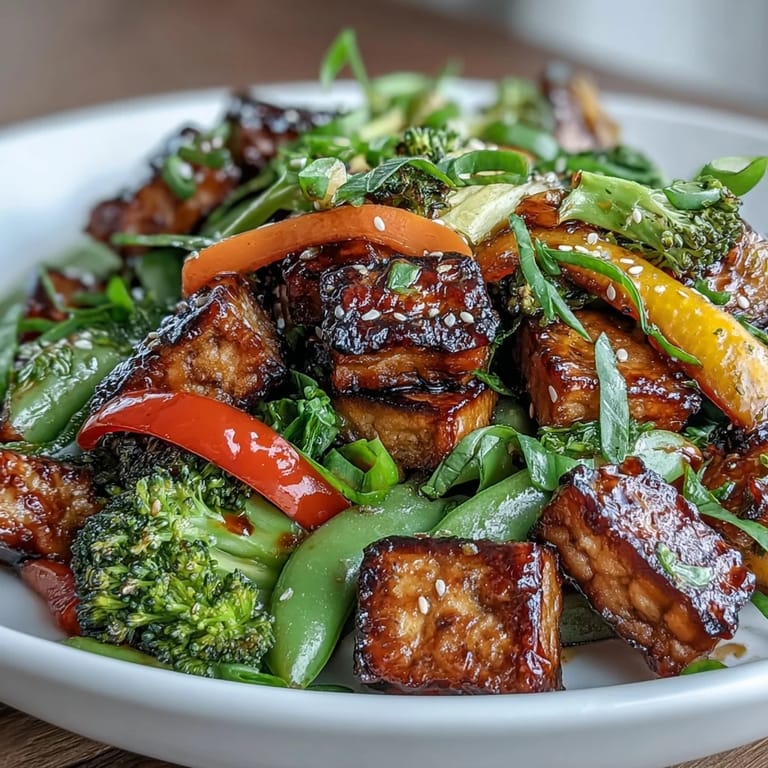
 One Saturday afternoon, my neighbor stopped by mid-cooking and asked what smelled so good. I invited her to stay for a bowl, and she ended up sitting at my kitchen table for an hour, just talking about food and life and how a simple weeknight stir-fry somehow turned into something worth savoring. That's when I realized this dish isn't just quick and healthy—it's the kind of meal that brings people together without fuss.
Why Tempeh Over Tofu
Tempeh has a firmer structure and a naturally nuttier, more substantial flavor than tofu, which means it stands up beautifully to stir-frying without falling apart. It also has a heartier texture that makes the dish feel more like a complete protein, less like you're eating something delicate that needs protecting. If you've tried tempeh before and found it unpleasant, it was likely never given the chance to sear properly—that caramelization step is everything.
Adjusting for Your Season and Pantry
The vegetables here are a suggestion, not a rule—use whatever looks fresh at your market or happens to be in your fridge. Mushrooms, baby corn, zucchini, bok choy, and even thin-sliced cauliflower all work beautifully in place of the peppers or peas. The key is keeping pieces roughly the same size so they cook evenly, and respecting that some vegetables need slightly longer than others (root vegetables first, delicate greens last).
Serving and Storage
This stir-fry tastes best served immediately while the vegetables are still snappy and the sauce is glossy and clinging. Leftovers keep well in the refrigerator for two to three days, though the vegetables will soften slightly—reheat gently in a wok rather than the microwave to bring back some of the vibrancy. If you want to build heat, add chili flakes or a splash of sriracha to the sauce, though I'd recommend tasting first and adjusting to your preference rather than guessing.
- Jasmine rice or soba noodles are traditional pairings, though quinoa works surprisingly well for a different texture.
- The sauce keeps the whole dish moist without being soupy, so you won't need extra condiments.
- This recipe doubles easily if you're feeding more people, though you may need to work in two batches to avoid overcrowding the wok.
 Save to Pinterest
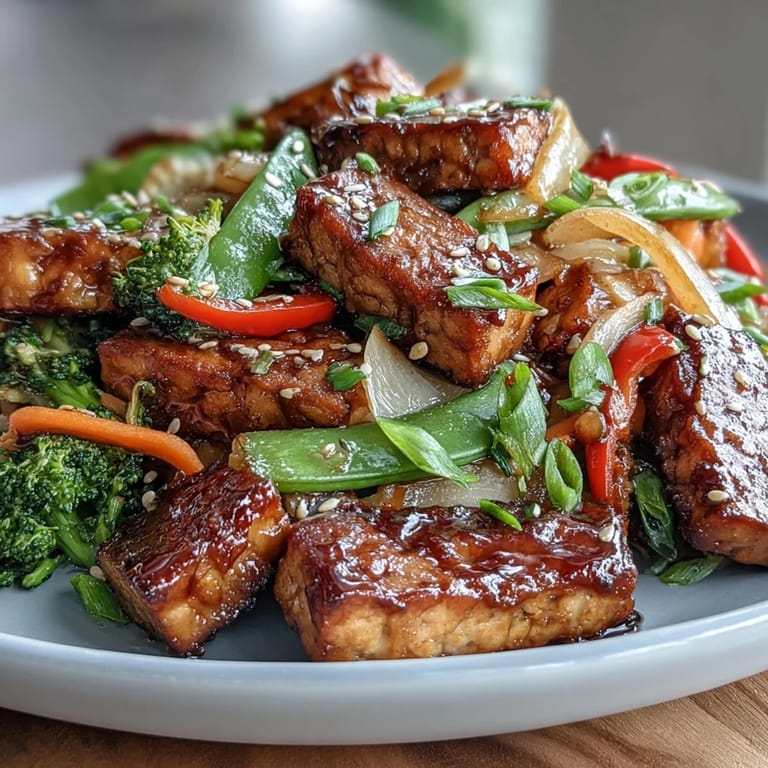
 This is the kind of recipe I return to again and again because it's reliable, quick, and never boring—just the right amount of flexibility to keep things interesting without requiring any real skill. It's become my go-to on nights when I want something that tastes intentional but doesn't demand hours in the kitchen.
Recipe FAQs
- → Can I use tofu instead of tempeh?
Yes, extra-firm tofu works well as a substitute. Press it first to remove excess moisture, then cut into cubes and follow the same cooking method. Cooking time may need slight adjustment as tofu cooks faster than tempeh.
- → How do I store leftovers?
Store cooled leftovers in an airtight container in the refrigerator for up to 3 days. Reheat gently in a skillet or microwave. The vegetables will soften slightly, but the flavors will continue to develop.
- → Can I make this gluten-free?
Absolutely. Simply substitute regular soy sauce with tamari or coconut aminos, and ensure all other ingredients are certified gluten-free. The rest of the dish is naturally gluten-free.
- → What vegetables work best in stir-fries?
Firm, quick-cooking vegetables work best. Try mushrooms, baby corn, zucchini, snow peas, bok choy, or baby spinach. Add vegetables in stages based on cooking time—harder vegetables first, leafy greens last.
- → How can I add more protein?
Double the tempeh portion, add edamame, or toss in cashews or peanuts during the final minute of cooking. You can also serve over protein-rich grains like quinoa or pair with marinated baked tofu on the side.
- → Can I meal prep this dish?
Yes! Cut vegetables and prepare the sauce up to 2 days in advance. Store components separately in the refrigerator. The dish cooks quickly, so you can also make a full batch and portion it for lunches throughout the week.