 Save to Pinterest
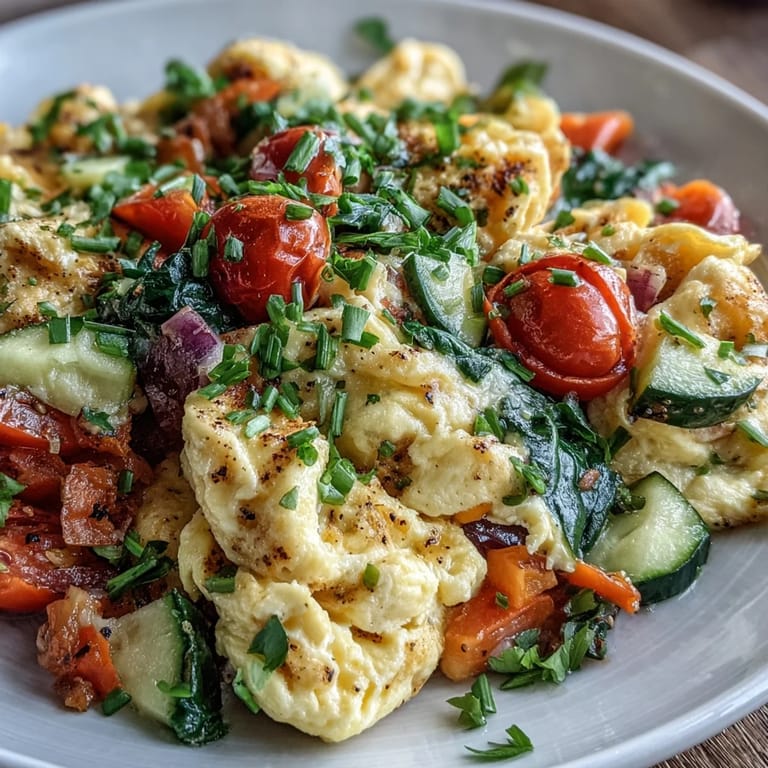
 There's something about a scrambled egg breakfast that shifts the entire mood of a morning. I discovered this particular combination on a lazy Saturday when I had half a bell pepper and some spinach that needed rescuing from the back of my fridge, plus a carton of eggs that seemed to be calling my name. The kitchen filled with the smell of sautéed onions and butter, and somehow what started as a cleanup mission turned into the kind of breakfast I found myself making every week after. It's simple, it's quick, and it tastes like you actually tried.
I made this for my partner one Sunday morning when we were both exhausted from moving into a new place, and watching their face light up when they took that first bite reminded me why I love feeding people. There's something grounding about handing someone a warm plate filled with bright colors and knowing it's going to fuel them properly. That breakfast became our little ritual on Sunday mornings, the one thing we'd do right even when everything else felt chaotic.
Ingredients
- Eggs: Four large ones give you that fluffy texture you're after, and the milk (dairy or otherwise) makes them silky instead of dense, though honestly a splash of water works in a pinch.
- Cherry tomatoes: They burst slightly as they cook and release little pockets of sweetness that balance the savory elements.
- Baby spinach: It wilts down to almost nothing, so don't be shy, and it adds nutrients without any bitter edge if you add it near the end.
- Red bell pepper: The slight sweetness and crunch matter more than you'd think, and it softens just enough to become tender without turning mushy.
- Zucchini: Dice it small so it cooks through in the same time as everything else, and it absorbs flavors beautifully.
- Red onion: Finely chopped means it gets soft and sweet, not raw and harsh, and it's really the backbone that holds everything together.
- Olive oil or butter: Butter tastes richer, but olive oil works perfectly and adds its own gentle flavor.
- Fresh herbs: A last-minute sprinkle wakes everything up, and whichever you choose (parsley, chives, basil) brings its own personality to the plate.
Tired of Takeout? 🥡
Get 10 meals you can make faster than delivery arrives. Seriously.
One email. No spam. Unsubscribe anytime.
Instructions
- Whisk your eggs until they're ready:
- Crack four large eggs into a bowl with two tablespoons of milk, a pinch of salt, and a grind of black pepper, then whisk until they're pale and slightly frothy. This little bit of air is what keeps them from becoming dense.
- Get your pan ready:
- Heat a tablespoon of oil or butter in your non-stick skillet over medium heat until it shimmers slightly, but don't let it smoke. You want it hot enough to cook through, but not so hot that everything scorches.
- Sauté the harder vegetables first:
- Throw in the red onion and bell pepper and let them soften for about two minutes, stirring occasionally so they cook evenly. You'll see them start to become glossy and tender.
- Add the remaining vegetables:
- Stir in the zucchini and cherry tomatoes and cook for another two to three minutes, letting them release their moisture and flavors into the pan. This is when your kitchen will smell absolutely incredible.
- Wilt the spinach in:
- Add the baby spinach and let it soften for about a minute, stirring gently until it's distributed throughout. Don't walk away, as this happens fast.
- Pour in the eggs:
- Let the beaten eggs flow over the vegetables and give them 30 seconds to just barely set before you start moving them around with a spatula. This rest period helps them begin to cook gently.
- Scramble with intention:
- Using your spatula, gently push the eggs from the edges toward the center every 20 or 30 seconds, keeping everything moving so they cook evenly. The whole thing should take about two to three minutes, and you'll know it's done when there's no visible raw egg but everything still looks soft and creamy.
- Finish and serve:
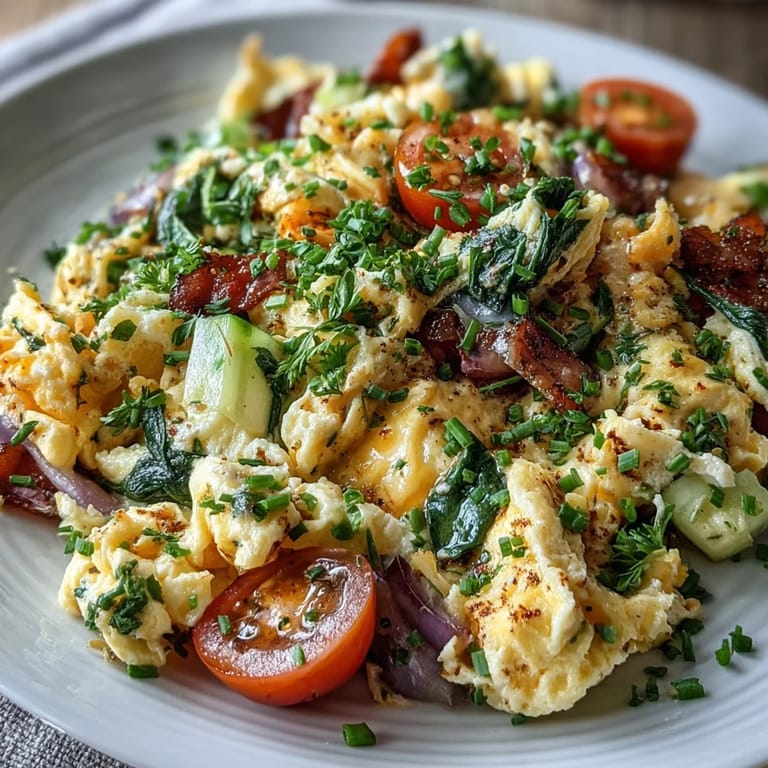
- Turn off the heat, sprinkle your fresh herbs over the top, and serve immediately on a warm plate. The residual heat will continue cooking everything slightly, so don't overdo it on the skillet.
 Save to Pinterest
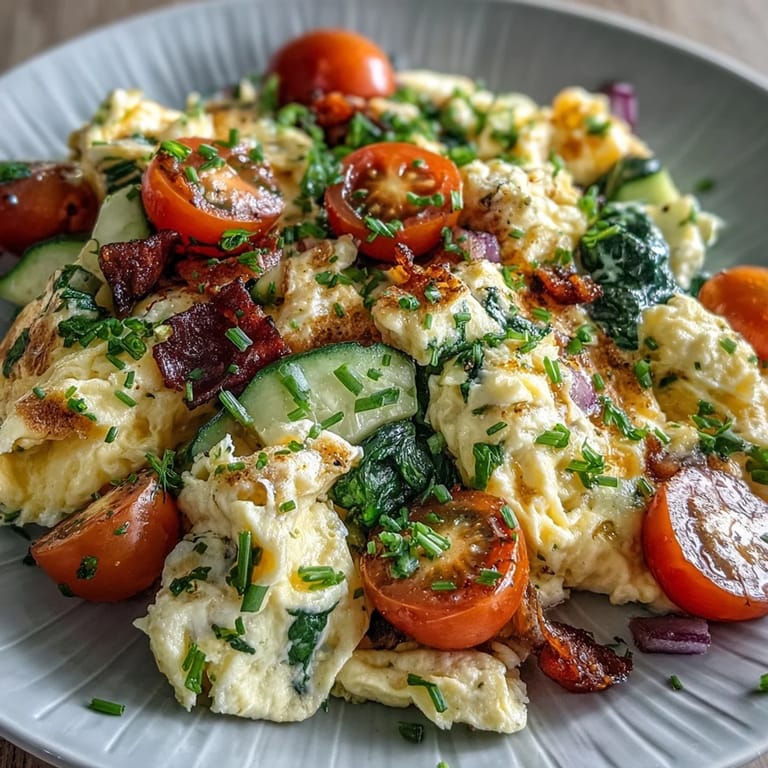
 There's a moment right when you serve this, when someone takes their first bite and they realize this is actually breakfast, not just eggs, and that simple recognition makes it feel special. Food doesn't need to be complicated to matter.
Timing Your Vegetables Right
The secret to this whole dish is understanding that different vegetables cook at different speeds, so you can't just dump everything in at once and hope for the best. Harder vegetables like onions and peppers need a head start, while spinach is ready in seconds and can actually wilt from the heat of the other ingredients. Once you understand this layering, you'll stop worrying about timing and just feel when each thing is ready to add.
Customizing With Seasonal Produce
This dish is actually at its best when you're using whatever looks good at your farmers market or what's actually ripe in your own garden. Spring brings asparagus and fresh peas, summer gives you tomatoes and basil, fall has mushrooms and kale, and winter calls for roasted root vegetables if you chop them small enough. The vegetables listed here are just a suggestion, really a framework for you to make this your own.
Making It Your Own
Once you've made this a couple of times, you'll stop thinking of it as a recipe and start thinking of it as a technique you can apply to whatever you're in the mood for. Some mornings I add crumbled feta because I'm feeling rich, other times I use whatever herbs I have growing on my windowsill, and last week I threw in some diced avocado at the end because why not. The core technique stays the same, but your breakfast never gets boring.
- Keep your heat at medium so nothing scorches and your eggs stay tender.
- Add any cheese you like right at the end so it doesn't overcook and become tough.
- Serve this immediately while everything is still warm, because it's best eaten fresh off the skillet.
 Save to Pinterest
 This is the kind of breakfast that feels indulgent but isn't, that takes barely any time but tastes like you've been cooking since dawn. Make it for yourself on a quiet morning, or make it for someone you care about and watch how a simple scrambled egg can turn into something that matters.
Recipe FAQs
- → Can I make this egg scramble ahead of time?
While best served immediately for optimal fluffiness, you can prepare the vegetables in advance and store them in the refrigerator. Simply reheat the vegetables briefly before adding the beaten eggs. Leftovers can be refrigerated for up to 2 days and reheated gently in the microwave or skillet.
- → What other vegetables work well in this scramble?
Mushrooms, asparagus, kale, broccoli florets, or diced sweet potatoes all pair beautifully with eggs. For softer vegetables like spinach and tomatoes, add them toward the end. For harder vegetables like broccoli or sweet potatoes, sauté them a few minutes longer before adding the eggs.
- → How do I prevent my eggs from becoming rubbery?
Cook over medium heat and remove the pan from the heat while the eggs still look slightly underdone—the residual heat will finish cooking them. Avoid over-stirring, and use gentle motions when folding the eggs. Adding a splash of milk also helps keep them tender and creamy.
- → Can I make this dairy-free?
Absolutely. Substitute the milk with any unsweetened plant-based milk such as almond, oat, or soy. Use olive oil or coconut oil instead of butter for cooking. Omit any cheese additions or use dairy-free alternatives if desired.
- → What's the best way to whisk the eggs?
Whisk vigorously in a bowl until the mixture is slightly frothy and uniform in color. This incorporates air, resulting in lighter, fluffier eggs. A fork works in a pinch, but a whisk or handheld frother creates better volume. For extra fluffiness, let the whisked eggs sit for 5 minutes before cooking.
- → How can I add more protein to this dish?
Stir in crumbled feta, goat cheese, or shredded cheddar during the last minute of cooking. You can also add diced cooked bacon, ham, or turkey sausage along with the vegetables. For plant-based protein options, try hemp hearts, nutritional yeast, or white beans.