 Save to Pinterest
 My neighbor once knocked on my door holding a foil-wrapped plate and said, Taste this before I eat the whole thing myself. It was pot roast, and the beef practically dissolved on my tongue. I made her write down every step right there in my kitchen. That Sunday, I tried it myself, and the smell alone had my family circling the stove like moths. Ive been making it ever since, tweaking the vegetables and timing until it became mine.
I remember making this on a gray March afternoon when nothing felt right. I seared the beef, piled in the vegetables, and slid the pot into the oven. Three hours later, the kitchen glowed with warmth, and my kids wandered in asking what smelled so good. We ate at the table instead of in front of screens, and for a little while, everything felt easy again.
Ingredients
- Boneless beef chuck roast: This cut has enough marbling to stay juicy during the long roast, and it shreds beautifully once its done.
- Kosher salt and black pepper: Simple seasoning lets the beef and vegetables shine without masking their natural flavors.
- Carrots: They turn sweet and buttery in the oven, adding color and a touch of earthiness.
- Parsnips: These bring a subtle, almost nutty sweetness that balances the richness of the beef.
- Yellow onions: They melt into the braising liquid and add a deep, savory base.
- Potatoes: Quartered potatoes soak up the juices and become creamy on the inside, crispy on the edges.
- Celery: It adds a quiet, herbal note that rounds out the vegetable medley.
- Garlic: Smashed cloves soften and perfume the broth without overpowering.
- Tomato paste: A spoonful deepens the color and adds umami richness.
- Beef broth: The foundation of the braising liquid, it keeps everything moist and flavorful.
- Dry red wine: It deglazes the pot and adds a layer of complexity, but you can skip it if you prefer.
- Worcestershire sauce: This secret ingredient adds a tangy, savory punch that ties everything together.
- Fresh thyme, rosemary, and bay leaves: These herbs infuse the broth with woodsy, aromatic warmth.
- Olive oil: For searing the beef and building that golden, flavorful crust.
Tired of Takeout? 🥡
Get 10 meals you can make faster than delivery arrives. Seriously.
One email. No spam. Unsubscribe anytime.
Instructions
- Preheat and Prep:
- Set your oven to 300°F and pat the beef dry with paper towels so it sears instead of steams. Season it generously on all sides with salt and pepper.
- Sear the Beef:
- Heat olive oil in a heavy Dutch oven over medium-high heat until it shimmers. Lay the beef in and let it sizzle undisturbed for 3 to 4 minutes per side until deeply browned, then set it aside.
- Cook the Vegetables:
- Toss the onions, carrots, parsnips, potatoes, and celery into the hot pot and stir them around for 5 minutes until they start to soften. Stir in the garlic and tomato paste, letting them cook for another minute until fragrant.
- Deglaze the Pot:
- Pour in the red wine and scrape up all the caramelized bits stuck to the bottom. Let it bubble for a couple of minutes.
- Braise the Beef:
- Nestle the beef back into the pot and pour in the broth and Worcestershire sauce. Tuck in the thyme, rosemary, and bay leaves so the liquid comes about halfway up the beef.
- Roast Low and Slow:
- Bring everything to a gentle simmer, cover tightly with the lid, and slide it into the oven. Let it roast undisturbed for 3 to 3 and a half hours until the beef is fork-tender and the vegetables are silky.
- Rest and Serve:
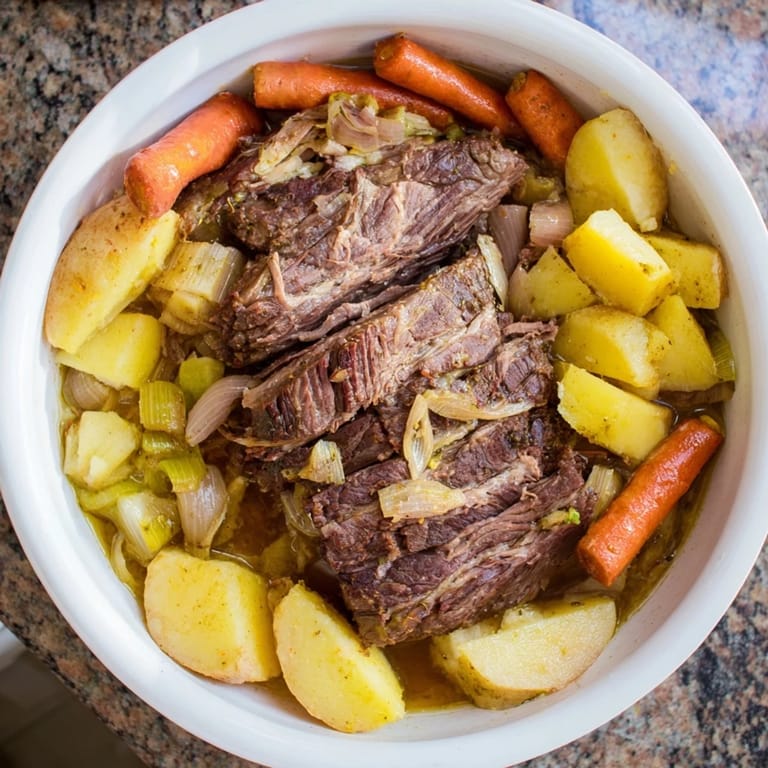
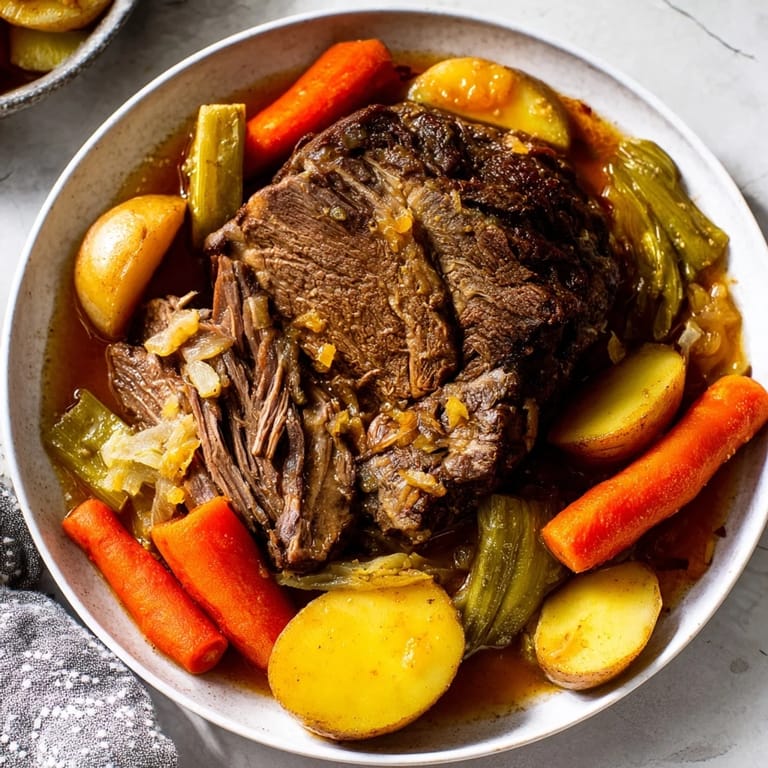
- Pull the pot from the oven, fish out the herb stems and bay leaves, and let the beef rest for 10 minutes. Slice or shred it, then spoon the vegetables and pan juices over the top.
 Save to Pinterest
 One winter evening, I made this for a friend who had just moved to town and didnt know anyone yet. We sat in my kitchen with bowls piled high, and she said it tasted like home. I realized then that food like this does more than fill you up, it makes people feel like they belong.
How to Get the Best Sear
Make sure the beef is completely dry before it hits the pan, any moisture will cause it to steam instead of brown. Let the oil get hot enough that it shimmers but doesnt smoke, and resist the urge to move the beef around. Just let it sit and develop that gorgeous crust. If your pot isnt big enough, sear in batches rather than crowding, patience here pays off in flavor.
Making the Sauce Richer
Once the beef and vegetables are done, you can lift them out and set the pot on the stove over medium heat. Let the juices simmer and reduce by half until they thicken and cling to a spoon. If you want it even thicker, whisk together a tablespoon of cornstarch with a little cold water and stir it in, simmering for another minute or two. This turns the braising liquid into a glossy, restaurant-style sauce.
Storage and Leftovers
This pot roast tastes even better the next day after the flavors have had time to meld. Store it in an airtight container in the fridge for up to four days, or freeze it for up to three months. Reheat gently on the stove with a splash of broth to keep it moist.
- Shred leftover beef and pile it onto crusty rolls with a little juice for incredible sandwiches.
- Chop everything up and stir it into beef stew or shepherd's pie filling.
- Warm it up and serve over mashed potatoes or creamy polenta for a quick, comforting dinner.
 Save to Pinterest
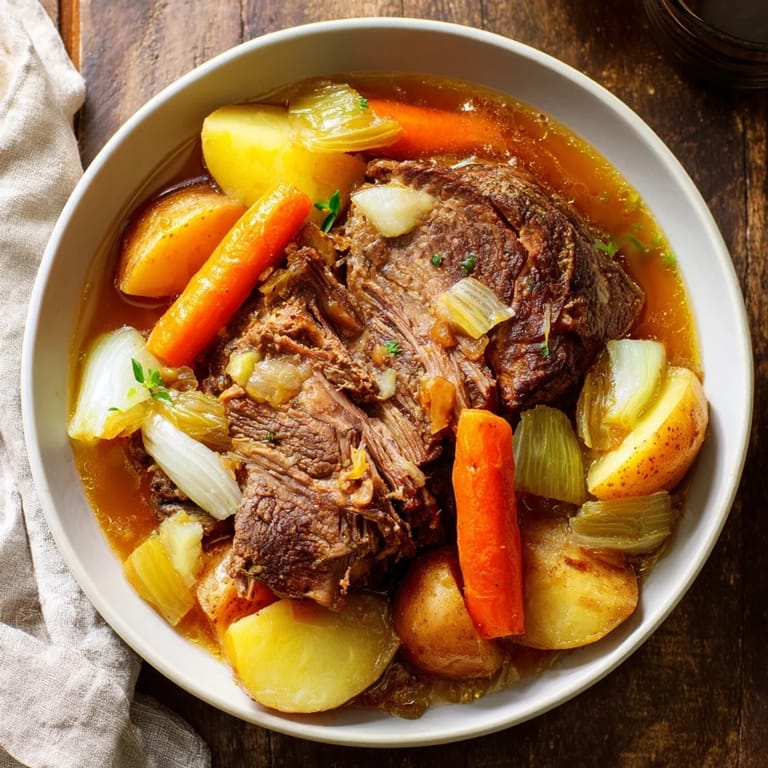
 This pot roast has become my go-to whenever I want to slow down and savor something real. I hope it fills your kitchen with warmth and your table with good conversation.
Recipe FAQs
- → What cut of beef is best for slow roasting?
Boneless beef chuck roast is ideal due to its marbling and connective tissue, which break down slowly to create tender, flavorful meat.
- → Can I substitute parsnips in this dish?
Yes, turnips make a great alternative if parsnips are not available, keeping a similar root vegetable texture and flavor.
- → Is red wine necessary for cooking?
Red wine adds depth and richness, but can be replaced with extra beef broth if preferred or to avoid alcohol.
- → How can I thicken the sauce after cooking?
Remove meat and vegetables, then simmer the cooking juices on the stove until reduced or stir in a cornstarch slurry to thicken.
- → What is the best way to serve leftovers?
Leftovers are excellent for sandwiches or hearty stews, extending the meal with minimal effort.
- → Are there allergens to watch for in this dish?
Worcestershire sauce may contain anchovies; always check the label if fish allergies exist. Broth should also be checked for hidden allergens.