 Save to Pinterest
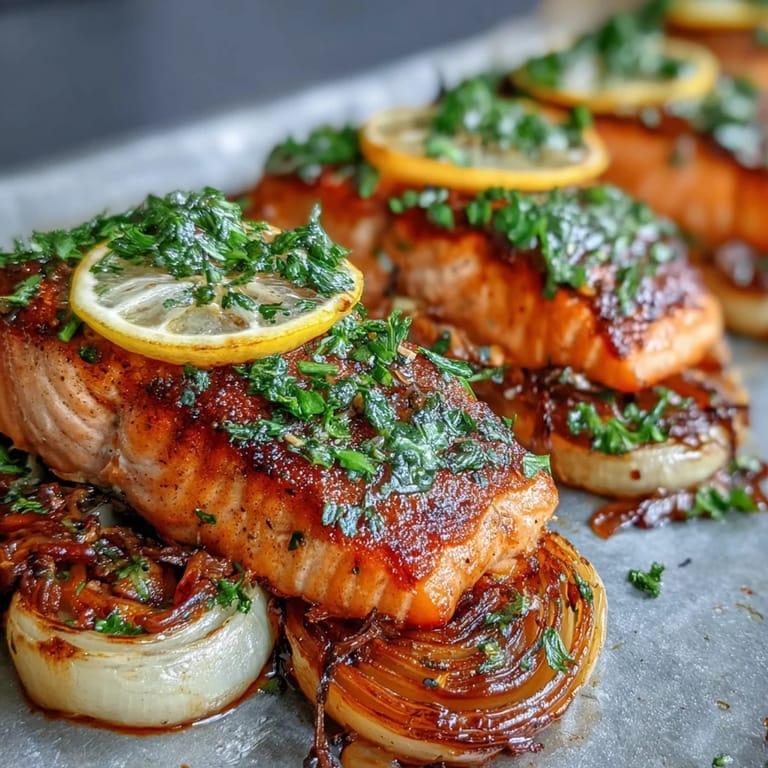
 I pulled this salmon out of the oven on a Tuesday night when I had exactly twenty minutes before a video call and zero desire to scrub multiple pans afterward. The leeks had softened into sweet, golden tangles, the salmon skin crisped just enough to peel away cleanly, and that parsley dressing—sharp, bright, almost aggressively green—pulled the whole thing into focus. It tasted like I'd tried much harder than I actually had. I've been making it ever since, usually on nights when I want something that feels special without the fuss.
The first time I served this to friends, one of them scraped her plate clean and asked if I'd trained at a culinary school. I laughed and told her I'd just learned to trust good olive oil and not overthink things. The truth is, this dish doesn't need fancy technique—it needs timing, a hot oven, and the willingness to let the ingredients do their own work. We ate it with our hands, pulling lemon-scented salmon apart and mopping up the dressing with crusty bread.
Ingredients
- Salmon fillets, skin-on: The skin protects the flesh from drying out and crisps beautifully if you leave it undisturbed; buy the freshest you can find and let it come to room temperature before roasting.
- Leeks: They turn mellow and almost buttery when roasted, but make sure to rinse them well between the layers where grit loves to hide.
- Red onion: Sweeter and more vibrant than yellow onions, they caramelize into soft, jammy wedges that contrast nicely with the bright dressing.
- Olive oil: Use a good one for drizzling over the vegetables; it carries flavor and helps everything brown without burning.
- Lemon slices: They release their juice as they roast, perfuming the salmon and vegetables with a gentle citrus note.
- Fresh flat-leaf parsley: The backbone of the dressing; it should be vibrant green and smell grassy, not tired or yellowing.
- Garlic clove: One small clove is enough to add sharpness without overpowering the parsley.
- Dijon mustard: It emulsifies the dressing and adds a subtle tang that makes everything taste more alive.
- Capers: Briny, salty little bursts that cut through the richness of the salmon and oil.
- Lemon zest and juice: Zest gives you the fragrant oils, juice gives you acidity; together they wake up every other flavor on the plate.
Tired of Takeout? 🥡
Get 10 meals you can make faster than delivery arrives. Seriously.
One email. No spam. Unsubscribe anytime.
Instructions
- Preheat and prep:
- Set your oven to 400°F and give it time to come fully up to temperature. Slice your leeks and onion while it heats, laying everything out so you're not scrambling later.
- Roast the vegetables first:
- Spread the leeks and onion on a large baking sheet, drizzle with olive oil, season with salt and pepper, and toss until every piece is lightly coated. Roast them alone for 10 minutes so they get a head start on caramelizing.
- Add the salmon:
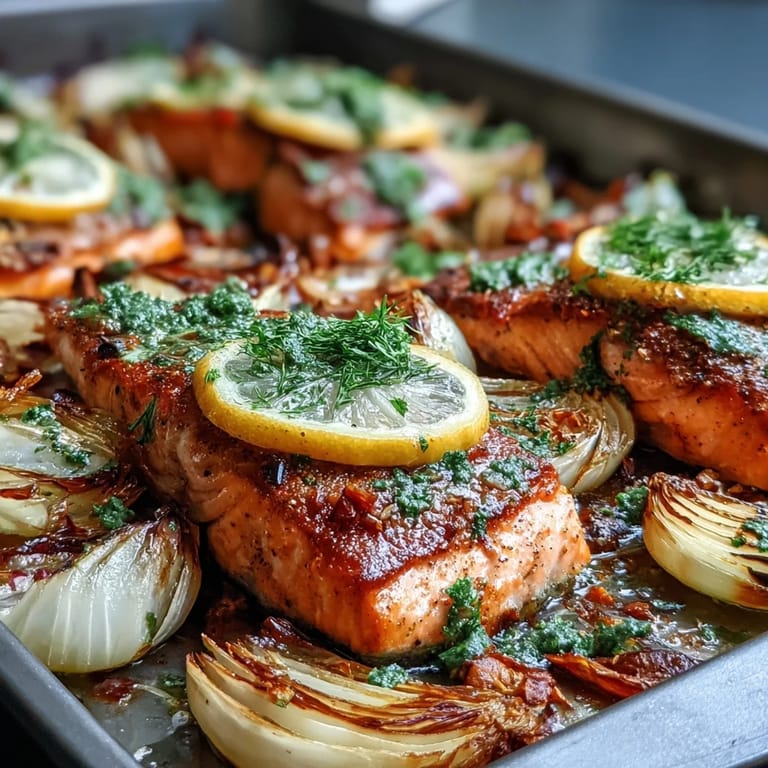
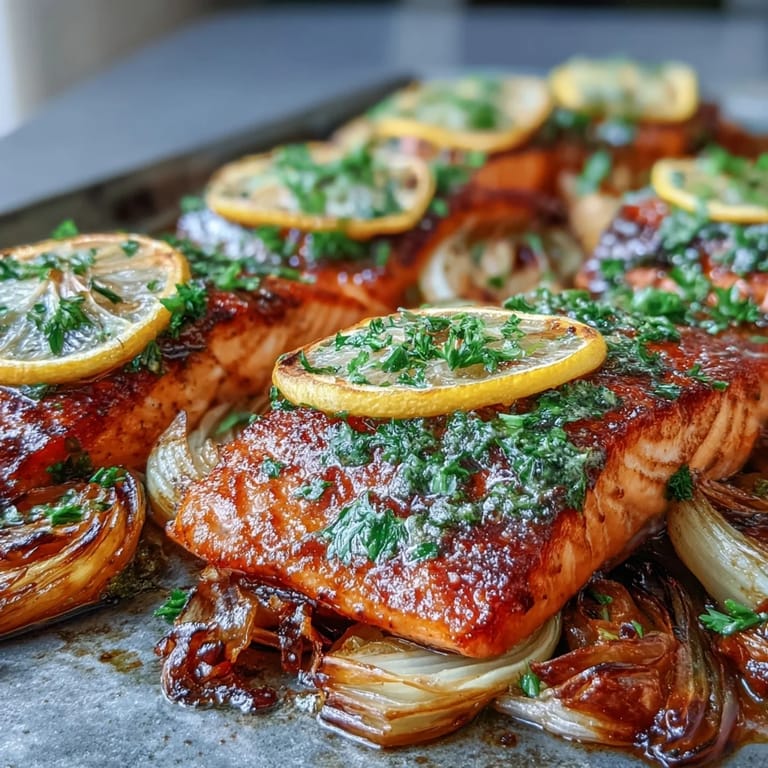
- Pull the pan out, nestle the salmon fillets skin-side down among the vegetables, and lay lemon slices over the top. The vegetables cushion the fish and keep it moist.
- Finish roasting:
- Return the pan to the oven and roast for 12 to 15 minutes, until the salmon is just cooked through and flakes easily. Don't overcook it or it will turn dry and chalky.
- Make the dressing:
- While the salmon bakes, chop the parsley finely and combine it in a small bowl with garlic, mustard, capers, lemon zest, olive oil, and lemon juice. Stir it together and taste, adjusting salt and pepper as needed.
- Serve:
- Transfer the salmon and vegetables to plates and spoon the parsley dressing generously over everything. Serve immediately while it's still hot.
 Save to Pinterest
 My neighbor once knocked on my door just as I was plating this, drawn by the smell of roasting lemons and garlic drifting into the hallway. I ended up sharing half my dinner, and she told me it reminded her of a bistro she loved in Paris years ago. We sat on my kitchen counter eating straight from the baking sheet, talking until the salmon went cold. That's the thing about simple food done well—it creates space for connection without demanding much from you.
Choosing Your Salmon
I always look for fillets that are firm to the touch, with skin that's shiny and scales that haven't been removed carelessly. Wild-caught salmon has a deeper flavor and firmer texture, but farmed salmon works beautifully too if it's fresh and responsibly sourced. If you can, ask your fishmonger to portion it for you—it saves time and ensures even cooking. I've also swapped in trout and arctic char when salmon wasn't available, and both were excellent.
Making the Dressing Ahead
You can prepare the parsley dressing up to a day in advance and store it in the fridge in a sealed jar. The flavors will deepen and meld, though the parsley may darken slightly. Give it a good stir before serving, and if it seems too thick, loosen it with a teaspoon of water or extra lemon juice. I sometimes make a double batch and use the leftovers on roasted vegetables, grilled chicken, or even stirred into warm grains.
Serving and Pairing Ideas
This dish is stunning on its own, but I like to serve it with roasted fingerling potatoes, a simple green salad, or steamed jasmine rice to soak up the dressing. A crisp white wine—something like Sauvignon Blanc or unoaked Chardonnay—cuts through the richness beautifully. If you want to bulk it up, add halved cherry tomatoes or asparagus to the baking sheet alongside the leeks.
- Serve with crusty bread to mop up every last bit of dressing and roasted lemon juice.
- Leftovers can be flaked into a grain bowl the next day with arugula and avocado.
- If you're feeding kids, you can serve the dressing on the side so they can control how much they want.
 Save to Pinterest
 This recipe has become my go-to when I want to feel like I've cooked something real without spending the whole evening in the kitchen. It's proof that a few good ingredients and a hot oven can do most of the work for you.
Recipe FAQs
- → Can I use frozen salmon fillets?
Yes, but make sure to fully thaw and pat them dry before roasting to ensure even cooking and proper browning.
- → What can I substitute for leeks?
Use sliced fennel bulb or additional onions if leeks aren't available. Fennel adds a subtle anise flavor that pairs beautifully with salmon.
- → How do I know when the salmon is done?
The salmon should flake easily with a fork and reach an internal temperature of 145°F. The flesh will appear opaque with a slightly translucent center for medium doneness.
- → Can I make the parsley dressing ahead?
Absolutely. Prepare it up to 2 days in advance and store refrigerated in an airtight container. Bring to room temperature before serving for best flavor.
- → What other fish work well with this method?
Trout, cod, halibut, or arctic char are excellent alternatives. Adjust cooking time based on thickness—thicker fillets need a few extra minutes.
- → How should I store leftovers?
Store the salmon and vegetables separately from the dressing in airtight containers for up to 2 days. Reheat gently in the oven at 300°F to avoid drying out.