 Save to Pinterest
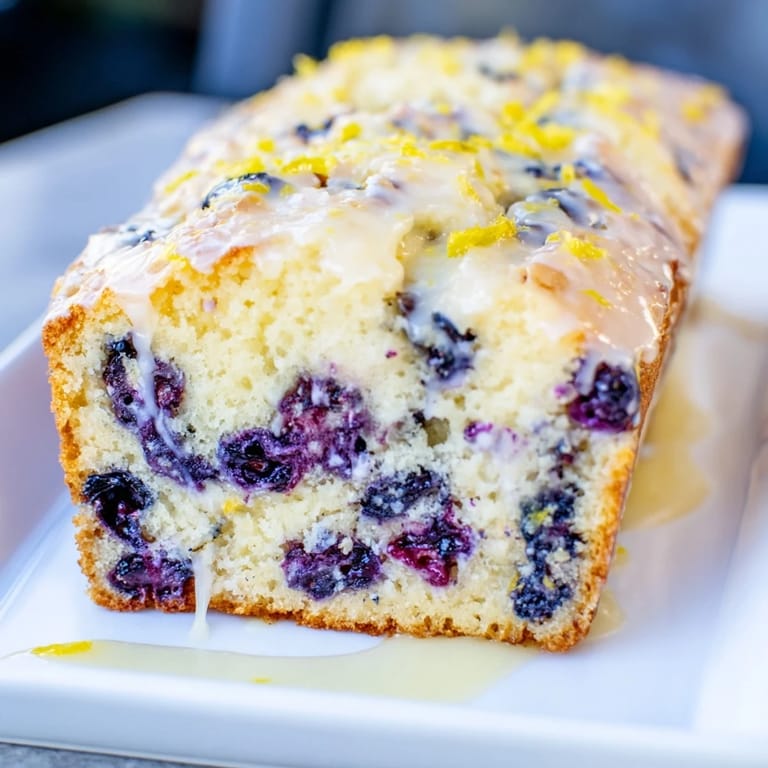
 There's something magic about turning a handful of ingredients into a loaf cake in under a minute of blending. I discovered this lemon blueberry yogurt loaf on one of those mornings when I wanted something special but had zero patience for fussy recipes—the kind of day when my kitchen felt more like an obstacle course than a creative space. One pulse of the blender later, and suddenly I had a batter that smelled like summer and tasted like someone had actually spent hours on it.
My neighbor brought over a loaf cake once and mentioned she'd made it in her blender, which felt like admitting to a hack no proper baker would use. But when I tasted it—that tender crumb, the bright lemon hitting your tongue before the blueberry sweetness arrived—I realized she'd cracked something genuinely good. Now I make it whenever friends are stopping by, and they always ask if it's from a bakery, which makes me smile every single time.
Ingredients
- Eggs (2 large): They bind everything while the blending action aerates them, creating that unexpectedly tender crumb you want in a yogurt cake.
- Greek yogurt (1 cup): Use the full-fat kind if you can—it adds richness and keeps the loaf moist for days, which is the whole point of this recipe.
- Vegetable oil (1/2 cup): This stays liquid, which means the crumb stays soft; butter would bake up denser and the texture would suffer.
- Lemon zest (1 tbsp finely grated): Zest it right before blending so it stays vibrant; bottled zest tastes like disappointment in baked form.
- Fresh lemon juice (1/4 cup): The acidity plays against the yogurt beautifully, but squeeze it fresh—shelf-stable juice has a bitter edge.
- Vanilla extract (1 tsp): It's subtle here, just enough to deepen the lemon flavor without announcing itself.
- All-purpose flour (1 1/2 cups): This is your structure, but you pulse just until combined to avoid toughening the cake.
- Granulated sugar (3/4 cup): It sweetens but also helps the lemon brightness stand out rather than hiding it.
- Baking powder (2 tsp): The twin of baking soda, these two work together to lift the cake gently.
- Baking soda (1/2 tsp): It reacts with the lemon juice and yogurt's acidity, which is why this cake rises so reliably.
- Sea salt (1/4 tsp): A small amount amplifies the lemon and keeps sweetness from feeling flat.
- Fresh blueberries (1 cup): Frozen works just as well—the flour coating prevents them from sinking to the bottom where nobody can reach them.
- Powdered sugar (1/2 cup for glaze): Mixed with fresh lemon juice, it adds shine and a finishing tartness that feels intentional.
Tired of Takeout? 🥡
Get 10 meals you can make faster than delivery arrives. Seriously.
One email. No spam. Unsubscribe anytime.
Instructions
- Heat the oven and prepare your pan:
- Preheat to 350°F and line a 9x5-inch loaf pan with parchment paper so you can lift the cake out cleanly without wrestling it. Grease the paper too, because parchment is helpful but not foolproof.
- Blend the wet mixture until smooth:
- Add eggs, yogurt, oil, lemon zest, lemon juice, and vanilla to your blender and let it run until everything is completely homogeneous. This is the moment where the blender does the heavy lifting.
- Add and pulse the dry ingredients:
- Pour in flour, sugar, baking powder, baking soda, and salt, then pulse—and this is important—pulse just until you see no dry flour streaks. Over-mixing here is the only way you can actually ruin this cake, so resist the urge to keep going.
- Fold in the blueberries by hand:
- Toss your berries with 1 tablespoon of flour first to coat them, then gently fold them into the batter with a spatula. This keeps them suspended throughout the cake instead of sinking into a sad blue layer at the bottom.
- Pour and smooth:
- Transfer the batter into your prepared pan and smooth the top gently with the spatula. The batter should be thick enough that it holds its shape.
- Bake until golden and set:
- Bake for 50 to 55 minutes, until a toothpick inserted in the center comes out clean or with just a few moist crumbs. If the top is browning too quickly, tent it loosely with foil for the last 15 minutes.
- Cool with patience:
- Let the loaf sit in the pan for 10 minutes so it firms up enough to turn out, then transfer it to a wire rack to cool completely. This step prevents the inside from staying gummy while the outside cools.
- Add the glaze:
- Whisk powdered sugar with lemon juice until it reaches a pourable consistency, then drizzle it over the cooled loaf in whatever pattern feels right.
 Save to Pinterest
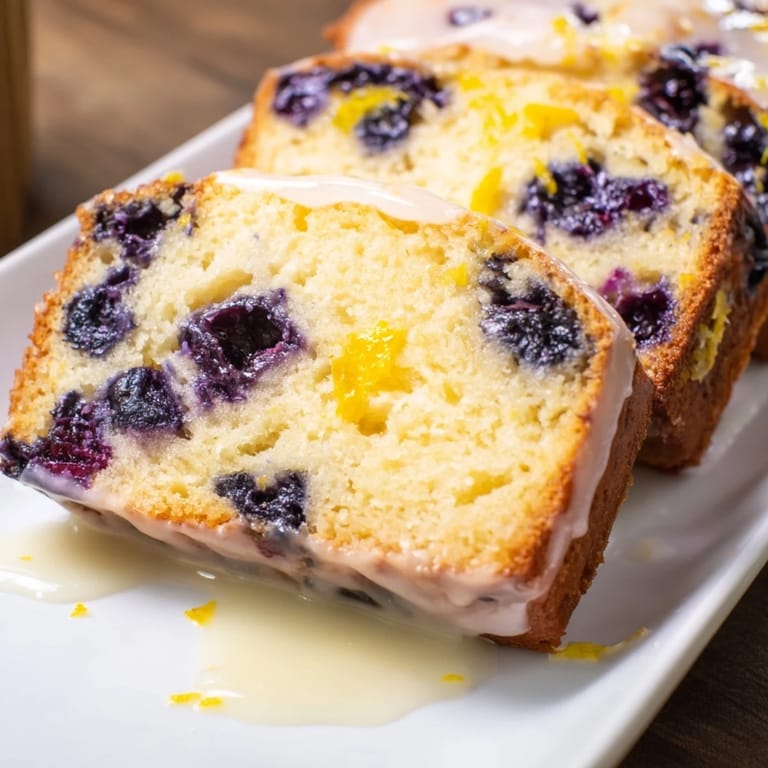
 I once brought a slice of this to a friend who'd been having a rough week, and watching her close her eyes on that first bite—the way her expression softened—reminded me that sometimes the simplest things matter most. A loaf cake and a cup of tea can feel like someone's saying 'I made this for you' in the clearest possible way.
Why This Loaf Stays So Moist
The combination of yogurt and oil creates a crumb that defies the usual rules—most cakes made with oil can feel greasy, but the yogurt's tang and acidity change everything. The liquid yogurt keeps the structure tender, while the acid in both the yogurt and lemon juice prevents staling by keeping water locked into the crumb structure. By day two, the flavors have deepened and the texture is actually better than when it came out of the oven, which is rare for cakes and feels like you've discovered something secret.
The Blender Method Revolution
Using a blender for a cake still feels slightly like cheating, in the best way possible. You're skipping the step of creaming butter and sugar, which traditionally requires a stand mixer or serious arm strength—instead, the blender aerates the wet ingredients while combining everything, doing two jobs at once. The real trick is stopping before you over-mix the flour, which is why the pulse setting exists and why you need to pay attention during those last few seconds.
Flavor Variations and What Works
This loaf is flexible enough to accommodate your mood without falling apart. Some versions call for almond extract added to the wet ingredients, which gives it an almost cake-like richness, or you can toast the lemon zest briefly before blending to deepen its flavor. The blueberries are essential to the character, but frozen ones work identically to fresh, and you can occasionally fold in a handful of white chocolate chips or pistachios if you want something different without changing the structure.
- Coconut yogurt swaps in seamlessly if you need dairy-free, and it actually brightens the lemon flavor.
- A 1/2 teaspoon of almond extract in the wet ingredients creates a subtle flavor depth that makes people wonder what you did differently.
- If you're glazing, taste it before drizzling—sometimes you want it thicker and more restrained, and sometimes you want it drippy and generous.
 Save to Pinterest
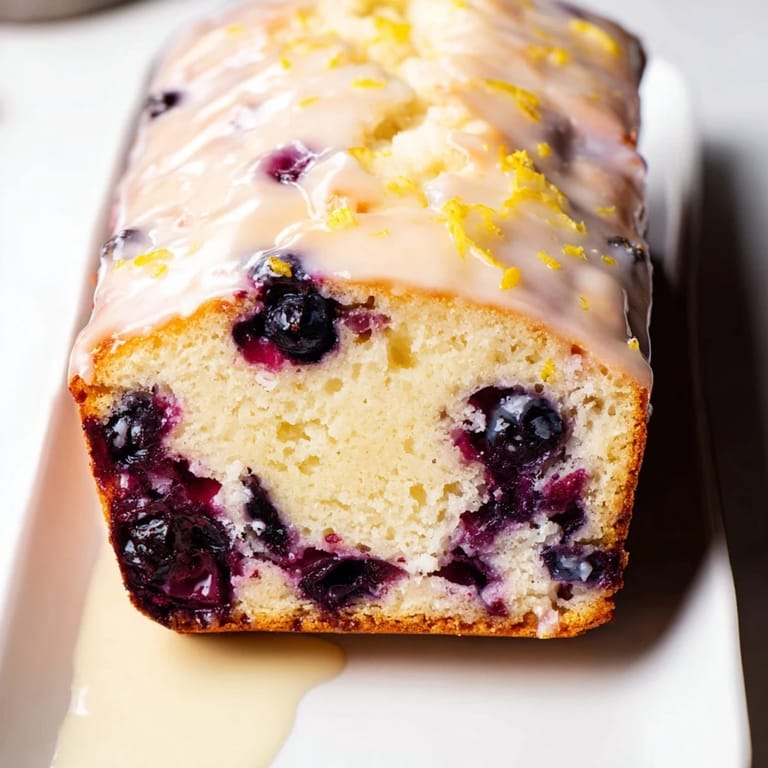
 This is the kind of recipe that feels like a small victory every time you make it, because it looks impressive and feels effortless. Once you've made it once, you'll have it memorized, and it becomes the cake you reach for whenever you need something good that doesn't require convincing yourself to start.
Recipe FAQs
- → How do I prevent blueberries from sinking in the batter?
Toss the blueberries with a tablespoon of flour before folding them gently into the batter to help them stay evenly distributed during baking.
- → Can I substitute the yogurt for a dairy-free alternative?
Yes, coconut yogurt or other plant-based yogurts can replace regular yogurt, keeping the loaf moist and tender.
- → What is the best way to achieve a moist crumb in this loaf?
Using yogurt and vegetable oil in the batter adds moisture, while careful blending prevents overmixing, resulting in a tender, moist crumb.
- → Is it necessary to use a blender for this loaf?
A blender simplifies combining wet and dry ingredients smoothly, but you can also mix by hand, ensuring not to overmix once flour is added.
- → How can I add more lemon flavor to the loaf?
Incorporate lemon zest, lemon juice, and consider drizzling a lemon glaze made with powdered sugar and lemon juice after baking for extra brightness.