 Save to Pinterest
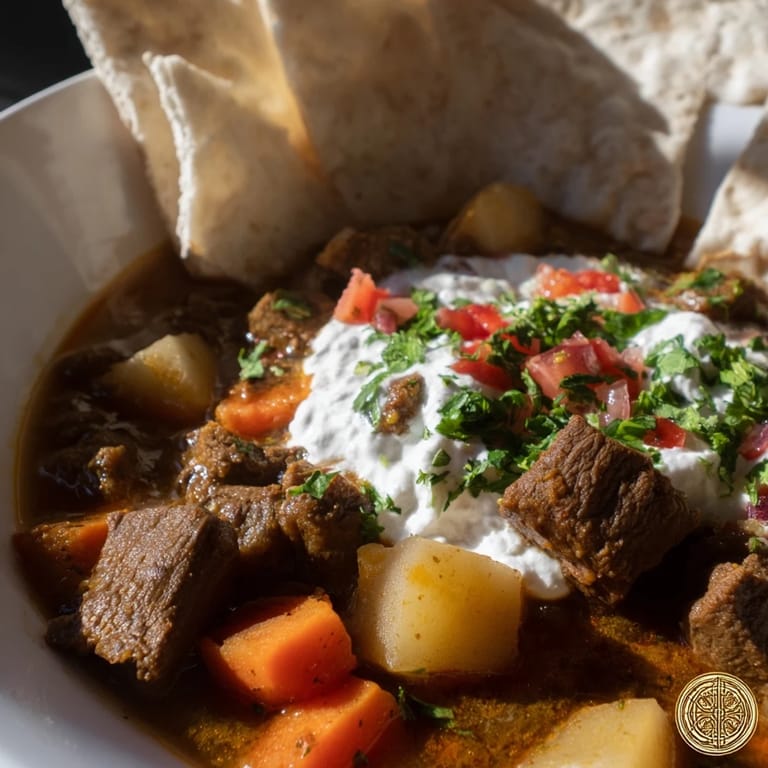
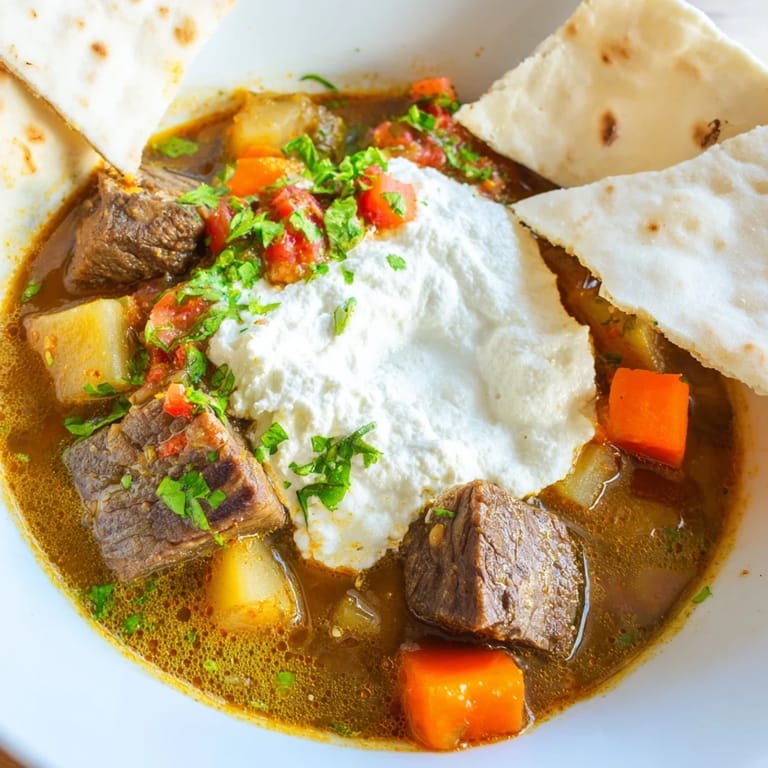
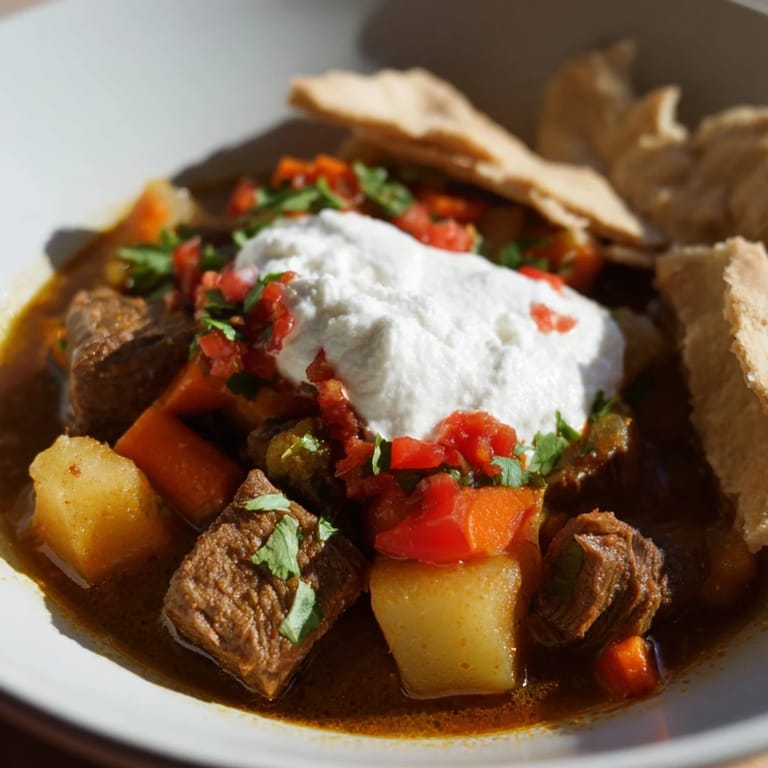
 The first time I tasted saltah was in a small kitchen in Sana'a, watching a woman work with such ease that her hands seemed to know every step by memory alone. She layered the hot stew over torn bread with the confidence of someone who'd fed her family this way for decades, then crowned it with a cloud of whipped fenugreek that looked impossibly light. I realized then that this wasn't just a stew—it was a complete experience, meant to be assembled right in front of you, each layer telling its own story of warmth and tradition.
I remember the sound of the whisk hitting the bowl, over and over, my arm getting tired as the fenugreek slowly changed from thin liquid to something that looked like whipped cream. My friend kept saying it would never happen, but then suddenly it did—a small miracle of persistence and patience that made us both laugh when we realized we'd been whisking for almost five minutes straight.
Ingredients
- Beef or lamb, 500g cubed: Cut pieces about the size of dice so they cook evenly and absorb all those spices; I learned the hard way that uneven sizes mean some meat is tender while others are tough.
- Vegetable oil, 2 tbsp: Use something neutral that won't fight with the cumin and turmeric; the oil is your foundation for browning meat properly.
- Onion, 1 large chopped: This goes golden and sweet, creating the flavor base everything else builds on—don't rush this step.
- Garlic, 3 cloves minced: The smell when it hits the hot oil tells you you're on the right track.
- Tomatoes, 2 medium chopped: Fresh tomatoes add brightness that canned versions sometimes miss, though either works in a pinch.
- Green chili, 1 finely chopped (optional): This is where you control the heat; if your guests are cautious, keep it minimal and let people adjust at the table.
- Potato and carrot, 1 medium each cubed: These soften into the broth and give the stew body without needing extra thickening.
- Water or beef broth, 4 cups: Broth gives deeper flavor, but water works fine if that's what you have—the spices do the heavy lifting.
- Cumin, 1/2 tsp ground: This warm spice is the backbone of the whole dish.
- Coriander, 1/2 tsp ground: It adds an almost citrusy note that balances the earthiness.
- Black pepper, 1/2 tsp ground: Fresh ground makes a real difference here.
- Turmeric, 1 tsp ground: Beyond color, this brings a subtle warmth that ties everything together.
- Ground fenugreek, 1/2 tsp (stew) plus 2 tbsp (hulbah): Fenugreek is the signature—it tastes a bit like maple and almonds, and it's what makes this authentically Yemeni.
- Salt, 1 tsp: Taste as you go because salt levels vary with your broth choice.
- Ground fenugreek seeds (for hulbah), 2 tbsp: This needs to soak and whip into foam, so keep it separate from the stew fenugreek.
- Water for hulbah, 1/3 cup plus soaking liquid: The soaking loosens the seeds so they whip into clouds.
- Tomato, 1 small diced (for hulbah): This adds freshness to the foam and catches the eye when served.
- Cilantro, 1 small bunch chopped: The herbaceous kick at the very top of each bowl.
- Lemon juice, 1/2 lemon: A squeeze of brightness that wakes up all the spices.
- Yemeni flatbread (malawah or lahoh), 2 large: These are thicker and chewier than pita, designed to soak up broth; if you can't find them, pita works but use less to prevent mushiness.
Tired of Takeout? 🥡
Get 10 meals you can make faster than delivery arrives. Seriously.
One email. No spam. Unsubscribe anytime.
Instructions
- Brown the foundation:
- Heat oil in your largest pot over medium heat and let the onions turn golden and soft—this takes about 5 minutes and sets the stage for everything that follows. Once they're caramelized, add garlic and chili, stirring just until fragrant.
- Sear the meat:
- Push the onions aside and add your meat cubes, letting them sit undisturbed for a couple of minutes so they develop a golden crust that locks in flavor. Toss and brown on all sides, which takes about 8 to 10 minutes.
- Build the spice layer:
- Stir in your tomatoes and all the ground spices—cumin, coriander, pepper, turmeric, and fenugreek—letting them toast slightly in the oil so they become more fragrant. This aromatic moment lasts just 2 to 3 minutes but transforms the whole pot.
- Add vegetables and liquid:
- Nestle in the potato and carrot, then pour in your broth or water, stirring to combine everything evenly. Bring it to a boil so you can see the bubbles racing across the surface.
- Low and slow simmer:
- Once boiling, drop the heat to low, cover the pot, and let it bubble gently for 1 to 1.5 hours—the longer it cooks, the more tender the meat becomes and the deeper the flavors meld. You'll know it's ready when a fork slides through the meat like butter.
- Soak and whip the fenugreek:
- While the stew simmers, place your ground fenugreek seeds in a bowl and cover with cold water, letting them sit for a full hour—this hydration is what allows the whipping to work. After soaking, drain off the excess water and whisk or fork the soaked seeds vigorously for several minutes until they transform into a light, fluffy foam.
- Season the hulbah:
- Fold your diced tomato, cilantro, and chili into the fenugreek foam, then finish with lemon juice and a pinch of salt, tasting to adjust as needed. The acidity should sing against the fenugreek's nutty sweetness.
- Assemble the bowls:
- Tear your flatbread into bite-sized pieces and distribute among serving bowls, then ladle the hot meat stew over the bread so it soaks into every piece without becoming mushy. The bread should be thoroughly moistened but still hold its shape.
- Crown and serve:
- Spoon a generous mound of hulbah on top of each bowl so it sits there like a cloud before your diners mix it all together with their spoons. Serve immediately while everything is piping hot and the bread is still absorbing the broth.
 Save to Pinterest
 The first time someone I'd cooked for took that first spoonful, mixing all three layers together, their eyes widened and they looked at me like I'd revealed a secret. That moment—when they understood why this dish matters, why it's been feeding people for generations—is when I knew I'd made something that went beyond feeding hunger.
The Soul of Yemeni Cooking
Saltah represents something important about Yemeni food culture: the belief that a meal should engage all your senses and your hands, not just sit in front of you waiting to be eaten. The fenugreek topping is what caught me off guard the most—I'd never encountered a spice that could be whipped into foam, and once I understood how it worked, I felt like I'd unlocked something fundamental about the cuisine.
Timing and Patience
This dish asks you to slow down in two different ways: the long simmer that tenderizes the meat and melds the spices, and then the separate, meditative task of whipping fenugreek until it transforms. Neither can be rushed, but neither feels laborious once you understand what's happening—it's like the cooking itself is part of the experience you're creating for your guests.
Making It Your Own
While saltah has ancient roots, every kitchen makes it slightly differently based on what's available and what tastes feel like home. I've seen versions with more vegetables, some with less spice, and others where the hulbah is nearly as thick as the stew itself—these aren't mistakes, they're adaptations that keep the dish alive.
- If you can't find Yemeni flatbread, look for lahoh at Middle Eastern markets, but pita or even naan can work in a pinch—just adjust the amount so the bread soaks without dissolving.
- The green chili is optional, but if you include it, taste the broth before adding the final pinch of salt since chili heat can make you misjudge saltiness.
- Make extra hulbah if you're feeding people who really love it—some diners will want more than a single generous spoonful on top.
 Save to Pinterest
 Once you've made saltah, you'll understand why it's considered comfort food across Yemen—it's warm, layered, and built with intention. Make it for people you care about, and let them experience the small magic of mixing all those layers together.
Recipe FAQs
- → What cut of meat works best for this stew?
Beef or lamb cut into 2 cm cubes is preferred for tender, flavorful results after slow simmering.
- → Can I substitute the fenugreek topping with something else?
The whipped fenugreek foam adds a distinctive aroma and texture, but a yogurt-based topping could be an alternative.
- → What breads are suitable for layering in this dish?
Traditional Yemeni flatbreads like malawah or lahoh work best, but pita or naan can be used as substitutes.
- → How long should the stew simmer for optimal flavor?
Simmering for 1 to 1.5 hours allows the meat to become tender and the spices to fully infuse the broth.
- → Is it possible to make a vegetarian variation?
Yes, omit the meat and increase root vegetables or add beans to maintain texture and heartiness.