 Save to Pinterest
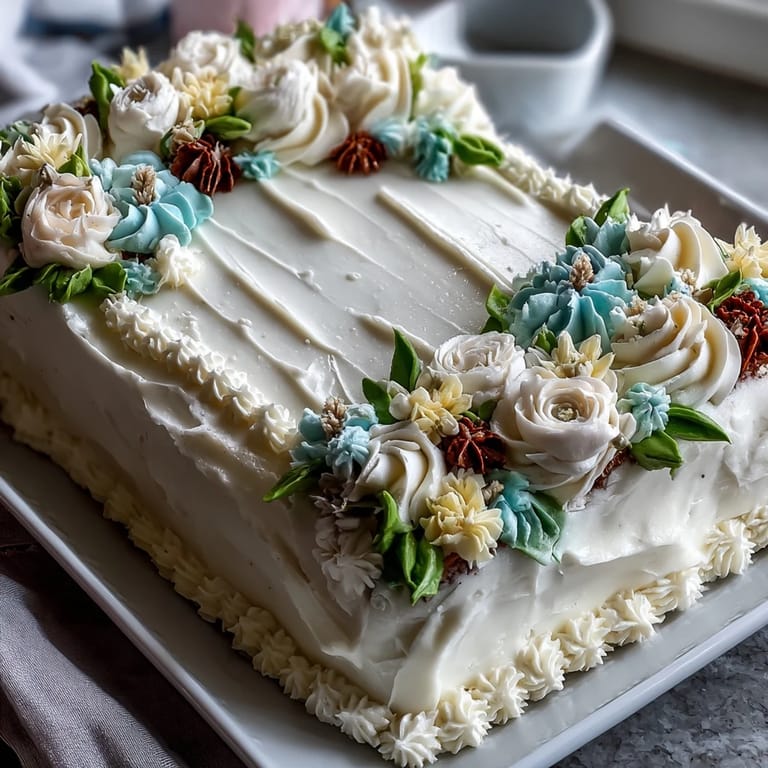
 My aunt handed me a piping bag with trembling hands the morning of my cousin's First Communion, confessing she'd never decorated a cake before in her life. We stood in her kitchen surrounded by bowls of pastel buttercream, and what could have been a disaster became one of those unexpectedly perfect moments—the kind where mistakes don't matter because the whole thing is done with love. This sheet cake, with its tender crumb and silky buttercream, became our secret weapon that day. The simplicity of it all struck me: no fancy techniques required, just butter, sugar, and a willingness to pipe a few flowers.
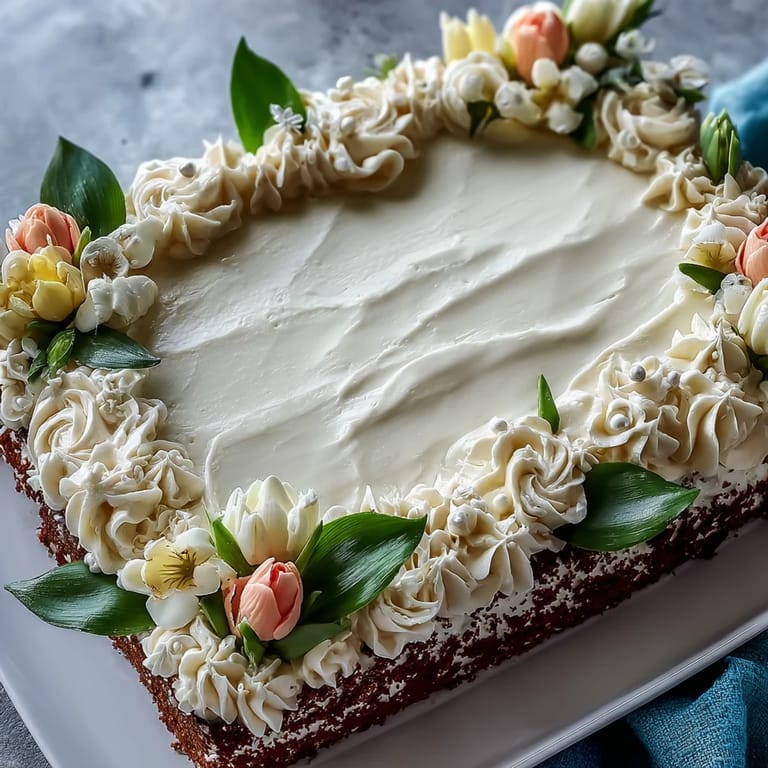
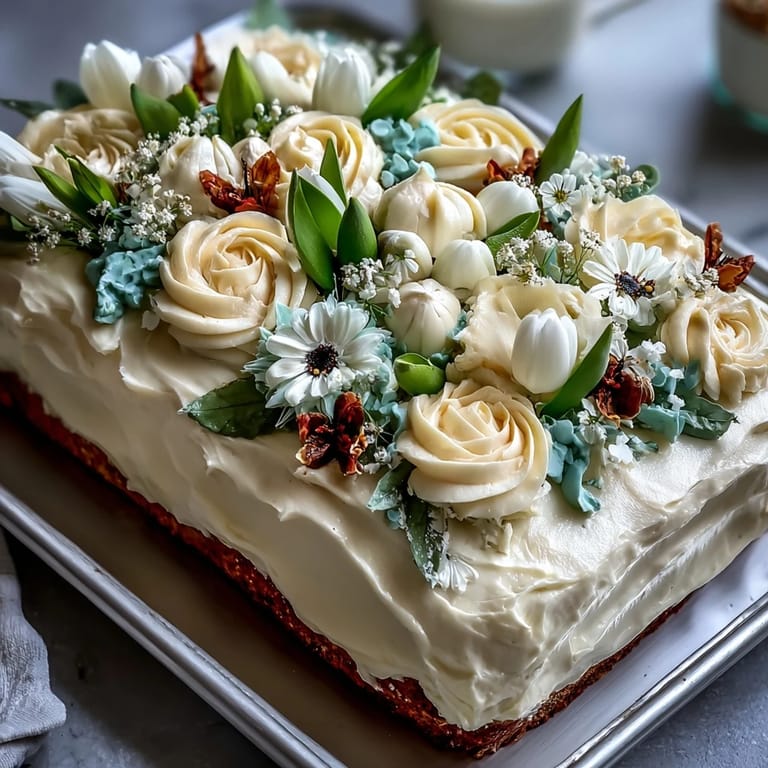
What I remember most isn't the final cake sitting on the reception table, but my cousin's little sister sneaking into the kitchen mid-decoration and gasping when she saw the pink roses blooming across the white surface. She wanted to touch them, convinced they were real for a moment. That's when I understood why people spend time on cake decorating—it's not vanity, it's creating something that makes people pause and feel something.
Ingredients
- All-purpose flour (2 ½ cups): The backbone of a tender cake; sifting isn't strictly necessary but whisking it with the baking powder ensures even distribution of leavening throughout.
- Baking powder (2 ½ tsp): This is your lift—don't skip it or substitute with baking soda without adjusting other ingredients.
- Salt (½ tsp): A small amount that somehow makes the vanilla flavor sing louder than you'd expect.
- Unsalted butter (1 cup): Room temperature is non-negotiable here; cold butter won't cream properly and your cake will be dense.
- Granulated sugar (2 cups): Beating it with butter for a full three minutes creates tiny air pockets that make the cake light and fluffy.
- Eggs (4 large): Room temperature eggs blend seamlessly into the batter; cold ones can cause curdling and uneven texture.
- Pure vanilla extract (1 tbsp for cake, 2 tsp for buttercream): The soul of this cake—don't use imitation unless you have to.
- Whole milk (1 cup): Room temperature milk incorporates smoothly; cold milk can shock the warm batter.
- Unsalted butter for buttercream (1 ½ cups): Softened and at room temperature, this becomes clouds of frosting when whipped properly.
- Powdered sugar (6 cups): Sift it before measuring to avoid lumps that can grit up your otherwise silky buttercream.
- Food coloring (gel type): Gel colors won't thin out your buttercream the way liquid colors do, keeping your frosting stiff enough to pipe defined flowers.
Tired of Takeout? 🥡
Get 10 meals you can make faster than delivery arrives. Seriously.
One email. No spam. Unsubscribe anytime.
Instructions
- Set your stage:
- Preheat the oven to 350°F and grease that 9x13-inch pan thoroughly, then line it with parchment paper so the cake slides out effortlessly later. This step takes two minutes but saves you from a crumbled disaster.
- Mix the dry ingredients:
- Whisk flour, baking powder, and salt together in a medium bowl until they're evenly combined. You're essentially distributing the leavening so it acts uniformly throughout the batter.
- Cream butter and sugar:
- In a large bowl, beat the softened butter and sugar for about three minutes until the mixture is pale, fluffy, and looks almost like wet sand. This aerates the batter and is where much of your cake's tender texture comes from.
- Incorporate eggs one at a time:
- Add eggs individually, beating well after each addition so they fully emulsify into the butter mixture. Rushing this step can create a separated, curdled batter that bakes into a dense cake.
- Add vanilla and begin the three-part addition:
- Stir in vanilla extract, then add the flour mixture and milk in three alternating batches, starting and ending with flour. Mix just until combined—overmixing develops gluten and toughens the cake.
- Transfer and bake:
- Pour the batter into your prepared pan and smooth the top with a spatula so it bakes evenly. Bake for 28 to 32 minutes until a toothpick inserted in the center comes out clean with no wet batter clinging to it.
- Cool with patience:
- Let the cake rest in the pan for 10 minutes to set slightly, then turn it out onto a wire rack to cool completely. Decorating a warm cake is asking for melted buttercream and a frustrating afternoon.
- Make the buttercream:
- Beat softened butter until it's creamy, then gradually add sifted powdered sugar and milk in alternating batches, beating until smooth and fluffy. This usually takes five to seven minutes of beating; don't rush it or your frosting will be grainy.
- Color and fill piping bags:
- Divide the buttercream into bowls and add gel food coloring drop by drop, stirring until you reach the shade you want. Fill piping bags fitted with flower tips, leaf tips, and a small round tip for any text.
- Frost and decorate:
- Spread a generous base layer of plain buttercream over the cooled cake, then pipe flowers and leaves across the surface, clustering them in corners or along edges for a classic look. If you're adding a cross or First Communion text, use the small round tip and steady your hand.
 Save to Pinterest
 Later that night, after everyone had gone home, my aunt cut a slice and tasted it with eyes closed, as if she were trying to remember something. She said it tasted like relief and pride mixed together, which is exactly what a good cake should taste like when it's made with intention. That's the gift of this recipe—it's forgiving enough for nervous bakers but impressive enough to feel celebratory.
Why This Cake Works for Special Occasions
Sheet cakes have this underrated elegance about them—they're generous enough to feed a crowd, humble enough to feel homemade, and flexible enough to dress up or down depending on your decorating mood. There's something democratic about a sheet cake that sits well with celebration; it says we baked this for all of you, not just a few. The vanilla flavor is a blank canvas that lets buttercream flowers become the star without competing flavors getting in the way.
Making Piped Flowers Look Effortless
The truth about cake decorating is that it looks harder than it is, and once you pipe your first three flowers, your confidence shoots up immediately. The key is holding the piping bag at a consistent angle and letting the tip do the work rather than trying to muscle it. If a flower doesn't turn out, you can always smooth it back into the frosting and try again—buttercream is remarkably forgiving that way.
Storage, Timing, and Last-Minute Saves
This cake actually improves the next day as flavors settle and the crumb becomes even more moist, so baking it ahead takes enormous pressure off the day-of timeline. Store it covered at room temperature and frost it whenever you have a quiet moment to focus on decorating. If your piping bag gets too warm and the buttercream softens, stick it in the refrigerator for five minutes and you're back in business.
- Add ½ teaspoon almond extract to the batter for subtle depth without changing the vanilla-forward flavor.
- If you don't have a flower tip, a simple leaf tip pipes charming rustic petals that look intentionally organic.
- Keep parchment paper scraps near your work surface so you can practice piping flowers before committing them to the cake.
 Save to Pinterest
 Every time I see this cake now, I think about how celebration food doesn't have to be complicated to be meaningful. This one just needs butter, sugar, eggs, and someone willing to show up and decorate it with care.
Recipe FAQs
- → What baking pan size is recommended?
A 9x13-inch baking pan lined with parchment paper ensures even baking and easy cake removal.
- → How can I achieve smooth buttercream frosting?
Beat softened butter until creamy, gradually add powdered sugar alternating with milk, and beat until smooth and fluffy for a creamy texture.
- → Can I add extra flavor to the cake batter?
Yes, adding ½ teaspoon of almond extract enhances the vanilla base with a subtle nutty note.
- → What is the best way to pipe the floral decorations?
Use piping bags fitted with flower and leaf tips, tint buttercream in different colors, and pipe carefully along edges or corners for a classic look.
- → How should the cake be stored before serving?
Store the decorated cake covered at room temperature, ideally made a day ahead for flavors to meld.