 Save to Pinterest
 My sister came home from a trip to Vancouver one autumn and couldn't stop talking about the hand rolls she'd eaten at a tiny counter in Gastown. I'd never made sushi at home before, but her enthusiasm was contagious. That weekend, we cleared the kitchen table, spread out nori sheets like parchment paper, and fumbled our way through rolling cone after cone until our fingers were sticky with rice and we were both laughing too hard to care. The imperfect cones tasted better than anything we could have ordered.
I started making these for weeknight dinners when I realized how much faster they come together than traditional rolls. There's something freeing about skipping the bamboo mat and just shaping the nori with your palms. My neighbor tried one during a casual porch dinner last spring and immediately asked for the rice seasoning ratio. Now she texts me photos of her own wobbly cones every few weeks, each one a little neater than the last.
Ingredients
- Sushi rice: Short grain Japanese rice is essential here because it clings together without turning mushy, and rinsing it until the water runs clear removes excess starch that would make everything gummy.
- Rice vinegar: This is what gives sushi rice that subtle tang and prevents it from tasting flat, and I've learned to dissolve the sugar completely before folding it in so you don't get sweet spots.
- Avocado: Choose one that yields slightly to pressure but isn't mushy, because overripe avocado will smear and underripe slices won't have that buttery contrast against the crisp cucumber.
- Cucumber: English cucumbers have fewer seeds and thinner skins, making them ideal for clean julienne cuts that stay crunchy inside the roll.
- Crab meat: Real lump crab is a treat, but good quality imitation works beautifully and keeps the cost down for a casual weeknight meal.
- Nori sheets: Buy roasted seaweed and store it in a sealed bag, because even a little humidity will make the sheets limp and impossible to roll properly.
Tired of Takeout? 🥡
Get 10 meals you can make faster than delivery arrives. Seriously.
One email. No spam. Unsubscribe anytime.
Instructions
- Rinse the rice:
- Run cold water over the sushi rice in a fine mesh strainer, swirling gently with your hand until the water below turns from cloudy to nearly clear. This step takes patience but prevents gluey rice that sticks to your fingers more than the nori.
- Cook the rice:
- Bring the rice and water to a rolling boil, then immediately drop the heat to the lowest setting and cover tightly for 15 minutes without peeking. Let it rest off the heat for 10 minutes so the grains finish steaming and firm up just enough to hold their shape.
- Season the rice:
- Stir the vinegar, sugar, and salt in a small bowl until no crystals remain, then drizzle it over the hot rice and fold gently with a rice paddle using a cutting motion. Spread the rice on a wide plate or tray to cool faster, and resist the urge to refrigerate or it will turn hard.
- Prepare the crab:
- If you like a creamier filling, mix the crab with a tablespoon of mayonnaise until just combined. I usually keep some plain for those who prefer a lighter bite.
- Assemble each hand roll:
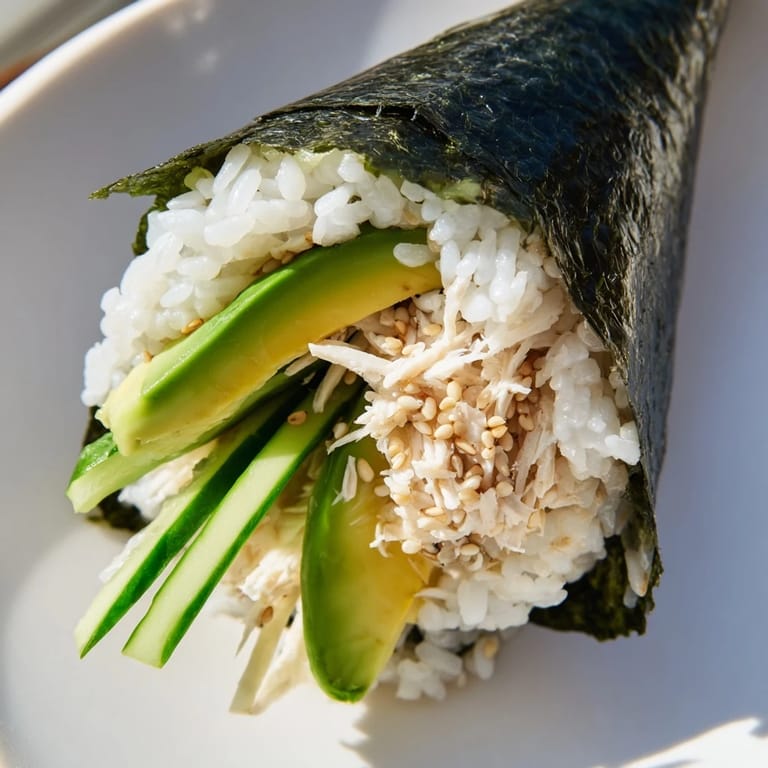
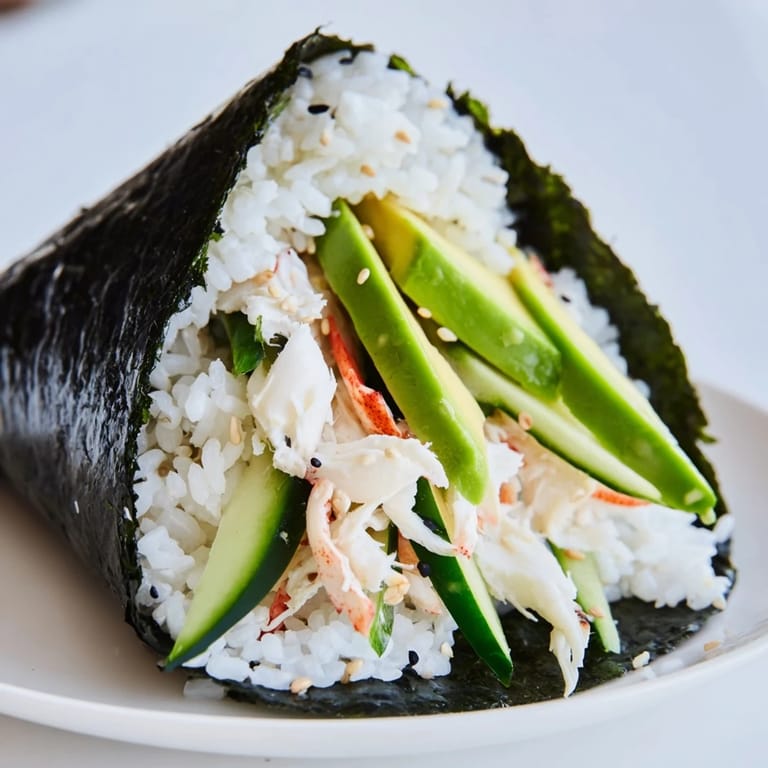
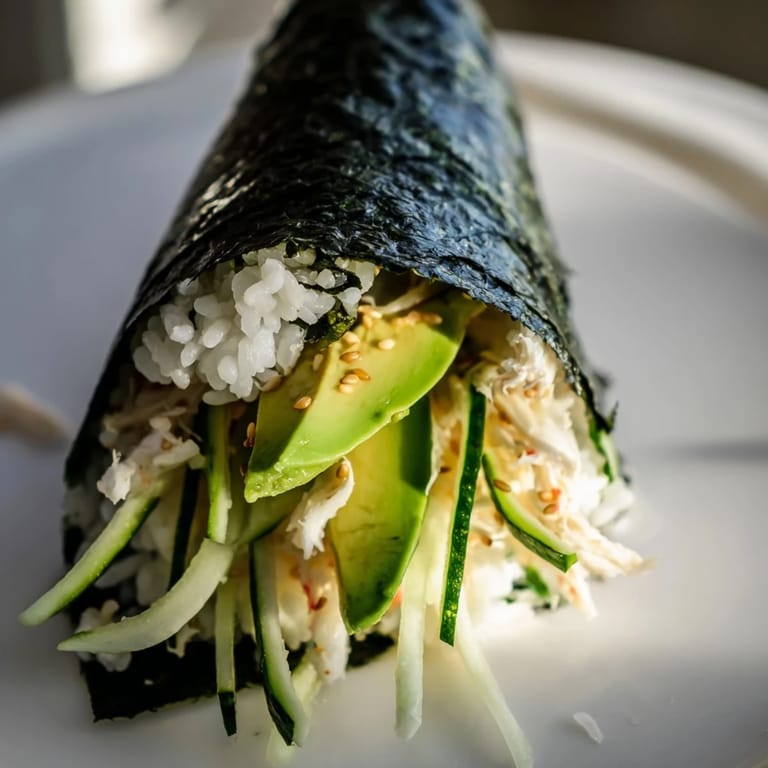
- Hold a half sheet of nori in your palm with the shiny side down and rough side facing up, then spread a thin diagonal stripe of rice across one corner. Layer two or three slices of avocado, a few cucumber sticks, and a small mound of crab on the rice, keeping everything snug but not overstuffed.
- Roll into a cone:
- Starting at the filled corner, roll the nori around the filling in a tight spiral, shaping it into a cone as you go. Press a grain or two of rice on the final edge to seal it closed, and don't worry if the first one looks wonky.
- Serve immediately:
- Arrange the cones on a platter with small dishes of soy sauce, pickled ginger, and a dab of wasabi. Hand rolls taste best within the first 20 minutes, before the nori softens.
 Save to Pinterest
 The first time I served these at a dinner party, I set out all the fillings in small bowls and let everyone roll their own. It turned into the most relaxed meal I'd hosted in months, with people laughing at their lopsided cones and trading tips across the table. One friend added a stripe of Sriracha and declared it her new favorite thing. By the end of the night, we'd gone through twice as much rice as I'd planned and nobody minded standing in the kitchen for seconds.
Choosing the Right Rice
I used to think any short grain rice would work, but sushi rice labeled as such has the right balance of starch and firmness to hold together without turning into paste. If you can only find medium grain, it will still work in a pinch, but the texture won't be quite as tender or sticky. Rinsing matters more than the brand, because that's what removes the powdery coating that makes cheap rice clump together in a gummy mess.
Customizing Your Fillings
Once you get the basic technique down, you can swap in almost any ingredient that's thinly sliced and not too wet. I've used cooked shrimp, smoked salmon, blanched asparagus, and even thin strips of tamago (sweet egg omelet) with great results. The key is keeping everything roughly the same thickness so the cone rolls evenly and doesn't tear on one side. Avoid anything too juicy like fresh tomatoes, which will sog out the nori before you get it to the table.
Storing and Making Ahead
Hand rolls really are best eaten fresh, but you can prep all the components a few hours in advance and assemble them just before serving. Keep the seasoned rice covered with a damp towel at room temperature, store the sliced fillings in the fridge, and leave the nori sealed in its package until the last minute. If you have leftover rice, it makes excellent fried rice the next day, though it won't stick together well enough for more rolls.
- Wrap any assembled rolls you can't finish in plastic and eat within an hour, though the nori will be chewy.
- Store extra crab mixture in an airtight container for up to two days and use it in salads or on crackers.
- Freeze portioned cooked rice in zip top bags for up to a month, then thaw and re season with a splash of vinegar when you're ready to roll again.
 Save to Pinterest
 These hand rolls have become my go to meal when I want something light but satisfying, and they never feel like work. I hope your first batch makes you smile as much as mine did.
Recipe FAQs
- → What type of rice should I use for hand rolls?
Use short-grain Japanese sushi rice, which has a sticky texture essential for holding the rolls together. Rinse thoroughly until water runs clear to remove excess starch before cooking.
- → Can I prepare the rice ahead of time?
Yes, cook the rice and season it several hours in advance. Store at room temperature in a covered container. Avoid refrigerating, as cold rice becomes hard. Use within 24 hours for best quality.
- → How do I keep nori sheets from getting soggy?
Assemble and serve hand rolls immediately after rolling. The nori stays crispest when eaten fresh. If nori softens, you can briefly toast halves over a flame or warm burner before filling.
- → What are good substitutes for crab meat?
Cooked shrimp, smoked salmon, or imitation crab all work beautifully. For vegetarian versions, try cucumber, avocado, or pickled daikon radish. Cooked chicken or tofu are excellent shellfish-free alternatives.
- → Do I need special equipment to make hand rolls?
A bamboo mat is optional—hand rolls can be rolled directly in your palm or on a flat surface. Essential tools include a sharp knife for slicing ingredients and a small bowl for the vinegar mixture.
- → How much rice should I spread on each nori sheet?
Apply approximately 2-3 tablespoons of rice diagonally across one corner of the nori half. Spread thinly to avoid overwhelming the wrapper and ensure the roll holds its cone shape.