 Save to Pinterest
 There's something about the smell of garlic hitting hot oil that makes you feel like you've got dinner under control, even on nights when you're running on fumes. I discovered this pasta one Tuesday when I had twenty minutes between work and picking up my kid, a jar of marinara in the pantry, and a handful of wilted spinach I was determined not to waste. The beauty of it isn't in complexity—it's in how those three simple elements come together to taste like you actually planned ahead.
I made this for my partner on a rainy Sunday when we were both tired of takeout menus, and they asked for the recipe before we'd even finished eating. That's when I knew it wasn't just about convenience—there's real comfort in a bowl of pasta where every bite tastes fresh and unhurried, even though it took barely longer than ordering delivery.
Ingredients
- Dried spaghetti or penne (12 oz): Don't overthink the shape—use what you have, though penne catches the sauce beautifully in its little tubes.
- Salt for pasta water: Your water should taste like the sea; this is the only seasoning your pasta gets, so don't skimp.
- Olive oil (2 tbsp): Good enough to drizzle on bread is good enough here—it's the foundation of everything delicious.
- Garlic (3 cloves, minced): Fresh garlic makes the whole kitchen smell like home; jarred works in a pinch, but you'll taste the difference.
- Jarred marinara sauce (24 oz): Pick one you'd eat straight from the jar, because that's the flavor backbone of this dish.
- Fresh baby spinach (5 oz): The leaves shrink dramatically when they hit the heat, so pile them in without fear.
- Red pepper flakes (optional, 1/2 tsp): A whisper of heat makes everything taste more interesting.
- Black pepper and Parmesan cheese (1/4 cup grated): These finish the dish with brightness and richness that transforms it into something special.
Tired of Takeout? 🥡
Get 10 meals you can make faster than delivery arrives. Seriously.
One email. No spam. Unsubscribe anytime.
Instructions
- Start the pasta:
- Get a big pot of salted water boiling hard—you want it at a rolling boil before the pasta goes in. Once it does, stir it once so nothing sticks, and then let it cook according to the package directions until it's al dente, which means it still has a tiny bit of resistance when you bite it.
- Build the sauce base:
- In a large skillet over medium heat, warm the olive oil for about a minute, then add your minced garlic and listen for that gentle sizzle. Let it get fragrant for maybe 30 seconds—you want to smell it, but you don't want it to brown.
- Let the marinara do its thing:
- Pour in the whole jar of sauce and let it come to a gentle simmer, which is just barely bubbling at the edges. If you're using red pepper flakes, scatter them in now and let them bloom in the heat for a minute.
- Wilt the spinach:
- Dump all that spinach into the pan and stir constantly until the leaves collapse into the sauce, which takes maybe 2 to 3 minutes. Don't walk away—watch how it transforms from a pile of leaves into something silky.
- Bring it together:
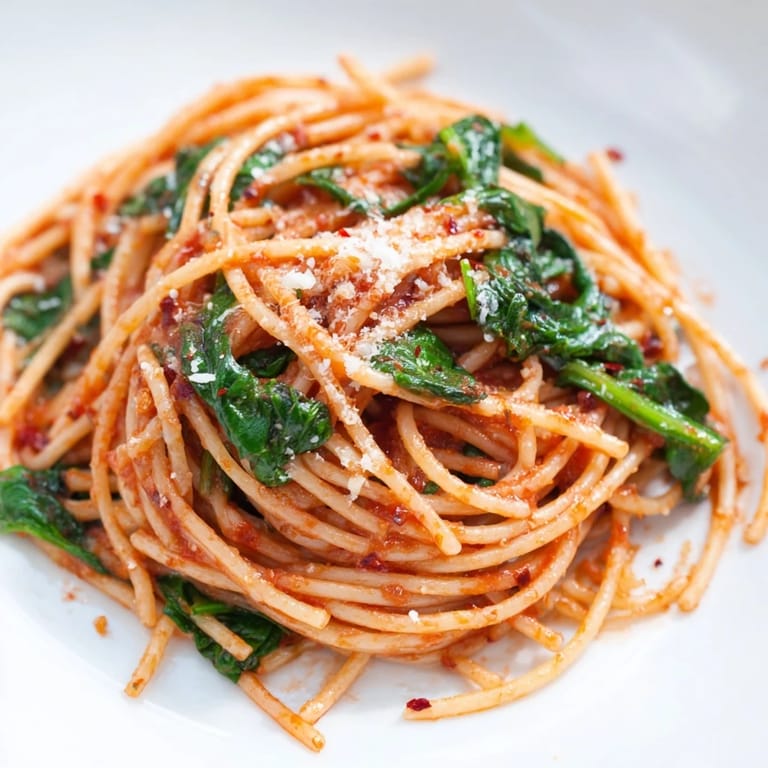
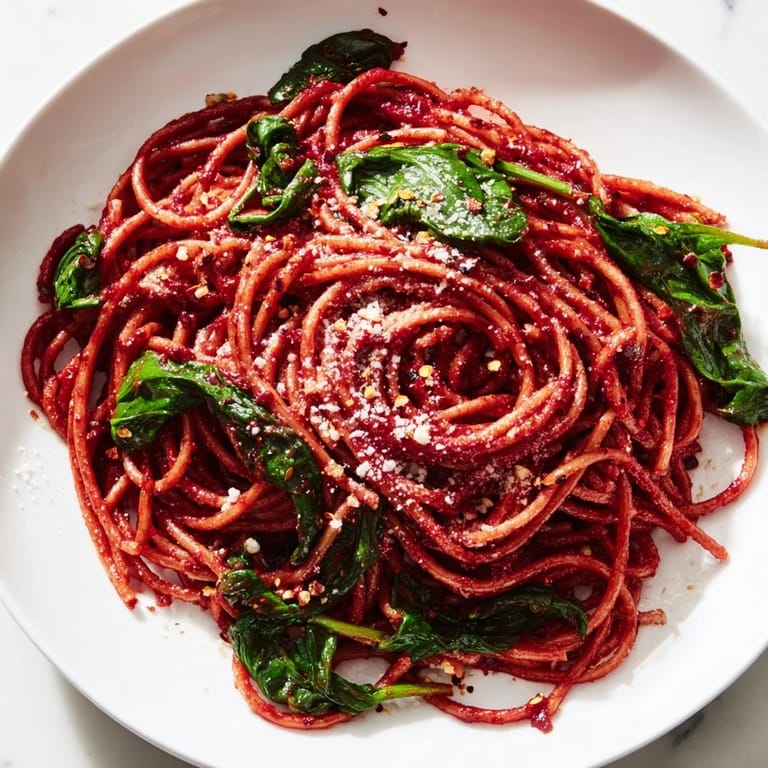
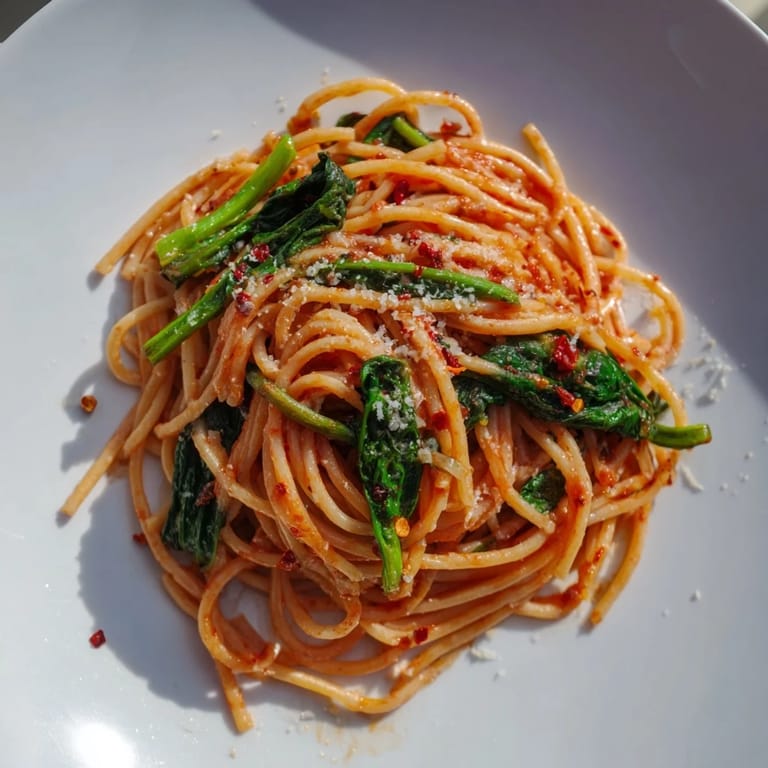
- Drain your pasta and add it right to the skillet, tossing everything so every strand gets coated in that gorgeous red sauce. If it looks too thick, splash in a little of that reserved pasta water until it's the consistency you like.
- Finish and serve:
- Stir in the Parmesan, crack some black pepper over the top, and taste it—adjust the seasoning if you need to. Serve it immediately while it's still steaming, and if you have fresh basil or extra Parmesan, scatter them over the top.
 Save to Pinterest
 This dish taught me that sometimes the most satisfying meals aren't the ones that take hours—they're the ones that let you taste every ingredient because there aren't many of them to hide behind. It became our default when we wanted something that felt like dinner, not just sustenance.
Why This Pasta Works on Busy Nights
The genius of this recipe isn't reinventing anything; it's understanding that fresh spinach wilting into warm marinara tastes expensive and homemade even though you're standing in your kitchen in yesterday's clothes. The pasta water is your secret weapon—that starchy liquid transforms a pile of ingredients into something cohesive and glossy. Once you've made this a few times, you stop reading the recipe and just move through it like a dance you've memorized.
Making It Your Own
I've thrown all sorts of things into this pan depending on what's lurking in the fridge: white beans for protein, sautéed mushrooms for earthiness, a splash of cream for richness, even a handful of sun-dried tomatoes when I was feeling fancy. The beauty is that it doesn't demand much—it's happy to be simple, but it also doesn't reject a little improvisation. Some nights I toast some breadcrumbs in butter and sprinkle them on top for crunch, or use burrata instead of Parmesan for something more luxurious.
Timing and Flexibility
Twenty minutes is genuinely all you need, but here's what I've learned: the sauce is actually better if you let it sit for a minute or two after you add the spinach, letting everything get to know each other before you add the pasta. If you're feeding more people, double the sauce but not the pasta—marinara stretches further than you'd think when you add that starchy pasta water. This is the kind of recipe that teaches you to trust your instincts instead of panic.
- Cook the pasta while you're making the sauce to save time, but don't let it sit—al dente means now.
- If your marinara looks watery, let it simmer a minute longer before adding the pasta to concentrate the flavor.
- Leftovers reheat beautifully and taste even better the next day, though they rarely last that long.
 Save to Pinterest
 This pasta has become my answer to the question "what's for dinner?" when there's no time and no energy for anything complicated. It reminds you that food doesn't have to be difficult to be delicious.
Recipe FAQs
- → What type of pasta works best for this dish?
Spaghetti or penne pasta hold the sauce well and cook to a perfect al dente texture, making them ideal for this preparation.
- → Can I use fresh spinach instead of baby spinach?
Yes, fresh spinach works well. Just ensure to wilt it properly in the sauce until tender to blend flavors nicely.
- → How can I adjust the sauce consistency if it’s too thick?
Add reserved pasta cooking water a little at a time to loosen the sauce while keeping it silky and well-coated.
- → What alternatives are there for Parmesan cheese?
You can use plant-based cheese substitutes for a vegan option or omit it entirely without losing much flavor.
- → Is it possible to add protein to this meal?
Cooked white beans or sautéed mushrooms are great additions to increase protein content without altering the dish’s core flavors.