 Save to Pinterest
 My first encounter with majboos happened on a dusty afternoon in Doha, when a colleague insisted I join her family for lunch. The aroma that greeted us at the door—a symphony of cinnamon, cardamom, and something mysterious I later learned was black lime—made me pause in the hallway. She caught my expression and smiled, saying this was the dish her grandmother made on Fridays, the one that brought everyone home. That single meal changed how I understood the relationship between spice and patience.
The first time I made it myself, I was nervous about the black limes—I'd only ever seen them at specialty markets, and they seemed intimidating. My kitchen filled with that same golden warmth I remembered, and by the time I lifted the lid after the final rest, my partner wandered in asking what smelled like home. That's when I realized majboos isn't just about feeding people; it's about creating a moment everyone walks into already hungry.
Ingredients
- Lamb (1.5 kg, bone-in): Bone-in meat stays juicier and enriches the broth with deep, savory flavor—it's worth seeking out, though chicken works beautifully if that's what you have.
- Basmati rice (2 cups): Rinsing removes excess starch so each grain stays separate; soaking helps it cook evenly and absorb the fragrant broth without turning mushy.
- Onions (2 large): Cooked until deep golden, they become sweet and almost caramelized, creating the flavor foundation for everything else.
- Black limes (loomi, 2 dried): These pierced, wrinkled gems release a citrusy, slightly fermented note that traditional cooks swear by—omit them only if absolutely necessary.
- Spice blend (coriander, cumin, turmeric, cinnamon, cardamom, cloves): Each spice plays a role; together they create that warm, complex Middle Eastern signature that makes this dish unmistakable.
- Saffron threads (½ tsp soaked): A small amount stretched across the rice adds color and an elusive floral sweetness that elevates the whole dish.
- Ghee (4 tbsp): Traditional and irreplaceable for that rich, nutty flavor, though oil works if ghee isn't available.
- Water or stock (4 cups): Stock deepens the savory notes; water works but won't add quite the same depth.
- Toasted almonds (¼ cup): Scattered on top for crunch and a subtle richness that contrasts with the tender meat and soft rice.
Tired of Takeout? 🥡
Get 10 meals you can make faster than delivery arrives. Seriously.
One email. No spam. Unsubscribe anytime.
Instructions
- Season and prepare your mise en place:
- Rub the lamb pieces with salt and pepper, and have your onions sliced, garlic minced, and spices measured out nearby. This calm before cooking makes the actual process feel unhurried.
- Caramelize the onions:
- Heat your ghee in a large, heavy-bottomed pot until it shimmers, then add onions and let them turn deep golden—about 10 minutes of patient stirring. You'll smell the sweetness developing, and that's exactly right.
- Build the aromatics:
- Stir in the garlic and green chilies for just a minute, letting them perfume the oil without browning.
- Brown the meat:
- Add lamb pieces in batches so they actually touch the hot surface and develop a golden crust on all sides—this takes about 8 minutes and creates deep, savory flavor.
- Add tomatoes and spices:
- Stir in the chopped tomatoes and let them soften and break down, about 5 minutes. Then add your entire spice blend, black limes, and bay leaves, stirring until every piece of meat is coated in aromatic dust.
- Braise the lamb:
- Pour in your water or stock, bring to a boil, then lower the heat, cover, and simmer gently for 45–50 minutes until the meat is so tender it practically falls apart. This is when your kitchen smells like a traditional Qatari home.
- Transition to rice:
- Remove the lamb pieces with a slotted spoon and set aside. The broth left behind is liquid gold—this is what makes the rice extraordinary.
- Layer and steam:
- Stir your soaked, drained rice gently into the hot broth, then nestle the lamb pieces back on top. Drizzle the saffron water across the rice for color and a delicate floral note.
- Final cook and rest:
- Cover the pot tightly, reduce heat to low, and cook for 25–30 minutes until the rice is fluffy and has absorbed all the liquid. Then remove from heat, keep covered, and let it rest for 10 minutes—this settling time is crucial.
- Finish with flourish:
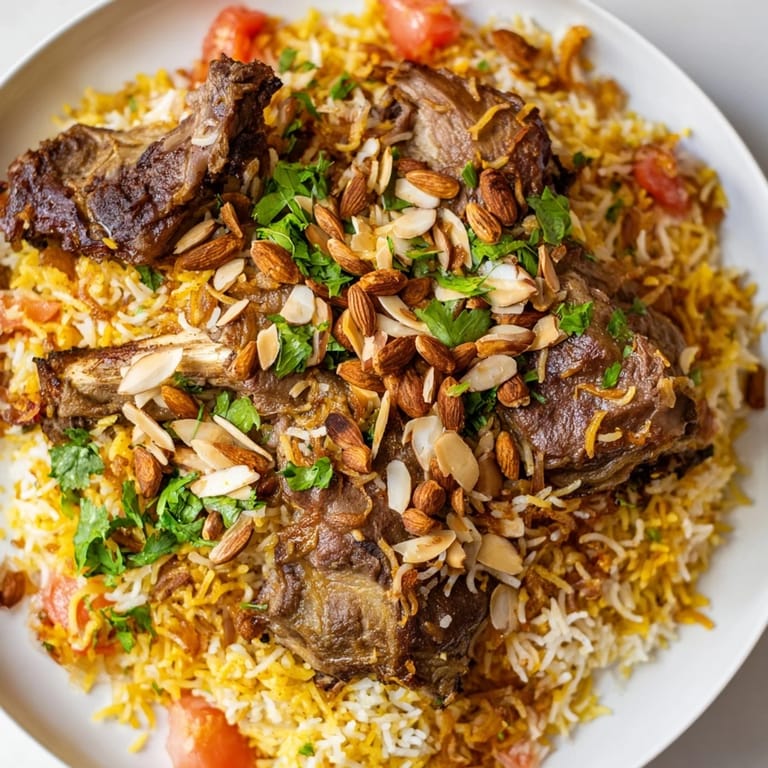
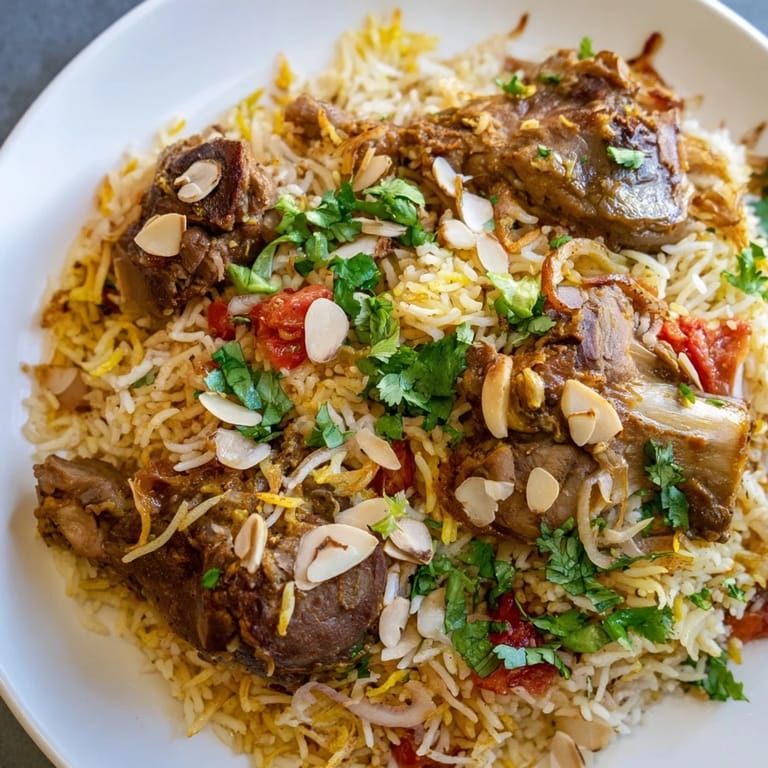
- Gently fluff the rice with a fork, arrange the lamb on a serving platter, and scatter toasted almonds and fresh cilantro across the top for texture and brightness.
 Save to Pinterest
 I learned the real magic of majboos when a friend's grandmother watched me eat it and simply nodded—no words, just that understanding nod that said I'd gotten it right. That's when I stopped thinking of it as a recipe and started thinking of it as a conversation across generations, each person adding their own rhythm to the same beautiful dance of spices and patience.
The Story of Black Limes
Black limes, or loomi, are fresh limes that have been sun-dried until they're dark and wrinkled—they look ancient and feel almost brittle in your hand. The first time I pierced one, I half-expected nothing to happen, but as it steeped in the broth, it released this subtle, almost fermented citrus note that made me understand why Qatari cooks consider them non-negotiable. They're not easy to find everywhere, but specialty Middle Eastern markets almost always carry them, and once you taste what they add, you'll make the effort.
Rice Technique Matters
Soaking your basmati rice for 30 minutes before cooking isn't just tradition—it hydrates the grains so they expand evenly and stay distinct rather than turning to mush. When you stir the rice into that lamb broth, you're not just cooking grains; you're letting them absorb all the savory, spiced liquid they've been steaming in, which is why every bite tastes like it's been seasoned throughout. The gentle stirring when you first add the rice helps distribute the broth evenly, but after that, resist the urge to stir—let the grains steam undisturbed.
Serving and Variations
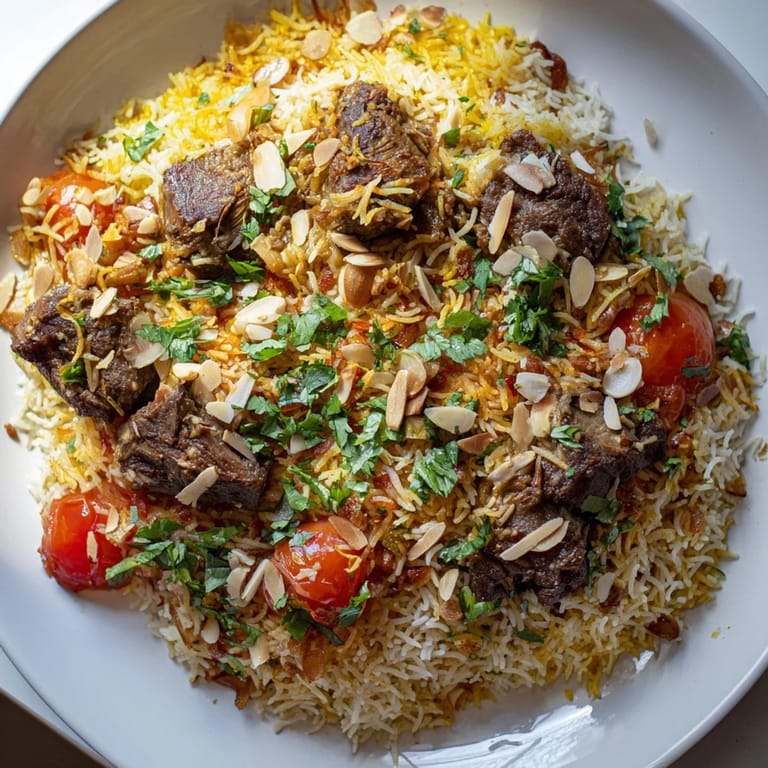
Majboos is traditionally served on a large platter where everyone gathers around, but it's equally at home on individual plates with the lamb arranged on top like a crown. Serve it alongside a cooling yogurt sauce, a bright tomato salad with fresh herbs, or even a spicy tomato condiment if your crowd likes heat. Some families make it with chicken instead of lamb, which cooks faster but loses some of that rich, deep flavor—adjust the braise time to about 25–30 minutes for chicken.
- If you find yourself without black limes, a combination of lime zest and a tiny pinch of sumac can create a similar tart, slightly mysterious note.
- Toasting your own almonds and cilantro from fresh gives the final dish more life than using pre-chopped versions.
- Leftover majboos actually improves after a day in the refrigerator, making it a brilliant dish for entertaining or meal prep.
 Save to Pinterest
 Every time I make majboos, I'm reminded that the best recipes are the ones that connect us—to places we've been, people we love, and traditions that taste like home. This is the dish I reach for when I want to slow down and cook with intention.
Recipe FAQs
- → What cut of meat works best for Qatari Majboos?
Bone-in lamb pieces are ideal for deep flavor, but chicken can serve as a lighter substitute without compromising taste.
- → How do black limes (loomi) affect the dish?
Black limes add a distinctive tangy, smoky aroma that enhances the meat’s richness and balances the spices beautifully.
- → Can I use regular rice instead of basmati?
Basmati is preferred for its fragrance and fluffiness, but long-grain white rice can be used with a slight difference in texture.
- → What is the purpose of soaking saffron in warm water?
Soaking saffron helps release its color and aroma, which infuse the rice during cooking for an authentic flavor and golden hue.
- → How should the lamb be cooked for best tenderness?
Simmer the meat gently in broth and spices until tender, usually 45-50 minutes, allowing flavors to meld and the meat to soften.
- → Are toasted almonds necessary for garnish?
Toasted almonds add a crunchy texture and nutty aroma that nicely complement the tender meat and fluffy rice.