 Save to Pinterest
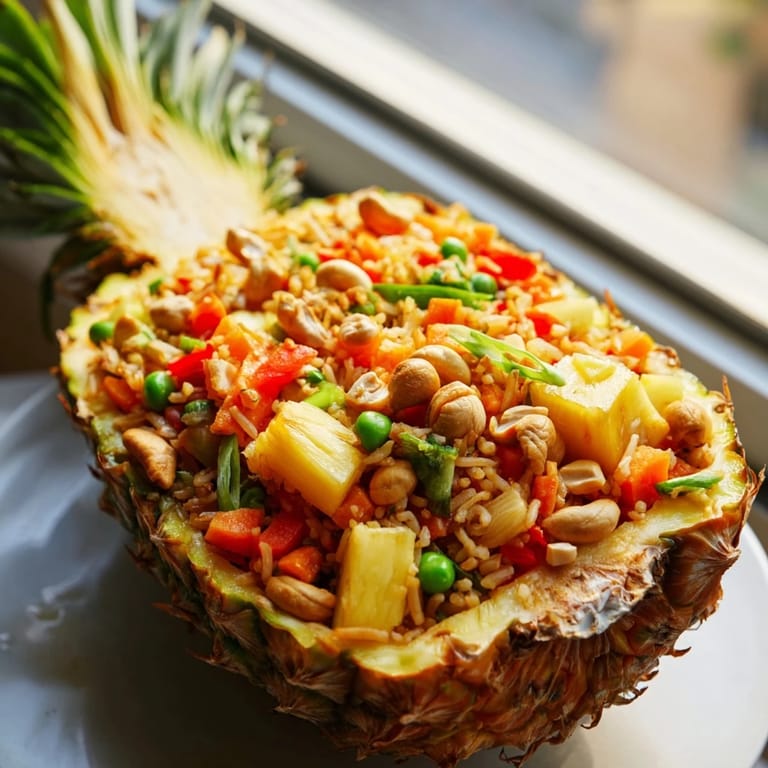
 I discovered pineapple fried rice on a sticky Bangkok evening when the air conditioning had died and my friend's grandmother refused to let me order delivery. She pulled a pineapple from her windowsill, carved it open with practiced efficiency, and suddenly the kitchen smelled like caramelized garlic and tropical fruit. Twenty minutes later, I was eating the best thing I'd tasted that summer, spooned straight from a hollowed shell that doubled as both plate and centerpiece. It taught me that sometimes the most memorable meals come from constraints rather than perfection.
I made this for a dinner party last spring when I wanted to impress without stress, and what stuck with me wasn't the compliments but watching a skeptical friend who insisted she didn't like pineapple go back for thirds. She was scraping the insides of the shell by the end of the night, and something about that moment—the surprise on her face—reminded me why I cook at all.
Ingredients
- 1 large ripe pineapple: Pick one that feels slightly soft at the stem and smells sweet; this is your vessel, so choose wisely and keep those leaves for drama.
- 3 cups cooked jasmine rice (preferably day-old): Fresh rice holds too much moisture and turns mushy, so this is one of those moments where leftovers are actually better than starting fresh.
- 2 tablespoons vegetable oil: Use neutral oil that won't compete with the fragrance of garlic and the sweetness coming through.
- 1 small onion, finely diced: This becomes almost invisible but builds the savory foundation that makes everything taste rounded.
- 2 cloves garlic, minced: Don't skip the mincing; rough chopped garlic burns too fast and tastes bitter instead of nutty.
- 1 medium carrot, diced: Cut everything the same size so pieces cook evenly and look intentional on the plate.
- 1 red bell pepper, diced: The color matters as much as the flavor here, so choose a bright red one that's already half the presentation.
- 2 eggs, lightly beaten (optional; omit for vegan): Scrambled eggs add richness and protein, but if you skip them, nobody will miss what they never knew was supposed to be there.
- 1/2 cup frozen peas: Frozen is actually perfect because they don't need thawing; they'll warm through in the rice and stay tender instead of turning to mush.
- 1/2 cup unsalted roasted cashews: These add texture and a whisper of luxury, and their neutral flavor lets the spices shine.
- 1/2 cup pineapple flesh, diced (from the hollowed pineapple): This is the secret move; fresh pineapple scattered through the rice caramelizes slightly and deepens the tropical flavor.
- 3 scallions, sliced: Save these for the very end so they stay bright and fresh instead of wilting into the rice.
- 1/4 cup raisins or golden sultanas (optional): They plump up from the heat and add bursts of concentrated sweetness that balance the salty soy.
- 2 tablespoons soy sauce (use tamari for gluten-free): This is your main seasoning anchor, so don't water it down and don't skip it.
- 1 tablespoon fish sauce (optional; omit for vegetarian/vegan): Two tablespoons seems like a lot but it dissolves into the rice and adds umami depth that makes people wonder what secret ingredient you used.
- 1 teaspoon curry powder: This whispers warmth without overpowering; adjust up if you like spice, down if you're cooking for cautious eaters.
- 1/2 teaspoon white pepper: It's milder than black pepper and dissolves seamlessly instead of leaving little sharp bites.
- 1 teaspoon sugar: Don't skip this; it's not about sweetness but about making all the other flavors pop and feel balanced.
- Salt, to taste: Add it at the end because soy sauce already carries salt, so you're adjusting, not starting.
- Fresh cilantro leaves: Chop these just before serving so they don't turn dark and bruised.
- Lime wedges: A squeeze of lime at the table lifts everything and brings brightness to each bite.
Tired of Takeout? 🥡
Get 10 meals you can make faster than delivery arrives. Seriously.
One email. No spam. Unsubscribe anytime.
Instructions
- Prepare your pineapple canvas:
- Slice the pineapple in half lengthwise, keeping the crown of leaves attached for that show-stopping look. Using a sharp knife and a steady hand, carve out the flesh, leaving a clean 1/2-inch shell that won't collapse when you fill it; dice half a cup of the pineapple flesh for cooking and set the shells aside like you're preparing a stage.
- Wake up the wok:
- Heat vegetable oil in a large wok or skillet over medium-high heat until it shimmers, then add the diced onion and minced garlic. You'll know it's ready when the smell hits you—sharp, fragrant, and suddenly your kitchen smells like something important is happening.
- Build the vegetable base:
- Add the carrot and bell pepper, stirring constantly for 2 to 3 minutes until the edges soften slightly but everything still has color and a tiny bit of resistance. This is when you're building flavor layers, not cooking everything to death.
- Scramble in the eggs (if using):
- Push the vegetables to one side of the wok, pour in the beaten eggs, and let them sit for a moment before scrambling gently until just set and still slightly creamy. Remove them to a plate if you want them to stay tender, or leave them in and keep stirring—either way works.
- Introduce the rice:
- Add the cooked rice, breaking up any clumps with the back of your spatula and stirring everything together so each grain gets coated with oil and flavor. This is where leftover rice's drier texture becomes an advantage, soaking up all the seasoning without turning into porridge.
- Layer in the good stuff:
- Stir in the peas, diced pineapple, cashews, and raisins (if using), mixing until everything is distributed evenly. The pineapple will start to release its juices slightly, which is exactly what you want.
- Season and finish:
- Pour in the soy sauce, fish sauce (if using), curry powder, white pepper, and sugar, stirring constantly for 2 to 3 minutes until the rice is heated through and the aromatics have melded. Taste it now and adjust salt as needed, keeping in mind that you're building savory warmth, not heat.
- Final touch:
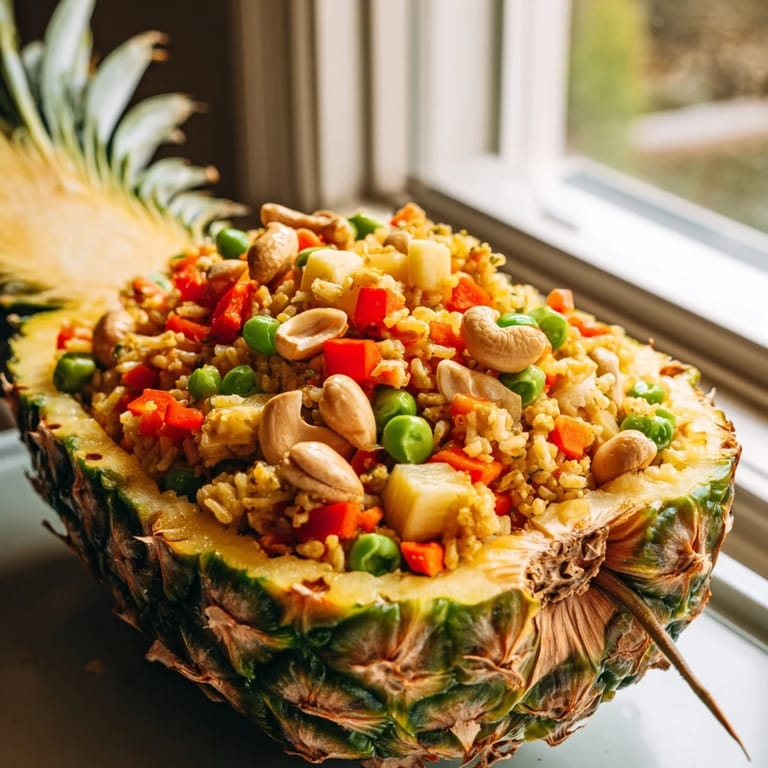
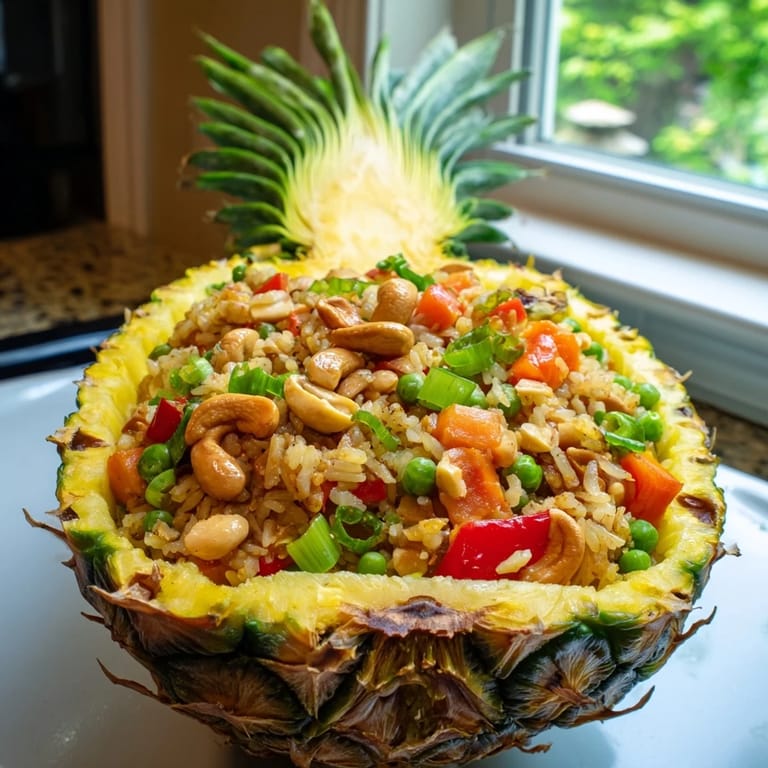
- Add the sliced scallions and toss everything one more time, then immediately spoon the rice into your hollowed pineapple halves. Work quickly so the scallions stay bright green and the whole dish feels fresh instead of overdone.
- Plate and serve:
- Garnish generously with fresh cilantro, nestle lime wedges alongside, and bring it to the table as is—let people see what they're about to eat. The presentation does half the work for you.
 Save to Pinterest
 My neighbor tasted this and asked if I'd taken a cooking class, which made me laugh because the whole thing came together in a wok and some borrowed wisdom. That moment reminded me that food doesn't need to be complicated to feel special; it just needs intention and a pretty vessel to land in.
Why Day-Old Rice is Your Secret Weapon
The first time I made this with fresh rice, I ended up with something that stuck to the spoon and tasted more like risotto than fried rice, which taught me a painful lesson. Day-old rice has lost some moisture and developed a slight crust on the grains, so when it hits the hot oil, each piece gets coated instead of clumping together. Store your leftover rice in the fridge uncovered or in a container with a paper towel to wick away steam, and pull it out about 30 minutes before cooking so it's not ice-cold when it hits the heat.
The Art of Vegetable Sizing
I used to chop everything haphazardly until I realized that uniform pieces not only cook evenly but also look intentional on the plate, which elevates the whole dish from weeknight dinner to something you'd serve guests. Everything should be roughly the same size as a pea or a bit smaller, so nothing steals the show and nothing lags behind in cooking time. This is one of those small details that separates rushed cooking from thoughtful cooking, and your guests will taste the difference even if they can't name it.
Making It Your Own
This recipe is a foundation, not a rulebook, so don't hesitate to swap in what you have or what you love.
- Add grilled chicken, shrimp, or crispy tofu to bulk it up into a complete meal rather than a side dish.
- If cilantro isn't your thing, finish with Thai basil or even just a scatter of fried shallots for crunch and elegance.
- Serve alongside a small bowl of Thai chili sauce or sriracha for people who want an extra kick without you having to build heat into the whole pot.
 Save to Pinterest
 Every time I make this, I think about that Bangkok evening and how a simple dinner became a memory because someone took the time to make something beautiful. That's really what cooking is about, and this dish happens to make it easy.
Recipe FAQs
- → Why is day-old rice recommended for fried rice?
Day-old or leftover rice works best because it's drier and won't clump together during cooking. Fresh, warm rice contains more moisture and tends to become mushy rather than maintaining individual grains.
- → Can I prepare the pineapple shells in advance?
Yes, you can hollow out the pineapple shells 2-3 hours ahead and store them in the refrigerator. Cover them lightly with plastic wrap to prevent browning and keep them fresh until you're ready to fill and serve.
- → How do I make this dish vegan?
Simply omit the eggs and fish sauce from the recipe. Both are optional ingredients. All other components are plant-based, making this naturally adaptable for vegan diets while maintaining authentic Thai flavors.
- → What proteins pair well with this dish?
Cooked shrimp, diced chicken breast, or crumbled tofu all work beautifully. Add your protein in step 5 along with the rice and vegetables. For best results, cook proteins separately first, then combine with the fried rice.
- → How do I achieve the perfect wok temperature?
Heat your wok or large skillet over medium-high heat until a drop of water sizzles on contact. This ensures quick cooking and proper caramelization of vegetables without burning. Adjust heat as needed during cooking to maintain consistent temperature.
- → Can I substitute cashews with other nuts?
Absolutely. Peanuts, almonds, or macadamia nuts work wonderfully. You can also use unsalted roasted varieties for better flavor control. Toast raw nuts lightly before adding for enhanced texture and taste.