 Save to Pinterest
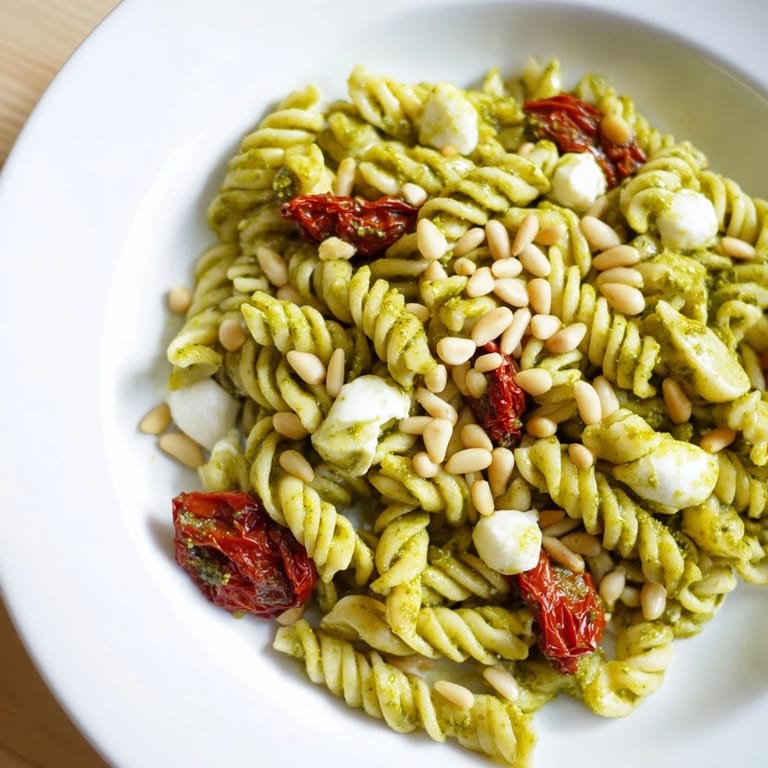
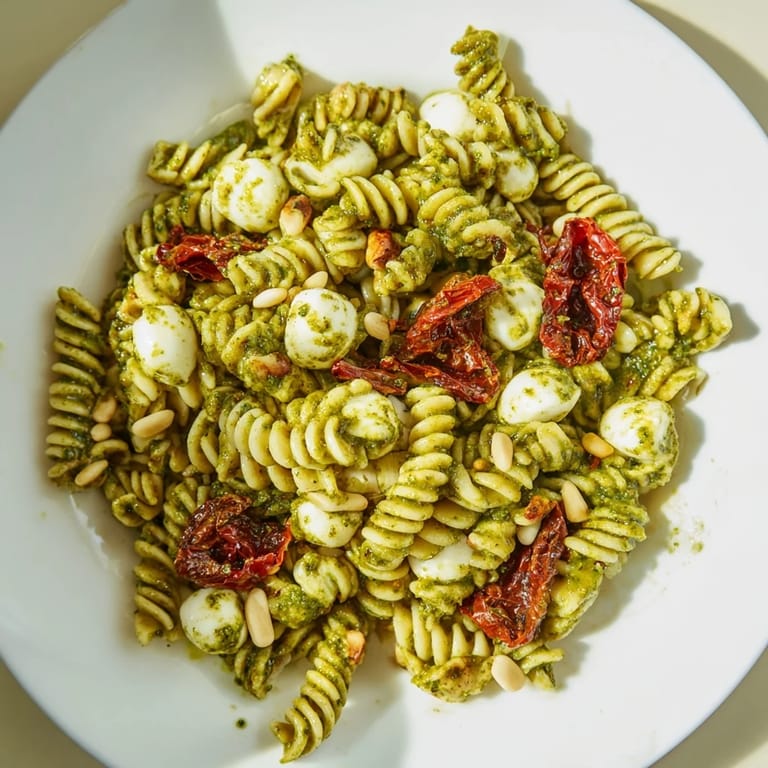
 There's something about the smell of fresh basil that instantly transports me back to a sweltering afternoon at my cousin's garden party, where she'd casually thrown together this pesto pasta salad in what felt like five minutes flat. I stood there sweating through my shirt, watching her toss warm pasta with vibrant green pesto like it was the easiest thing in the world, and I remember thinking: this is what summer tastes like. The moment the sun-dried tomatoes and creamy mozzarella hit the bowl, I understood why she made it every single time the weather turned warm.
I made this for my first picnic with someone I was trying to impress, and honestly, I was nervous the whole drive to the park that the pasta would get soggy or the pesto would separate. When we opened that container and the aroma hit us, they immediately asked for the recipe before we'd even sat down on the blanket. That's when I knew I'd stumbled onto something special.
Ingredients
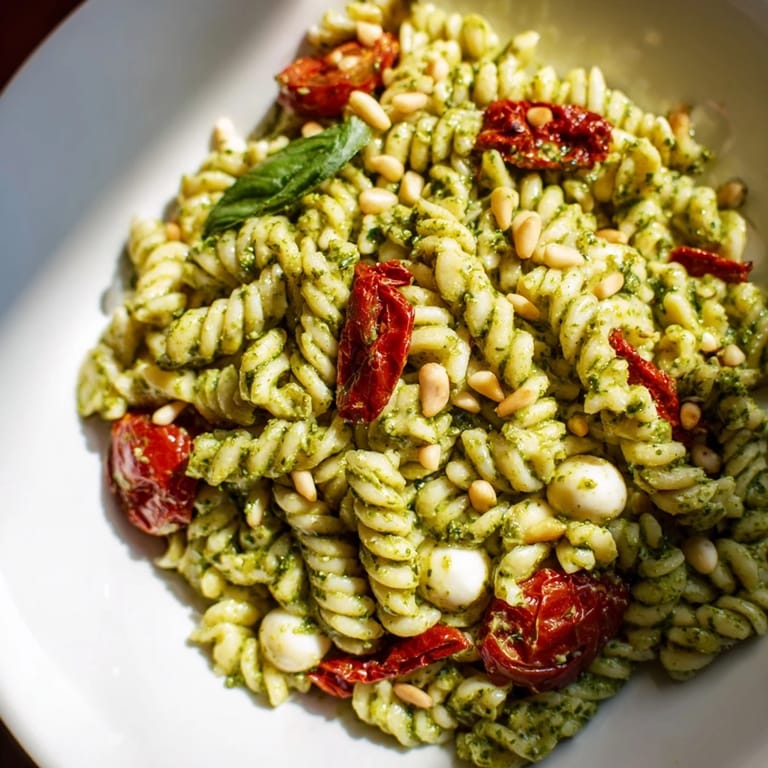
- Short pasta (fusilli, penne, or farfalle), 350g: The shape matters more than you'd think—the little ridges and twists catch the pesto and trap pockets of flavor with each bite, which is why I skip the smooth linguine for this one.
- Basil pesto, 100g: Whether you buy it or make it yourself, make sure it's vibrant green and fragrant, because that's where all your flavor is coming from.
- Sun-dried tomatoes, 100g: The concentrated sweetness and slight chew of these transformed my idea of what a salad could be the first time I used them.
- Fresh mozzarella balls, 200g: Room temperature is your friend here—cold mozzarella becomes rubbery, but warm pasta gently softening the cheese is magic.
- Pine nuts, 40g, lightly toasted: Toasting them brings out a nuttiness that store-bought rarely delivers, and the effort takes maybe two minutes in a dry pan.
- Fresh baby spinach, 50g (optional): I add this when I'm feeling virtuous, and it wilts slightly from the warm pasta, becoming silky rather than crunchy.
- Extra virgin olive oil, 2 tbsp: This is not the time to reach for the cheap bottle—the quality here shines through because there's nothing to hide behind.
- Salt, pepper, and lemon zest: These final touches are where you taste and adjust, making the dish entirely your own.
Tired of Takeout? 🥡
Get 10 meals you can make faster than delivery arrives. Seriously.
One email. No spam. Unsubscribe anytime.
Instructions
- Bring the water to a rolling boil:
- Fill a large pot with water and salt it generously—it should taste like the sea. Don't be shy here, because this is the only chance your pasta has to absorb flavor from within.
- Cook the pasta until just al dente:
- Follow the package directions, but stop a minute or two before you think it's done, because residual heat continues to cook it as you cool and toss it. You want it with just a bit of resistance when you bite, not soft throughout.
- Drain and cool the pasta:
- Run it under cold water to stop the cooking process, then let it sit for a minute so it's no longer steaming—this is crucial because hot pasta will wilt the spinach and cause the mozzarella to leak its liquid everywhere.
- Combine pasta, pesto, and olive oil:
- In your largest bowl, add the cooled pasta and pour the pesto over it, then drizzle with olive oil and toss like you mean it. Every strand should glisten and be kissed with green.
- Fold in the remaining ingredients:
- Add the sun-dried tomatoes, mozzarella, and pine nuts gently so you don't break apart the cheese—think of this as folding rather than tossing. If you're using spinach, add it now and let the residual warmth of the pasta do the work.
- Taste and season:
- This is non-negotiable—taste it with a clean spoon, then adjust salt, pepper, and lemon zest until it tastes like a better version of itself. Chill for at least an hour before serving if you have time.
 Save to Pinterest
 My neighbor tasted this at a summer gathering and actually sat down on my porch steps to finish her bowl, telling me about her childhood summers in Genoa and how this salad reminded her of home. That moment taught me that food is never just about the ingredients—it's about the memory and comfort you offer someone on a warm day.
The Toast Factor
I used to skip toasting the pine nuts because it felt like an extra step, but one afternoon I decided to spend two minutes warming them in a dry pan over medium heat, and it completely changed the dish. The warmth brings out this deeper, almost buttery flavor that makes the whole salad taste more sophisticated without any additional effort. It's the kind of small thing that takes a good recipe and makes it feel intentional.
Make-Ahead Strategy
This salad actually improves when you give it time, which is why it became my go-to dish for when I want to bring something to a gathering but don't have much time on the day of. I assemble it the morning of, and by the time we're ready to eat, the flavors have settled into harmony and the mozzarella has softened just enough. The cold from the fridge also makes it incredibly refreshing on hot days when nothing else sounds appealing.
Flexibility and Substitutions
What I love most about this dish is how forgiving it is once you understand the foundation—it's basil pesto, fresh cheese, and pasta, and everything else is negotiable based on what's in your kitchen or what you're craving. I've made versions with walnuts instead of pine nuts, added roasted red peppers, thrown in fresh arugula, or swapped the mozzarella for feta when that's what I had on hand. Each version tastes different but equally good, which means you can make this dish a hundred times and never get tired of it.
- Try chopped fresh basil or arugula stirred in at the last second for a peppery finish.
- Walnuts or almonds work beautifully if pine nuts aren't available or you want something more budget-friendly.
- A crisp white wine like Sauvignon Blanc or Pinot Grigio is the perfect pairing to complete the summer experience.
 Save to Pinterest
 This pasta salad taught me that the best meals don't require complicated techniques or exotic ingredients—they just need good ingredients treated with respect and a bit of care. It's become my summer signature, the dish people ask me to bring, and honestly, I'm not mad about it.
Recipe FAQs
- → What type of pasta works best?
Short pasta shapes like fusilli, penne, or farfalle hold the pesto well and provide pleasant texture.
- → Can I use homemade basil pesto?
Absolutely, homemade pesto adds fresh herbal notes and allows customization to taste.
- → How can I store leftovers?
Keep the salad refrigerated in an airtight container for up to two days to maintain freshness.
- → Are there good substitutes for pine nuts?
Toasted walnuts or almonds offer similar crunch and nutty flavor as alternatives.
- → Is it better served chilled or room temperature?
Both work well; chilling enhances refreshment, while room temperature accentuates flavors.