 Save to Pinterest
 The first time I made mung bean soup, raindrops were racing down my kitchen window as autumn was settling in. Something about the gentle simmer of these tiny green beans felt like an ancient ritual – transforming humble ingredients into liquid gold. My grandmother had mentioned mung beans were her go-to remedy during seasonal changes, but I'd never attempted making them myself until that chilly evening when my immunity needed a boost.
Last winter, my neighbor caught a terrible cold, and I remembered this soup. I packed it in my favorite thermos and walked it over to her door. The look on her face when she took her first spoonful – that moment of surprise at how something so simple could taste so complete – reminded me why sharing food is sometimes the purest form of care we can offer. She called me three days later asking for the recipe.
Ingredients
- Dried mung beans: These little powerhouses are surprisingly forgiving – I once forgot to soak them and just simmered them longer with excellent results.
- Cumin seeds: Toasting these whole rather than using ground cumin makes all the difference in creating that authentic depth of flavor.
- Fresh ginger: I keep mine in the freezer and grate it still frozen – it's actually easier to work with and the flavor remains intense.
- Vegetable broth: On busy days I use water with a splash of soy sauce instead and honestly sometimes prefer that lighter base.
- Lemon juice: Add this right at the end – I learned through multiple batches that acid added too early can prevent the beans from softening properly.
Tired of Takeout? 🥡
Get 10 meals you can make faster than delivery arrives. Seriously.
One email. No spam. Unsubscribe anytime.
Instructions
- Awaken the spices:
- Heat your pot over medium heat and add those cumin seeds, letting them dance until they release their nutty aroma – usually about a minute.
- Build the aromatic base:
- Add your onion, garlic and ginger, watching as they soften and begin to release their oils. The kitchen should be filling with a fragrant invitation by now.
- Layer in vegetables:
- Toss in the carrots and celery, giving everything a good stir. Their subtle sweetness will balance the earthiness of the beans.
- Bloom your spice palette:
- Add the turmeric, coriander, black pepper, cinnamon and bay leaf, stirring constantly. You'll notice the color transform immediately as the spices coat everything in golden warmth.
- Introduce the stars:
- Add those soaked mung beans, tomato, and broth, then give it all a good stir to marry the flavors. The beans will absorb all that spiced goodness as they cook.
- Simmer patiently:
- Let everything bubble gently for about 40 minutes. Your kitchen will smell increasingly wonderful as the soup develops its character.
- Balance the flavors:
- Fish out that bay leaf, then add salt and that crucial squeeze of lemon juice. This final brightness lifts everything and makes the flavors sing.
- Garnish with care:
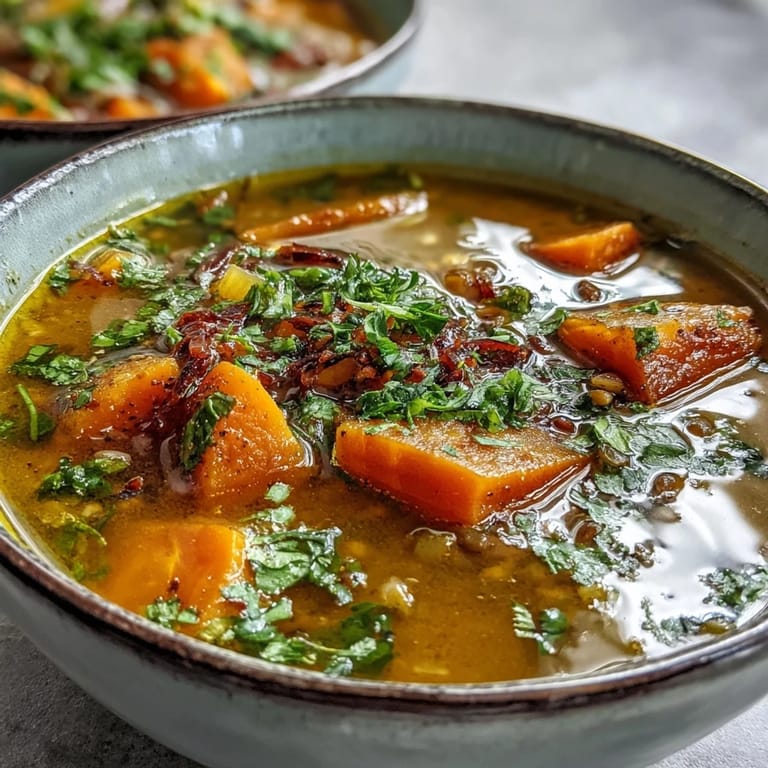
- Ladle into bowls and scatter with fresh cilantro. I love watching people's expressions as the steam carries the aroma up with their first spoonful.
 Save to Pinterest
 My sister visited last spring during a particularly stressful time in her life, and I made this soup without saying a word about its reputed digestive benefits. After dinner, we sat on the porch watching fireflies appear, and she mentioned feeling more centered than she had in weeks. Sometimes food works magic beyond its ingredients – creating space for healing in ways we never directly acknowledge.
Serving Suggestions
The beauty of this soup lies in its versatility at the table. One evening I served it alongside warm naan bread that I had quickly heated on the stove flame, letting it puff slightly before brushing with a little ghee. The way the bread soaked up the broth created this perfect bite that had my dinner guests practically silent for the first few minutes – always the sign of a successful dish.
Storage Tips
This soup actually improves with time as the flavors continue to develop. I once made a double batch on Sunday and noticed by Wednesday that the spices had mellowed and melded in a way that transformed the leftovers into something even more special than the original serving. Just be sure to cool it completely before refrigerating to preserve that perfect texture of the beans.
Seasonal Adaptations
I've made this soup in every season and found ways to adapt it to whatever the weather calls for. During summer heatwaves, I increase the lemon juice and add cooling cucumber and mint as garnish instead of cilantro, while winter versions get a dollop of coconut cream and extra cinnamon.
- Spring variation: Add tender peas and asparagus tips in the final 5 minutes of cooking for a celebration of green.
- Summer twist: Serve it at room temperature with extra lemon and a swirl of yogurt for a refreshing meal.
- Winter warmth: Stir in a spoonful of tomato paste with the spices and finish with a drizzle of chili oil for extra insulation against the cold.
 Save to Pinterest
 This humble mung bean soup has become more than just a recipe in my collection – it's become a ritual of care, both for myself and those around my table. May it bring the same warmth and nourishment to your kitchen.
Recipe FAQs
- → Do I need to soak mung beans before cooking?
Yes, soaking dried mung beans for 2 hours helps them cook more evenly and reduces simmering time. This step also makes them easier to digest and ensures a creamy texture in the final dish.
- → Can I use red lentils instead of mung beans?
Red lentils work beautifully as a substitute and cook even faster, typically needing only 20-25 minutes of simmering. They'll create a slightly thicker, creamier consistency while maintaining the same nourishing qualities.
- → How long does this soup keep in the refrigerator?
Stored in an airtight container, this soup keeps well for 4-5 days. The flavors actually deepen over time, making it an excellent option for meal prep. Reheat gently on the stovetop, adding a splash of water or broth if needed.
- → What makes this soup good for digestion?
Mung beans are naturally easy to digest and known in Ayurvedic traditions for their cooling, balancing properties. The addition of ginger, turmeric, and cumin further supports digestive health while adding depth of flavor.
- → Can I freeze this soup?
Absolutely. Portion cooled soup into freezer-safe containers, leaving some space for expansion. It freezes well for up to 3 months. Thaw overnight in the refrigerator and reheat on the stovetop, stirring occasionally.
- → How can I make this soup more filling?
Add a splash of coconut milk during the final 10 minutes for richness, or serve over steamed rice. You can also increase the vegetables or add diced potatoes for extra heartiness without compromising the traditional flavors.