 Save to Pinterest
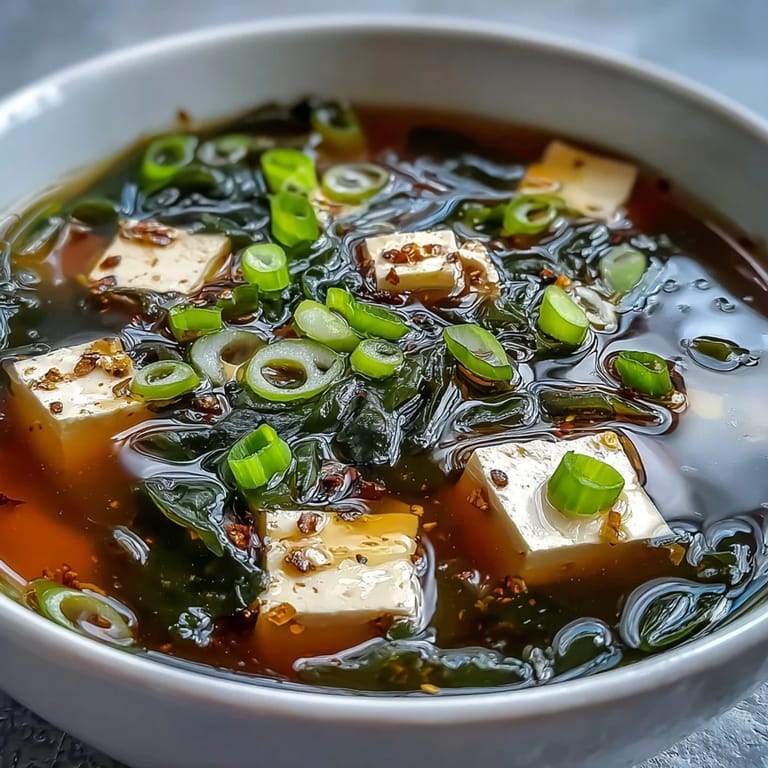
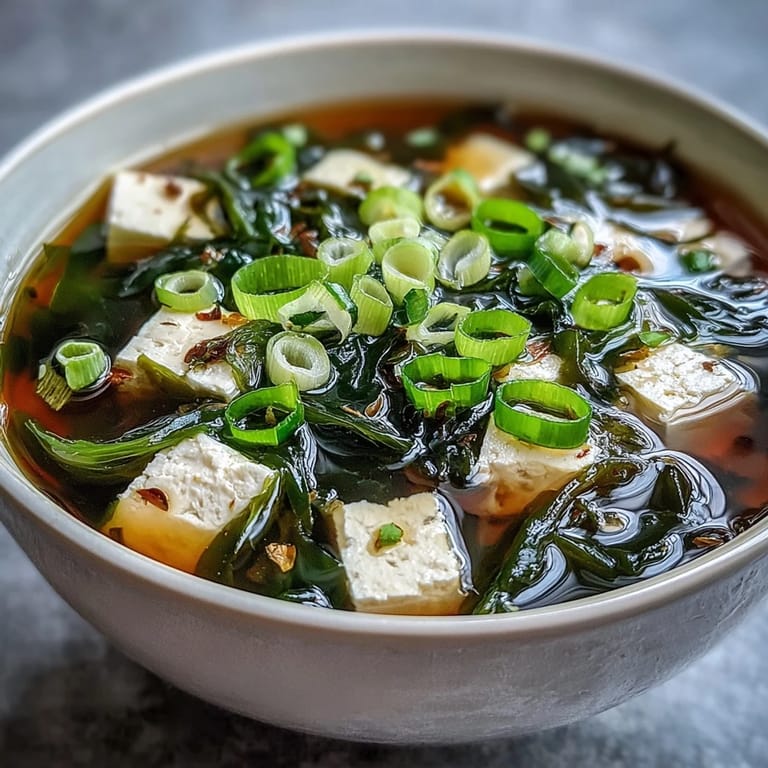
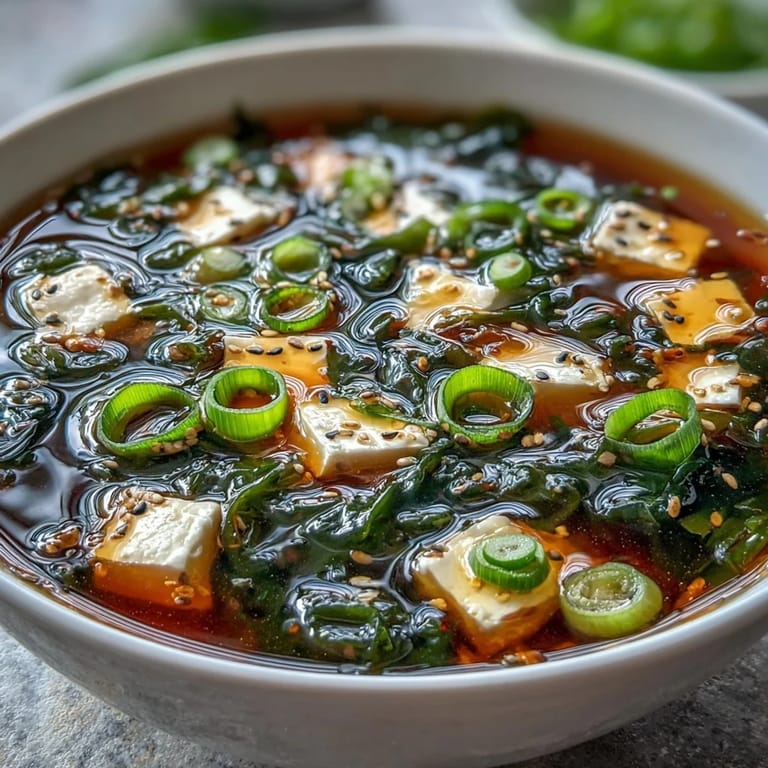
 There's something almost meditative about the moment dashi stock begins to steam, that delicate aroma filling the kitchen before anything else happens. My first proper miso soup came together one quiet morning when I wasn't trying to impress anyone—just myself, really—and I realized how five simple ingredients could taste like comfort distilled into a bowl. The silken tofu breaks apart on your tongue, the wakame unfurls with a subtle ocean note, and the miso brings this warm, umami depth that makes you slow down. It's the kind of soup that doesn't demand much from you, but gives back everything you need.
I made this for my grandmother after she mentioned offhandedly that she missed having miso soup at home, and watching her take that first spoonful—the way her shoulders relaxed—told me everything. She started telling me stories about Tokyo mornings and her mother's kitchen, and suddenly the soup became a bridge between generations instead of just lunch. That's when I understood this isn't restaurant food or fancy food; it's the kind of cooking that connects people to their own memories.
Ingredients
- Dashi stock: This is your foundation, and vegetarian dashi made from kombu and shiitake works beautifully if you're avoiding fish—the umami comes through just as deep and satisfying.
- White or yellow miso paste: The gentler cousin of red miso, bringing sweetness and approachability without overwhelming the other flavors; keep it in the fridge once opened, and it'll last for months.
- Silken tofu: The softer texture matters here because it absorbs the broth's warmth without crumbling apart; firmer varieties will feel dense by comparison.
- Dried wakame seaweed: A quick soak brings it back to life with tender texture and mineral notes that anchor the whole bowl.
- Scallions: They're the bright finishing note, adding a whisper of sharpness that makes everything else taste more like itself.
Tired of Takeout? 🥡
Get 10 meals you can make faster than delivery arrives. Seriously.
One email. No spam. Unsubscribe anytime.
Instructions
- Warm the dashi gently:
- Pour the stock into your saucepan and let it heat over medium, listening for that first quiet simmer rather than a rolling boil. You want steam rising gently, not aggressively.
- Revive the seaweed:
- While the stock warms, let the wakame soak in cold water for five minutes—it'll soften and open up, ready to add later. Drain it well so you're not adding excess water.
- Dissolve the miso carefully:
- Scoop miso paste into a small bowl and pour in one ladle of hot dashi, then whisk until it's completely smooth with no lumps. This prevents the paste from clumping when it hits the hot broth.
- Warm the tofu and seaweed:
- Add both to the simmering dashi and let them heat for two to three minutes—the tofu is already soft, so you're just warming it through gently. Watch the surface for tiny bubbles rather than a vigorous boil.
- Finish with miso off the heat:
- Remove the pan from heat, then stir in your dissolved miso paste with care. Once miso goes in and the heat stays off, the living cultures and delicate flavors stay intact.
- Serve with fresh garnish:
- Ladle into bowls, scatter the sliced scallions over top, and serve immediately while the steam is still rising. This is when it tastes most alive.
 Save to Pinterest
 There was an evening when my roommate came home from a difficult day at work, saw me ladling this into bowls, and asked if they could have some without saying much else. We sat across from each other mostly quiet, just eating, and by the end they looked settled again—like their nervous system had remembered how to trust the world. That's when I stopped thinking of miso soup as something simple and started understanding it as medicine.
Choosing Your Miso Wisely
The miso paste you choose shapes everything about this soup's personality. White miso brings sweetness and a lighter touch, while red miso leans into deeper, more fermented notes—and honestly, mixing them teaches you something about balance. I learned this by accident one day when I grabbed two jars at once, and the combination was so compelling I've done it intentionally ever since. Your local Japanese market often has fresher options than what's sitting on mainstream supermarket shelves, and the staff can guide you toward pastes that match what you're after.
Building Flavor Beyond the Basics
Once you've made this version a few times and it feels natural, the soup becomes your canvas for small experiments. Thinly sliced mushrooms add an earthy second layer, fresh spinach brings a different kind of green, and even a whisper of ginger can wake things up without taking over. The restraint is important—this soup's power comes from clarity, not clutter, so each addition should feel like it's deepening something rather than adding noise. I think of it as learning to listen to what the base ingredients are saying, then adding just enough to help them speak a little louder.
Serving and Pairing
Miso soup fits into a meal in unexpected ways once you stop thinking of it as only an appetizer. A bowl with steamed rice becomes a light but complete lunch, while a smaller serving before dinner settles your stomach and opens your appetite without filling you up. I've served it at breakfast before a long day, at dinner after something heavy, and even as a late-night comfort when sleep felt far away. The versatility comes from how gently nourishing it is—your body feels cared for without being overwhelmed.
- Pair a full bowl with rice and roasted vegetables for a complete meal that leaves you satisfied but not sluggish.
- Serve a smaller portion before other courses to awaken your palate and ease digestion gracefully.
- Keep the components separate and assembled just before serving so the tofu stays tender and the aromatics stay bright.
 Save to Pinterest
 This soup reminds me that the most profound meals are often the simplest ones, built on respect for ingredients rather than complexity. Let it teach you something about listening to what's in front of you.
Recipe FAQs
- → What type of miso works best?
White miso (shiro) offers a milder, sweeter profile ideal for beginners. Yellow miso provides a balanced umami flavor. For deeper intensity, blend white and red miso pastes together.
- → Can I make this vegan?
Absolutely. Use kombu and shiitake-based dashi instead of traditional bonito fish stock. Most miso pastes are naturally plant-based, though always verify the ingredients list to be certain.
- → Why shouldn't I boil miso?
High heat destroys the beneficial probiotics in fermented miso and can create a gritty texture. Dissolving it in warm liquid separately, then stirring it off the heat preserves both nutrients and smooth consistency.
- → How long does leftover soup keep?
Store in an airtight container for 2-3 days maximum. Reheat gently without boiling to maintain the miso's benefits. The tofu may soften further, but the flavors will continue to develop.
- → What can I add for more substance?
Thinly sliced shiitake mushrooms, fresh spinach, or cubed sweet potato work beautifully. For extra protein, add edamame or cooked udon noodles to transform this into a heartier bowl.