 Save to Pinterest
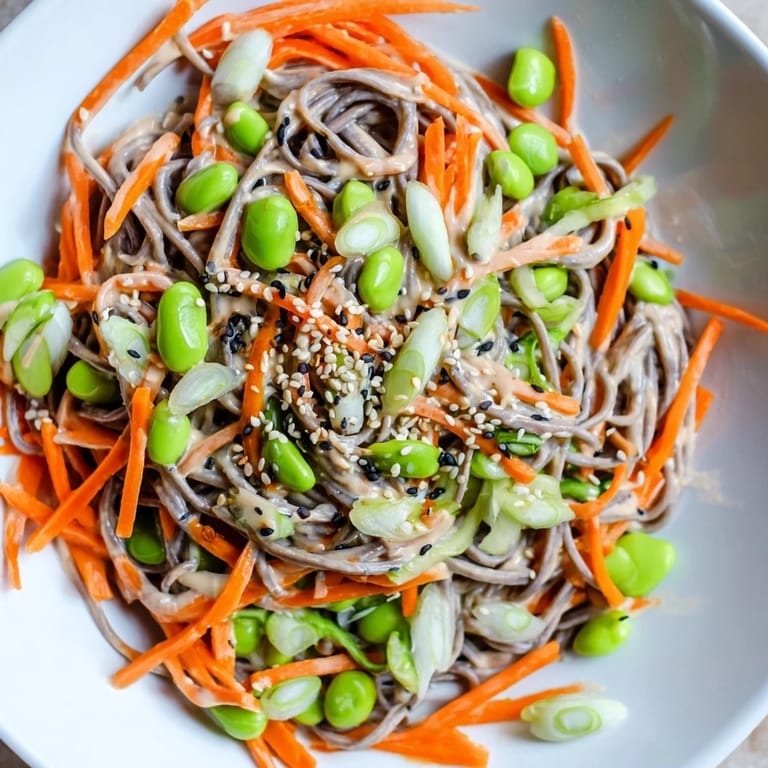
 There's something about the smell of sesame oil hitting a hot pan that immediately transports me to a small noodle shop tucked into a Bangkok side street. But this salad doesn't need that drama—it's the kind of dish I throw together on sweltering afternoons when the last thing I want is a hot stove. Cold noodles, crisp vegetables, and that silky sesame dressing do all the heavy lifting while I sit in the kitchen with an iced tea, watching the flavors come together.
I made this for a potluck on the hottest day of the summer, and it was the only dish that came home empty. One friend asked for the recipe three times before leaving, and another admitted she'd been eating it straight from the container in the car. That's when I realized this wasn't just lunch—it was the kind of food people actually want to eat.
Ingredients
- Soba noodles or thin spaghetti (250 g): Soba has a lovely nutty quality that pairs perfectly with sesame, but thin spaghetti works beautifully too and costs less. I rinse mine under cold water until they're completely chilled—that step makes all the difference.
- Cucumber (1 medium, julienned): The crispness cuts through the richness of the dressing, so don't skip the ice bath if your cucumber isn't as crisp as you'd like.
- Carrots (2 medium, julienned): A vegetable peeler and steady hand work better than a knife for getting those fine strands that coat beautifully in dressing.
- Edamame (1 cup, cooked and cooled): Frozen edamame save you time and honestly taste just as good as fresh—I keep them stocked in my freezer year-round.
- Spring onions (2, thinly sliced): Add these right before serving so they stay crisp and give you those little bursts of brightness with each bite.
- Toasted sesame seeds (2 tbsp): Don't buy pre-toasted—toast them yourself in a dry pan for two minutes and your entire dish will taste richer and more alive.
- Tahini or toasted sesame paste (3 tbsp): This is the backbone of your dressing, and toasted sesame paste has twice the flavor of regular tahini if you can find it.
- Soy sauce (2 tbsp): Use tamari if gluten matters to you, and taste as you go because brands vary wildly in saltiness.
- Rice vinegar (1 tbsp): The gentle acidity here is key—it doesn't overpower like white vinegar would.
- Toasted sesame oil (1 tbsp): A little goes a long way, and this is where you really taste quality, so don't buy the cheapest bottle.
- Honey or maple syrup (1 tbsp): This balances the umami and makes the dressing taste more sophisticated than it has any right to be.
- Fresh ginger (1 tsp, grated): Freshly grated makes a difference—jarred ginger tastes flat by comparison.
- Garlic (1 clove, finely minced): One clove is all you need, and mincing it small means it distributes evenly instead of giving you garlic shocks.
- Water (2–3 tbsp): This thins the dressing to the perfect pourable consistency without watering down the flavor.
Tired of Takeout? 🥡
Get 10 meals you can make faster than delivery arrives. Seriously.
One email. No spam. Unsubscribe anytime.
Instructions
- Cook your noodles until they're tender but still have a little bite:
- Boil a large pot of salted water and cook the noodles according to the package, then drain them in a colander. Rinse under cold running water until they're completely cooled, tossing them gently with your fingers so they separate and don't clump together.
- Whisk your dressing into something silky and smooth:
- In a large bowl, combine the tahini, soy sauce, rice vinegar, sesame oil, honey, ginger, and garlic, then whisk it all together. Add the water gradually—start with 2 tablespoons and keep whisking until the dressing flows like you could pour it, adjusting more water if it's too thick.
- Toss everything together until every strand is coated:
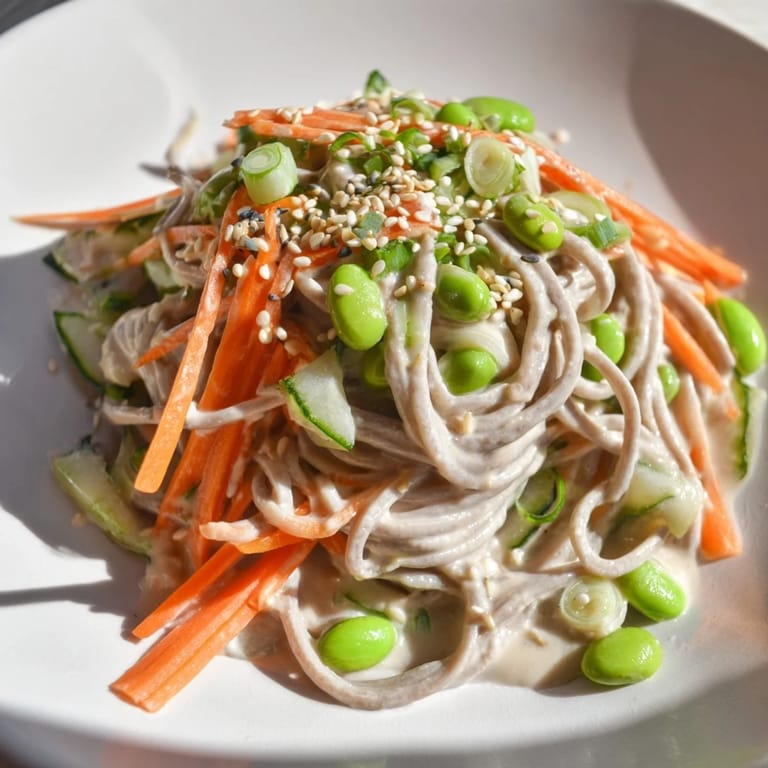
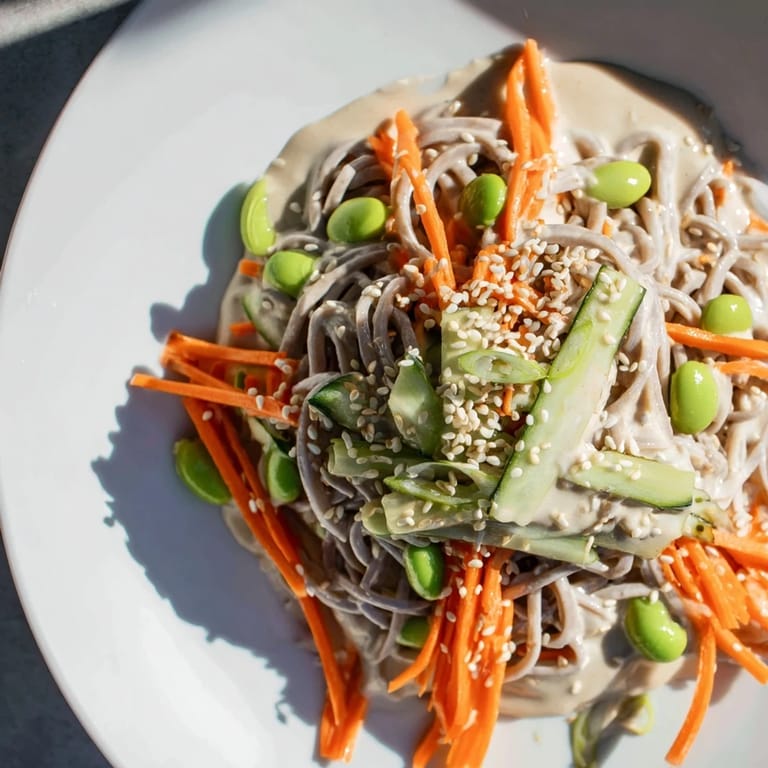
- Add your cooled noodles, cucumber, carrots, and edamame to the bowl with the dressing and toss gently but thoroughly, using two forks or tongs to make sure the dressing reaches every corner. The noodles should glisten and look creamy, not dry.
- Finish with brightness and crunch:
- Sprinkle the spring onions and toasted sesame seeds across the top, then add any optional garnishes you're using. This is also when you'd add cilantro, mint, crushed peanuts, or cashews if you want that final layer of flavor.
- Chill before serving so the flavors marry:
- Cover the bowl and refrigerate for at least 10 minutes—longer is fine, and the salad actually tastes better the next day when everything has had time to get friendly with the dressing.
 Save to Pinterest
 My mother tasted this straight from the container one evening while standing at the kitchen counter, and without saying anything, she just smiled and nodded. That quiet approval meant more to me than any compliment, because I knew she understood that this was the kind of food that nourishes without making a fuss about it.
Why This Works as Lunch
Cold noodles are deceptively smart—they're filling enough to be a complete meal but light enough that you don't feel weighted down afterward. The sesame dressing is creamy without dairy, so you get that satisfaction factor without any of the heaviness. This salad lives in that perfect space between comfort and refresh, which is exactly what you need when the weather is warm and your appetite is uncertain.
Making It Your Own
The magic of this recipe is that it's a foundation, not a rule. I've made it with shredded chicken, crispy tofu, grilled shrimp, and even leftover roasted vegetables without changing anything about how it comes together. One friend adds a fried egg on top, another sprinkles everything with chili flakes, and another swears by adding a handful of fresh herbs at the very last second. The dressing holds everything together so gracefully that you can honestly pivot based on whatever you have in your kitchen.
- Cooked chicken or tofu adds protein and turns this into a proper dinner instead of a side dish.
- Swap any vegetables for what's fresh at your market—bell peppers, snap peas, radishes, or shredded cabbage all work beautifully.
- Add a soft-boiled egg or drizzle of sriracha if you want to change the energy of the whole dish.
The Dressing That Changes Everything
The sesame dressing is where this salad lives or dies, so it deserves a moment of attention. The combination of tahini and sesame oil creates a richness that feels indulgent without being heavy, while the soy sauce and rice vinegar keep it balanced and bright. I've learned that the ratio matters—too much sesame oil and it tastes overwhelming, too little and it loses the whole point. The honey is the secret that makes people ask if there's cream in there, and the ginger and garlic are what prevent it from tasting one-dimensional or sweet.
 Save to Pinterest
 This salad has become my go-to dish when I want to feel like I cooked something thoughtful without spending my evening in the kitchen. It's the kind of food that makes you feel good, tastes better than it should, and somehow always brings people back for seconds.
Recipe FAQs
- → Can I make this dish gluten-free?
Yes, substitute soba noodles with rice noodles and use tamari instead of soy sauce to keep it gluten-free.
- → What protein options work well here?
Edamame provides plant-based protein, but shredded cooked chicken or tofu can be added for extra protein variety.
- → How should I prepare the noodles for best texture?
Cook noodles until tender, rinse with cold water, and drain well to prevent clumping and to keep them cool for serving.
- → Can I adjust the dressing's sweetness and acidity?
Absolutely, feel free to vary the honey or maple syrup amount and rice vinegar to suit your taste preferences.
- → What garnishes complement this dish?
Fresh herbs like cilantro or mint, crushed peanuts or cashews, and lime wedges add brightness and crunch.