 Save to Pinterest
 I discovered muhammara at a small restaurant in Aleppo, though truthfully it was the smell that found me first—that intoxicating blend of charred pepper and toasted walnut smoke drifting from their kitchen. The owner's daughter noticed my hesitation and placed a tiny spoonful on a piece of pita before I could politely decline, and within seconds I understood why this dip is treated like treasure across Syria and beyond. It's not fancy, but it tastes like someone who knows exactly what they're doing decided to share their lunch with you.
My friend Layla brought this to a potluck with a note saying it was her grandmother's version, and I watched people return to the bowl three times before dinner was even served. She told me later that her grandmother used to make it by hand with a mortar and pestle, and that she'd always taste it at least five times before serving, adjusting the molasses and lemon until it made her close her eyes. Layla skips a step now and then to save time, but she never skips that final taste.
Ingredients
- Red bell peppers (3 large): These are the star—you need them deeply charred so their sweetness becomes almost smoky and their flesh collapses into silky submission.
- Walnuts (1 cup, lightly toasted): Toasting them yourself makes a real difference in depth; raw walnuts taste flat by comparison.
- Pomegranate molasses (2 tbsp): This is the secret weapon that makes people pause mid-bite and ask what that flavor is—it's tart and complex in ways lemon can never be alone.
- Garlic (2 cloves): Two is enough; more will overpower the delicate balance between sweet pepper and tangy molasses.
- Breadcrumbs (2 tbsp): They're a binder and texture agent that keeps everything cohesive without making it heavy.
- Smoked paprika (1/2 tsp) and Aleppo pepper (1/2 tsp): These spices whisper rather than shout, adding warmth and a gentle heat that lingers.
- Cumin (1 tsp), salt, and black pepper: Standard players, but essential for tying all the flavors together.
- Extra virgin olive oil (2 tbsp, plus more for finishing): Use good oil here—it's not cooked, so its flavor matters.
- Lemon juice (1–2 tbsp): Taste as you go; you're balancing tart against tart, so restraint is key.
- Sesame seeds (1 tbsp, optional): A garnish that adds crunch and nods to how it's traditionally served.
Tired of Takeout? 🥡
Get 10 meals you can make faster than delivery arrives. Seriously.
One email. No spam. Unsubscribe anytime.
Instructions
- Char the peppers until they surrender:
- Preheat your oven to 220°C (425°F), lay the whole peppers on a baking tray, and roast for 20–25 minutes, turning them every few minutes so they char evenly on all sides. You're looking for blackened, blistered skin all over—this is where the flavor comes from.
- Steam them back to tenderness:
- Move the hot peppers to a bowl and cover it tightly with plastic wrap or a plate, then step away for 10 minutes and let the steam do the work. The skins will loosen completely, making peeling almost meditative—just cool them slightly first, then rub the charred skin away with your fingers or a damp cloth.
- Build the base in your food processor:
- Combine the peeled peppers, toasted walnuts, garlic, breadcrumbs, cumin, smoked paprika, Aleppo pepper, salt, and black pepper, then pulse until the mixture is coarse and chunky—it should hold some texture.
- Add the flavor and fat:
- Pour in the pomegranate molasses, olive oil, and lemon juice, then process until the mixture is smooth but still has character—it shouldn't be baby food. Taste it now and adjust: more molasses for deeper tang, more lemon for brightness, more oil for creaminess.
- Finish like someone who knows what they're doing:
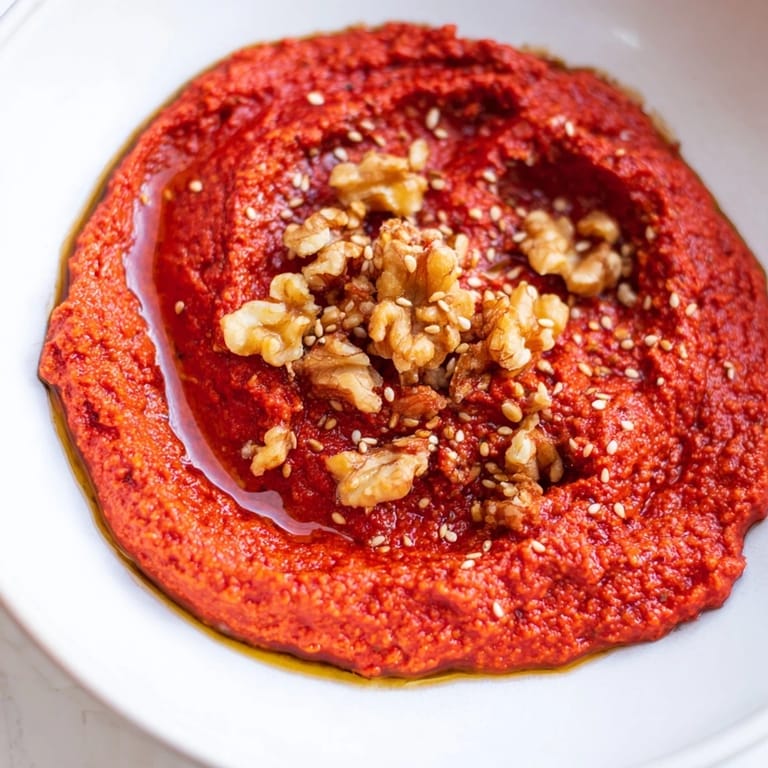
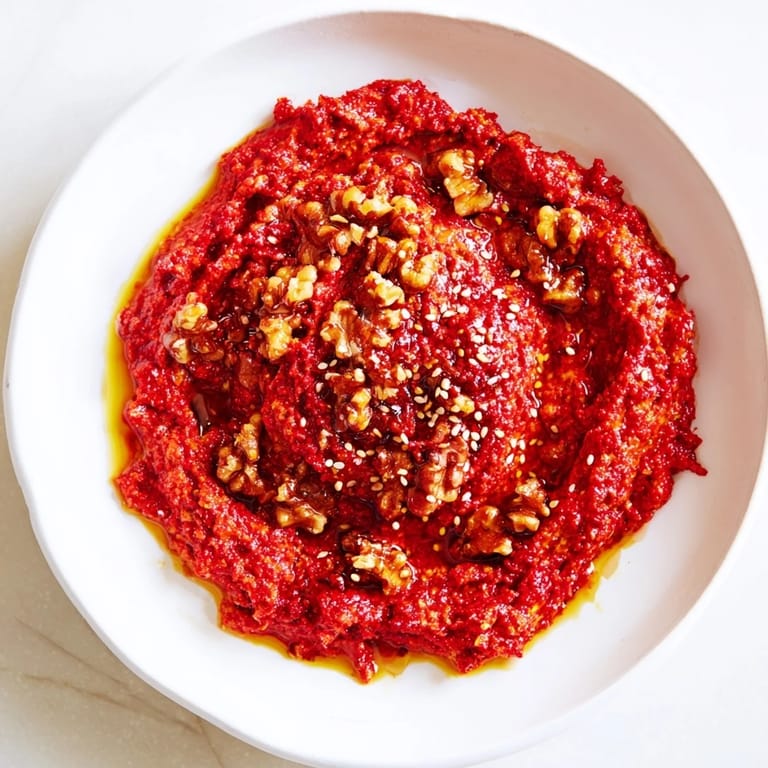
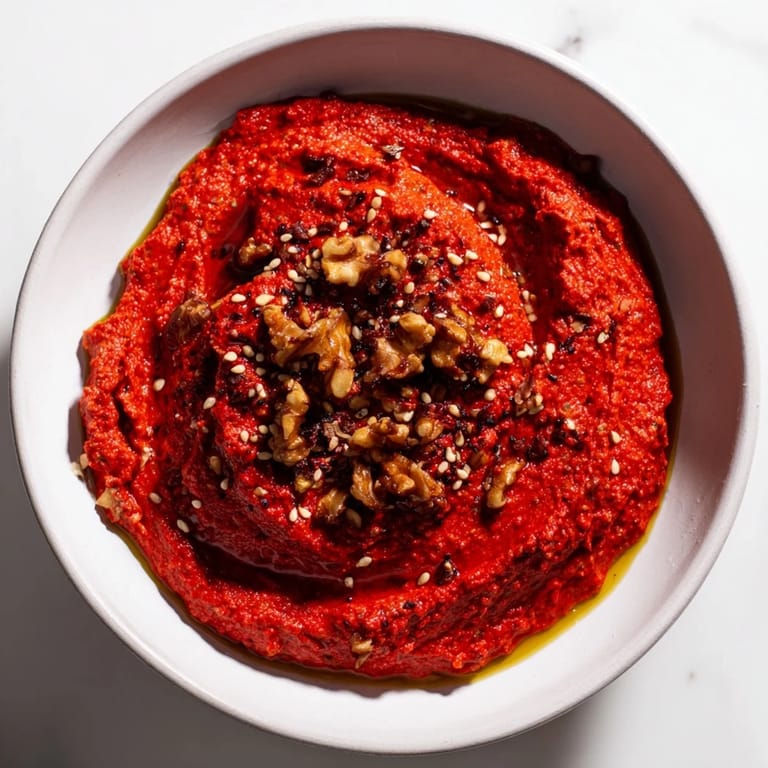
- Transfer everything to a shallow serving bowl and drizzle generously with more olive oil in a casual spiral pattern, then scatter sesame seeds across the top if you have them. Serve with warm pita, crackers, or fresh vegetables.
 Save to Pinterest
 I made this for my mother years ago when she was skeptical about anything without meat, and she dipped a vegetable stick in it almost without thinking. She took another bite, then set her plate down and said, 'This tastes like Syria,' which was her highest compliment, even though she'd never been there. That moment taught me that food doesn't need to be complicated to matter.
Why the Charring Changes Everything
The difference between roasted peppers and charred peppers is the difference between nice and remarkable. When you let those skins blacken and bubble, the sugars in the pepper caramelize and the flesh begins to break down—it's not about getting the flavor 'right,' it's about coaxing out sweetness that roasting alone never achieves. This is what gives muhammara its distinctive slightly smoky depth that makes people think it's more difficult than it actually is.
The Pomegranate Molasses Mystery
Most people who taste this dip for the first time think there's some secret ingredient they can't identify, and that secret is pomegranate molasses. It's tart without being sour in the way lemon is, with this haunting depth that makes you want another spoonful just to chase the flavor. If you can't find it at your regular grocery store, most Middle Eastern markets carry it, and a bottle lasts forever in the cupboard because you only need small amounts to transform entire dishes.
Serving Ideas and Moments
I've served this as part of a mezze platter with hummus, baba ghanoush, and marinated olives, and it holds its own against every other dip on the table. It's also stunning as a spread on sandwiches, a dollop alongside roasted vegetables, or simply with warm pita and good company. The beauty of muhammara is that it tastes intentional and restaurant-quality, but it asks almost nothing of you in return.
- Make it a day ahead and let the flavors settle and deepen in the refrigerator.
- Serve it at room temperature so the olive oil tastes soft and the spices bloom fully.
- Don't be shy with that final olive oil drizzle—it's not decoration, it's part of the dish.
 Save to Pinterest
 This dip has become my quiet proof that the best food doesn't come from complicated recipes or exotic ingredients—it comes from respecting what you're cooking and tasting as you go. Make it once and you'll understand why it's been feeding people across the Middle East for generations.
Recipe FAQs
- → How should red peppers be prepared for the dip?
Roast the red bell peppers at high heat until blistered and charred, then steam to loosen skins before peeling for a smoky flavor.
- → Can I adjust the heat level of this dip?
Yes, modify the spiciness by increasing or reducing Aleppo pepper or red chili flakes according to your preference.
- → What are some suitable serving suggestions?
Serve the spread with fresh pita bread, crackers, or vegetable sticks as part of a mezze platter.
- → Are there any storage recommendations?
Keep refrigerated in an airtight container for up to five days to maintain freshness.
- → Is this dish suitable for special diets?
It is vegan and dairy-free but contains tree nuts and gluten unless gluten-free breadcrumbs are used.