 Save to Pinterest
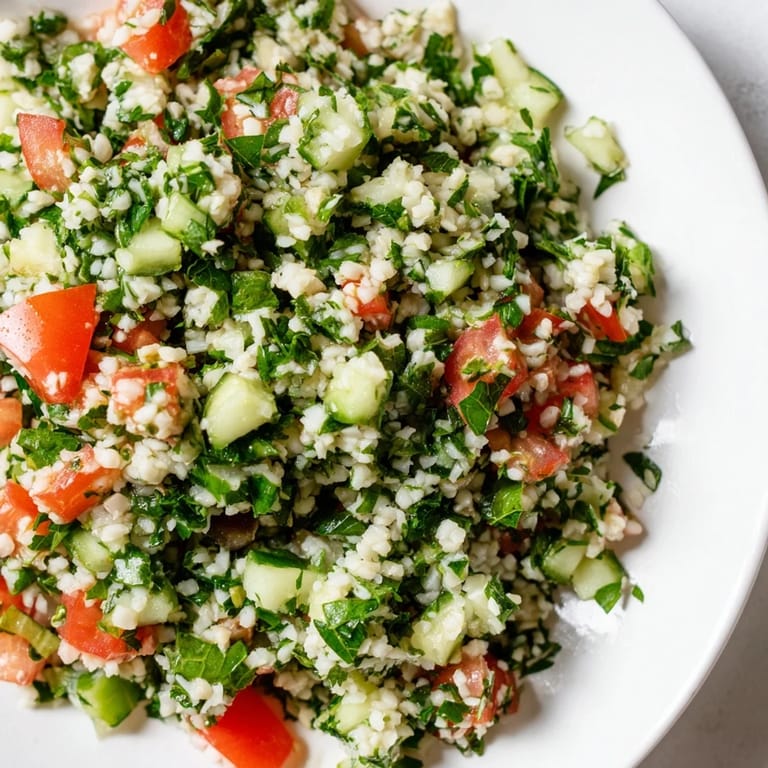
 There's a moment every summer when I decide it's time to make tabbouleh, usually after the farmers market has overflowed my bag with impossibly fragrant parsley and the first truly perfect tomatoes of the season. My Lebanese neighbor, Rania, taught me years ago that this isn't just a salad—it's basically a celebration of fresh herbs that happens to have vegetables. She'd always say the parsley should be so abundant you can barely see anything else, and somehow that completely changed how I understood the dish. Now when I make it, I'm transported back to her kitchen, where we'd stand over the cutting board, her hands moving twice as fast as mine, the scent of lemon and mint filling every corner.
I remember bringing this to a potluck on a scorching afternoon, worried it would wilt in the heat, only to watch it disappear before the main course was even served. One guest came back for thirds and asked if there was a secret ingredient—I almost laughed because the secret was just using enough parsley to make her grandmother proud. That's when I realized tabbouleh isn't about hidden techniques; it's about respecting the ingredients enough to let them shine.
Ingredients
- Fine bulgur wheat (1/2 cup): This is the foundation, and fine bulgur really does matter—it absorbs the dressing evenly and has a tender, delicate texture that rough bulgur can't match.
- Boiling water (3/4 cup): Hot water awakens the grain and softens it without cooking, which preserves the fresh taste of everything you'll add.
- Flat-leaf parsley, finely chopped (2 cups packed): This is non-negotiable—flat-leaf parsley has more flavor than curly, and chopping it by hand rather than a food processor keeps it from bruising and releasing bitter oils.
- Fresh mint (1/2 cup finely chopped): Mint adds a cooling brightness that makes each bite feel more refreshing, and it's worth seeking out truly fresh leaves.
- Spring onions, finely sliced (2): They add a subtle sharpness that keeps the salad from feeling one-note, without overpowering the delicate herbs.
- Tomatoes, seeded and diced (3 medium): Seeding them prevents excess moisture from making the salad soggy—a small step that makes a real difference in texture.
- Cucumber, diced (1/2 medium): The cool crunch is essential, and half a cucumber is usually just enough so it doesn't dominate the dish.
- Extra-virgin olive oil (1/4 cup): Use something you actually like tasting on its own, because you'll taste it clearly here.
- Freshly squeezed lemon juice (1/4 cup): The acidity is what brings everything alive—bottled juice won't give you the same brightness.
- Fine sea salt and black pepper: These simple seasonings matter more than you'd think, so taste as you go and adjust to your preference.
Tired of Takeout? 🥡
Get 10 meals you can make faster than delivery arrives. Seriously.
One email. No spam. Unsubscribe anytime.
Instructions
- Hydrate the bulgur gently:
- Pour boiling water over the bulgur and cover it, then wait 10–15 minutes while it softens and absorbs the water. The steam does the work here, so don't be tempted to stir it—fluff it gently with a fork once it's done, and if there's excess water pooling at the bottom, drain it carefully.
- Build your herb base:
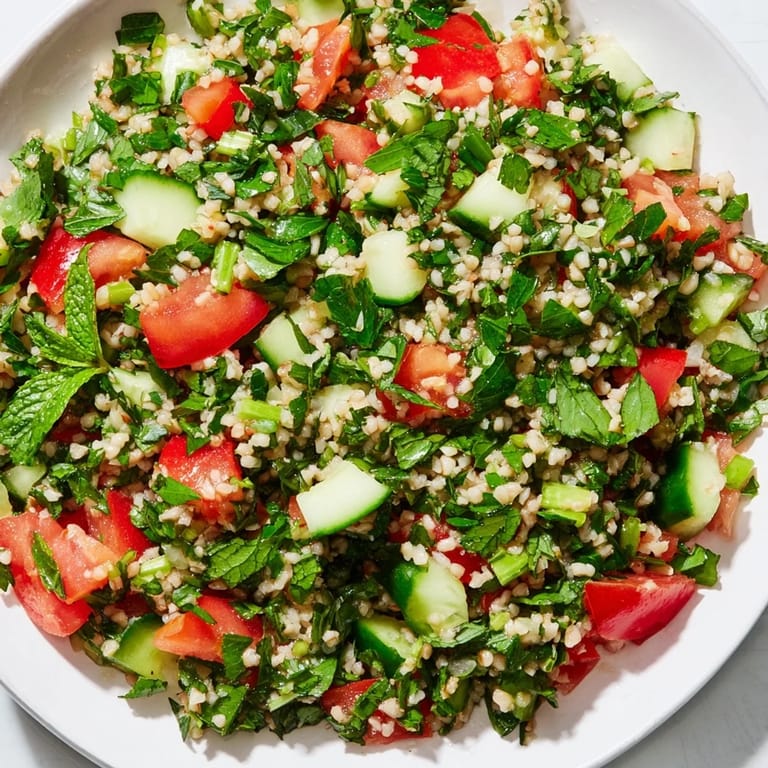
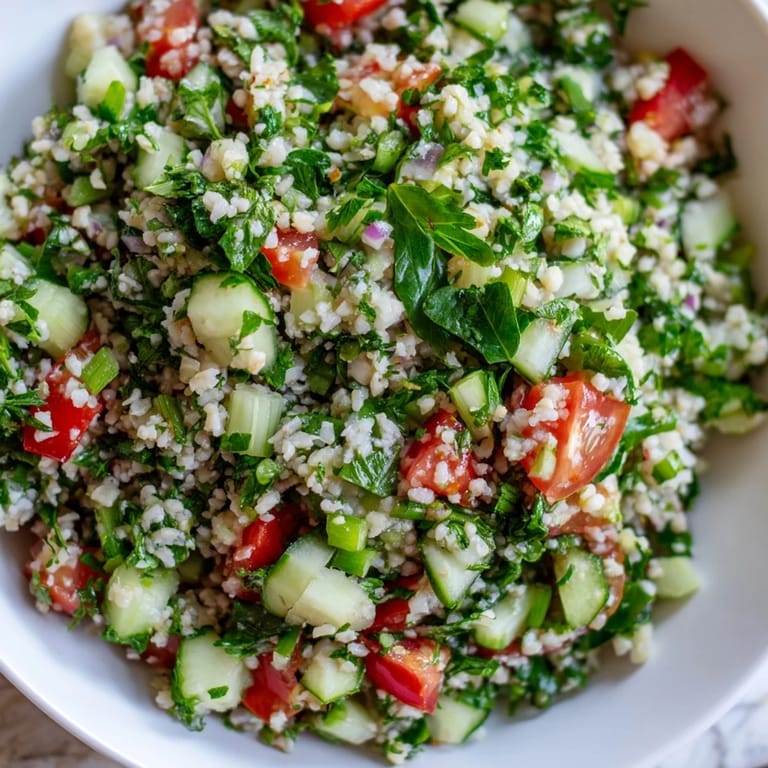
- In a large bowl, combine all your chopped parsley, mint, spring onions, tomatoes, and cucumber, then take a moment to appreciate how vibrant and alive it all looks together. This is the real heart of the salad, so don't rush this step.
- Bring it together:
- Once the bulgur is cool and fluffy, add it to your herb mixture and toss gently so nothing gets crushed or bruised. The goal is for every element to stay distinct while beginning to know each other.
- Make the dressing:
- Whisk together olive oil, lemon juice, salt, and pepper in a small bowl, tasting as you go—you want it bright and assertive, not timid. Remember that the dressing will season the bulgur and vegetables as it sits.
- Dress and taste:
- Pour the dressing over everything and toss gently but thoroughly, making sure the bulgur gets coated evenly. Taste a bite and adjust seasoning—this is your moment to make it perfect for your palate, not a recipe's.
- Chill or serve:
- You can serve it right away at room temperature or refrigerate it for a while, though I find it's best eaten within a few hours when the herbs are still at peak freshness.
 Save to Pinterest
 There was an evening when my daughter, who usually picks through salads, asked for seconds of tabbouleh and then asked if she could help me make it next time. That's when I understood that food becomes memorable not when it's complicated, but when it tastes like someone cared enough to do the simple things really well.
The Art of Fresh Herb Preparation
The moment you start chopping fresh herbs for tabbouleh, you're committing to a certain standard of freshness and attention. I've found that washing and thoroughly drying the herbs before chopping makes a real difference—wet herbs bruise more easily and can introduce excess moisture into the salad. The key is using a sharp knife and a steady hand, letting the blade do the work rather than crushing the leaves. This isn't pedantic; it's the difference between a salad that tastes bright and herbaceous versus one that tastes a little muddy and tired.
Timing and Temperature Considerations
Tabbouleh is one of those dishes that actually improves slightly as it sits, because the bulgur continues to absorb the dressing and everything gets better acquainted. However, I've learned there's a window—after a day in the refrigerator, the herbs start to lose their punch and the overall vibrancy dims. The best version is eaten within a few hours of assembling, when it's still bright and alive, though room temperature often tastes better than cold because the flavors aren't muted. If you're making this ahead for a gathering, assemble everything except the dressing, then combine just before serving.
Serving and Pairing Ideas
I think of tabbouleh as a bridge dish—it works beautifully alongside grilled lamb, chicken, or fish, but it's equally happy as the main event with some grilled halloumi and warm flatbread. It's also at its best as part of a spread with hummus, baba ganoush, falafel, and fresh vegetables, the way I first experienced it in Rania's kitchen. When you're thinking about what to serve it with, remember that its brightness cuts through rich, fatty foods beautifully, so don't hesitate to pair it with something hearty.
- Serve it at room temperature rather than straight from the refrigerator, as cold mutes the flavors you've worked to develop.
- For a gluten-free version, substitute the bulgur with cooked quinoa or millet, which will give you a slightly different but equally satisfying texture.
- If you're doubling this recipe for a crowd, taste and adjust the dressing carefully, as your proportions might shift when you're working with larger quantities.
 Save to Pinterest
 This salad has become my go-to when I want to feel grounded in the kitchen but also want something that feels effortless to share. There's something about tabbouleh that reminds me why I love cooking in the first place—not for complexity, but for the quiet satisfaction of fresh ingredients treated with respect.
Recipe FAQs
- → What grain is used in this salad?
Fine bulgur wheat is soaked until tender, providing a chewy texture that balances the fresh herbs and vegetables.
- → Can I substitute bulgur for a gluten-free option?
Yes, cooked quinoa works well as a gluten-free alternative while maintaining the dish's texture and freshness.
- → What herbs enhance the salad's flavor?
Flat-leaf parsley, fresh mint, and spring onions create the signature fresh and aromatic profile.
- → How is the dressing made?
A simple mix of extra-virgin olive oil, freshly squeezed lemon juice, sea salt, and ground black pepper adds a bright, zesty finish.
- → How should it be served for best taste?
Enjoy this salad chilled or at room temperature to fully appreciate the fresh, vibrant flavors.
- → How long can leftovers be stored?
Store in the refrigerator for up to two days, though it is best enjoyed fresh for optimal texture and flavor.