 Save to Pinterest
 I discovered black currant glaze on a Tuesday afternoon while rummaging through a friend's pantry, searching for something to salvage a rather plain roasted chicken. She handed me a jar of black currant preserves with a knowing smile and said, "Trust me on this." Twenty minutes later, my kitchen smelled like a European bakery mixed with something savory and mysterious. That glaze changed how I thought about finishing meats forever.
Last winter, I made this glaze for a small family dinner and watched my usually quiet father ask for seconds on the carrots. He drizzled extra glaze over everything on his plate. That moment taught me that sometimes the simplest things, made with attention, become the dishes people remember.
Ingredients
- Black currant preserves: The foundation of this glaze, bringing a deep, slightly tart fruitiness that standard jellies can't match. Choose a good quality jam where you can actually taste the berries.
- Balsamic vinegar: This is what keeps the glaze from becoming cloying. It adds complexity and a subtle sweetness that whispers rather than shouts.
- Honey: Rounds out the rough edges and adds a silky quality when heated.
- Dijon mustard: Seems bold at first, but it's what makes your guests tilt their heads and wonder what they're tasting.
- Unsalted butter: Creates the glossy finish and adds richness that holds everything together.
- Brown sugar: Deepens the caramel notes and contributes to that sticky, professional look.
- Fresh thyme: Optional but worth hunting down if you have it. It grounds the sweetness in something earthy and herbal.
- Black pepper and salt: These small additions prevent the glaze from feeling one-dimensional.
Tired of Takeout? 🥡
Get 10 meals you can make faster than delivery arrives. Seriously.
One email. No spam. Unsubscribe anytime.
Instructions
- Gather your ingredients and prep your pan:
- Pull out a small saucepan and have everything within arm's reach. There's nothing worse than scrambling for the honey when things are already heating up.
- Combine the base ingredients:
- Pour the black currant preserves, balsamic vinegar, honey, Dijon mustard, butter, and brown sugar into the saucepan. Stir everything together until you start to see the butter soften and meld with the jam.
- Heat gently and stir until smooth:
- Set the saucepan over medium heat and keep stirring until the mixture becomes completely smooth and the butter disappears into the glaze. You're looking for a uniform, silky texture with no lumpy bits of jam.
- Season with aromatics and spice:
- Add the thyme leaves (if you're using them), black pepper, and a small pinch of salt. Stir these in and let the thyme release its flavor into the warm glaze.
- Simmer until glossy and thick:
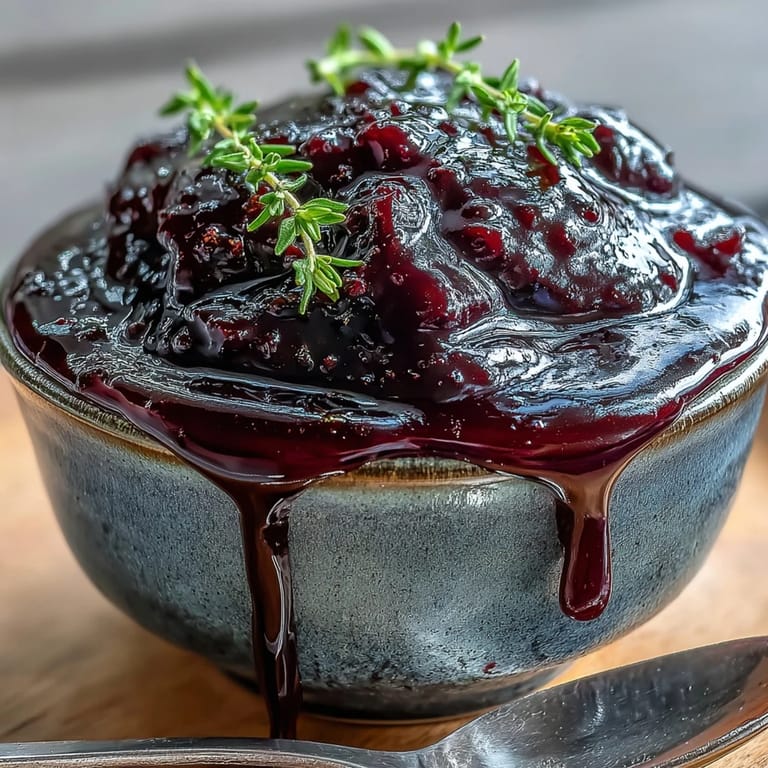
- Lower the heat slightly and let the glaze simmer gently for 5 to 7 minutes, stirring now and then. You'll notice it starting to thicken and develop a beautiful sheen, like it's been polished.
- Use or store:
- Remove from heat immediately so it doesn't reduce too much. Brush it onto meats during the last 20 to 30 minutes of cooking, or serve it on the side as a sauce.
 Save to Pinterest
 I once made this glaze for a dinner party and brushed it onto ham so generously that it pooled on the platter like edible jewels. Someone took a photo of it before eating, which I'd never seen happen before. Food stopped being just sustenance that night and became something people wanted to remember.
The Magic of Texture
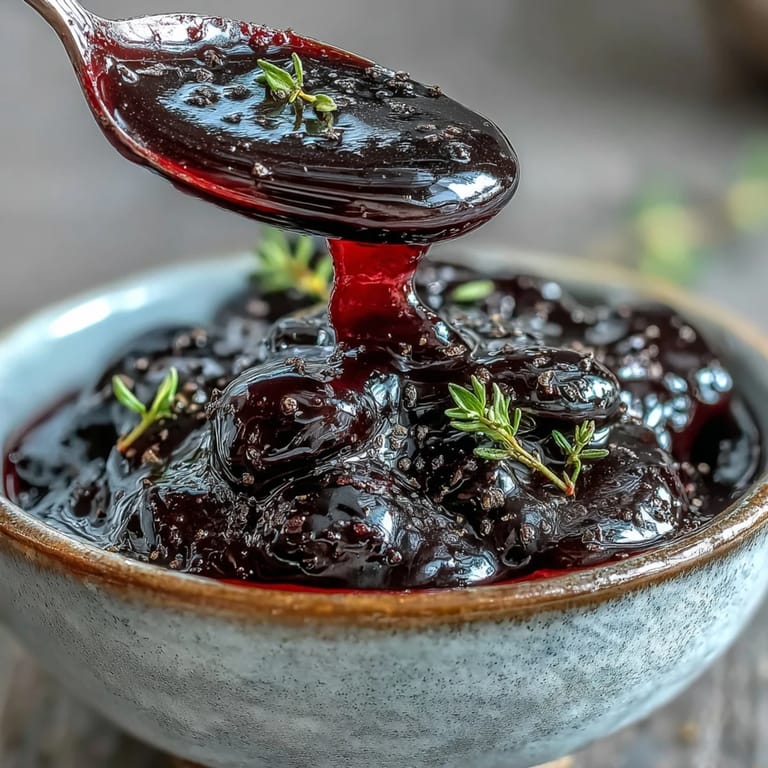
What makes this glaze feel more refined than a simple jam drizzle is the simmering step. As the mixture reduces, the sugars concentrate and the liquid evaporates, leaving you with a coating that clings to whatever you're glazing. It doesn't pool or run off like a sauce. Instead, it stays put and deepens as it cools, developing that professional lacquered appearance that makes people think you spent hours in the kitchen.
Perfect Pairings Beyond Ham
While this glaze is famous for ham, I've had the best results with roasted duck breast, where the rich meat and tart glaze balance each other beautifully. Pork chops benefit from a light brush, and root vegetables like carrots and parsnips become something almost dessert-like. Even roasted Brussels sprouts gain a sophisticated edge when finished with this glaze.
Storage and Make-Ahead Wisdom
This glaze keeps for a full week in the refrigerator, making it perfect to prepare ahead when you're hosting. Reheat gently in a small saucepan over low heat, stirring in a splash of water if it's tightened up during storage. The flavors actually deepen after a day or two, so don't hesitate to make it early.
- Transfer leftovers to a clean jar while still warm to ensure a good seal.
- If you're meal prepping, make a double batch and keep it on hand for quick weeknight transformations.
- Never microwave this glaze as it can split. Always return it to the stovetop for gentle reheating.
 Save to Pinterest
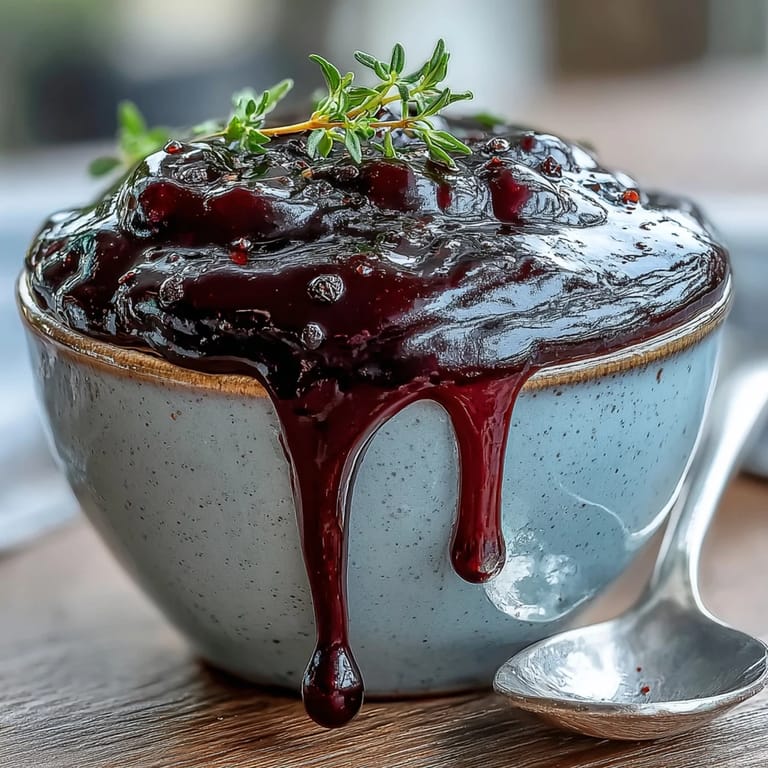
 This small recipe has taught me that sometimes the most memorable meals come from the simplest additions. A glaze, a brush, and five minutes of simmering can elevate something ordinary into something worth talking about.
Recipe FAQs
- → What dishes pair best with black currant glaze?
This tangy glaze excels on roasted pork, chicken, duck, and glazed ham. It also complements root vegetables like carrots, parsnips, and sweet potatoes beautifully.
- → Can I make black currant glaze ahead of time?
Yes, prepare the glaze up to a week in advance and store in a sealed jar in the refrigerator. Reheat gently before applying to your dish.
- → What can I substitute for black currant preserves?
Red currant preserves, cherry jam, or even blackberry jam work well as alternatives while maintaining a similar tart-sweet profile.
- → How do I get the smoothest glaze consistency?
Strain the cooled glaze through a fine mesh sieve to remove any fruit pieces or seeds, ensuring an ultra-smooth, professional finish.
- → When should I apply the glaze during cooking?
Brush the glaze on during the last 20-30 minutes of roasting to prevent burning while allowing the sugars to caramelize beautifully.
- → Is this glaze suitable for special diets?
The glaze is naturally vegetarian and gluten-free. For a dairy-free version, substitute the butter with coconut oil or olive oil.