 Save to Pinterest
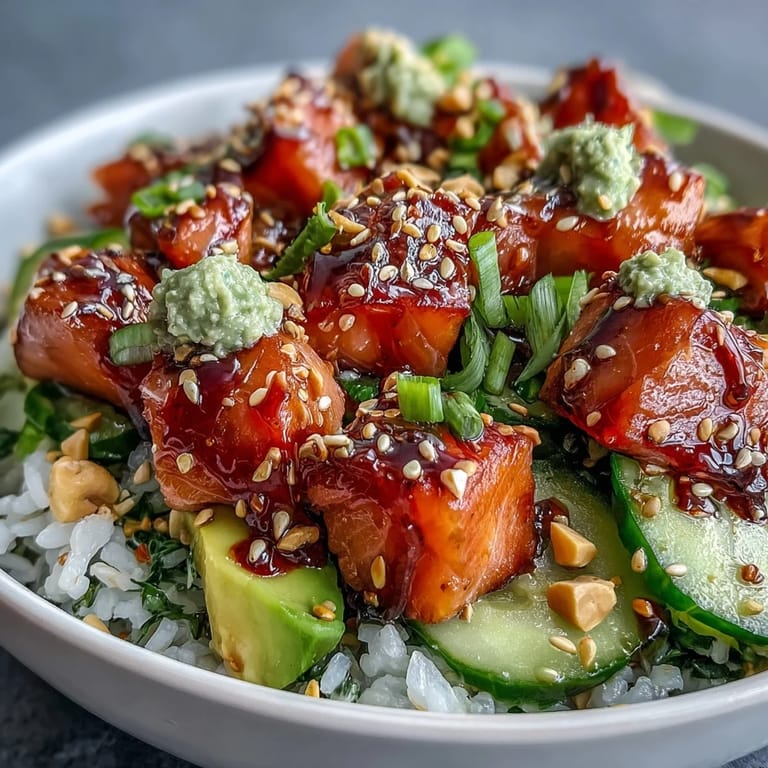
 There's something about assembling a bowl rather than plating a traditional dish that makes cooking feel less formal and more like you're building something together. I discovered this avocado salmon bowl on a lazy Sunday afternoon when I had leftover sushi rice, some beautiful salmon from the market, and absolutely no energy for complicated cooking. The beauty of it hit me immediately: every component could shine on its own, yet somehow they created this harmonious, umami-packed whole that tasted far more sophisticated than the fifteen minutes it took to prepare.
I made this for a friend who'd been on an elimination diet and finally had cleared fish again. Watching her face light up when she took that first bite, the way the wasabi made her eyes water and then laugh—that's when I realized this bowl was more than just a convenient lunch. It became this celebration of flavors returning to her table, a small moment of joy wrapped in nori and peanuts.
Ingredients
- Fresh salmon fillet (250 g), skinless and cubed: Look for salmon that's firm and fragrant in a good way; the smaller cubes cook evenly and absorb the marinade beautifully.
- Tamari sauce (2 tbsp): It's deeper and slightly less salty than regular soy sauce, giving the marinade a richer backbone without overpowering delicate salmon.
- Toasted sesame oil (1 tsp): This is where the nutty warmth comes from; use genuine toasted sesame oil, not the pale cooking variety, because a little goes such a long way.
- Rice vinegar (1 tsp for marinade, 1 tbsp for rice): The acidity lifts everything without the harsh edge of white vinegar; it's surprisingly gentle.
- Honey or agave syrup (1 tsp): Just a touch to balance the umami and salt, creating a marinade that tastes complete rather than one-dimensional.
- Cooked sushi rice (200 g): Short-grain rice matters here because it holds the seasoning better and has that slight stickiness that makes a bowl feel cohesive.
- Sugar and salt for rice: These tiny amounts transform plain rice into something with actual presence on the palate.
- Ripe avocado (1 large): Cut it just before assembling so it doesn't brown, and if you're not serving immediately, brush the exposed flesh lightly with lime juice.
- Roasted peanuts (2 tbsp), roughly chopped: The crunch is essential for textural contrast; dry roasted ones have more personality than oil-roasted.
- Chili oil (1 tbsp): This is your heat and richness combined; adjust based on whether you like a gentle warmth or real spice.
- Wasabi paste (1 tsp): Fresh wasabi from a tube tastes alive compared to the powder, though either works in a pinch.
- Nori sheets, sliced into strips: Optional but adds that ocean-y, umami depth that ties the whole bowl together visually and flavor-wise.
- Cucumber, thinly sliced: The cooling element that prevents the bowl from feeling heavy, especially important with the chili oil and wasabi.
- Spring onions, sliced: Their mild sharpness cuts through richness and adds a fresh, living quality to each spoonful.
- Toasted sesame seeds (1 tbsp): They add a subtle nuttiness and visual texture that makes the bowl feel more intentional.
- Fresh cilantro or microgreens, lime wedges: These final touches are optional but they shift the bowl from satisfying to memorable.
Tired of Takeout? 🥡
Get 10 meals you can make faster than delivery arrives. Seriously.
One email. No spam. Unsubscribe anytime.
Instructions
- Prepare the marinade and salmon:
- Whisk tamari, sesame oil, rice vinegar, and honey together in a medium bowl until the sugar dissolves. Add your salmon cubes and toss gently so every piece gets coated; the color should deepen slightly as the marinade clings to them. Cover and refrigerate for 10–15 minutes while you prep everything else—this is the minimum time needed for the flavors to penetrate without cooking the delicate fish.
- Season your rice:
- Mix the warm cooked sushi rice with rice vinegar, sugar, and salt, stirring gently so the grains stay intact rather than turning mushy. The rice should taste ever-so-slightly sweet and tangy, like it's already a complete dish on its own.
- Assemble your toppings:
- Slice the avocado lengthwise around the pit, twist to open, and scoop into clean slices with a spoon; rough-chop your peanuts, cut the nori into thin strips, and slice cucumber and spring onions. Having everything prepped before you build the bowls means the whole experience feels smooth rather than chaotic.
- Build the bowls:
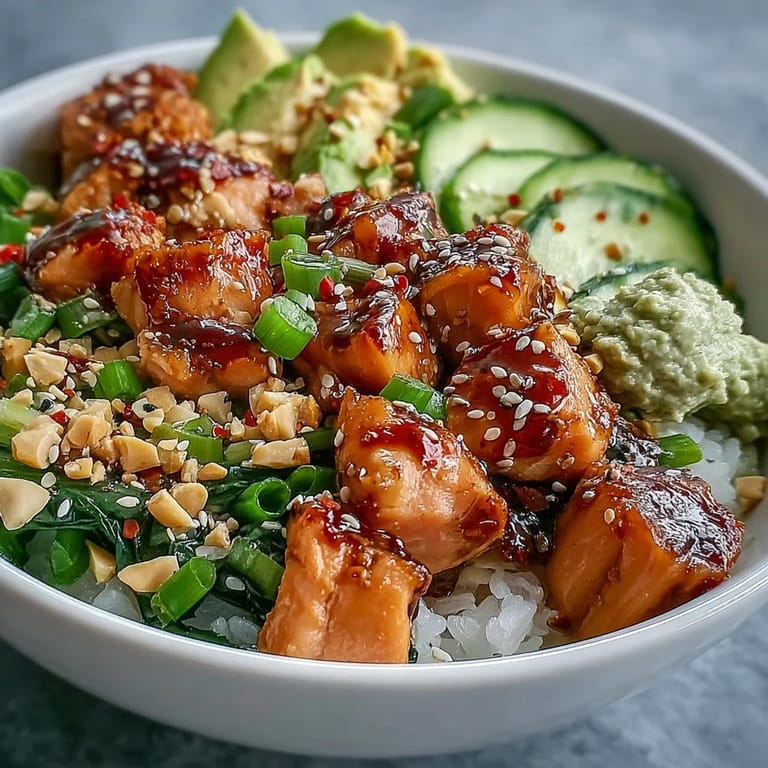
- Divide the seasoned rice between two serving bowls, creating a gentle mound. Arrange the marinated salmon, avocado slices, cucumber ribbons, and spring onions on top in sections so the colors create a visual rhythm.
- Add the remaining elements:
- Drizzle the chili oil evenly over the bowl, then add small dabs of wasabi paste where you'd like concentrated heat. Sprinkle with roasted peanuts, sesame seeds, and nori strips, then finish with cilantro or microgreens if using.
- Serve with lime:
- Bring the bowls to the table with lime wedges on the side so people can squeeze brightness over the top just before eating. The acidity from lime is the final note that makes everything feel brighter and more alive.
 Save to Pinterest
 My partner, who typically avoids anything remotely spicy, surprised me by going back for seconds and actually using more wasabi than I'd expected. That moment made me realize how personal a bowl like this becomes when everyone gets to customize it—suddenly it's not just dinner, it's a conversation about heat tolerance and texture preferences and what makes food genuinely satisfying.
The Magic of Customization
The brilliance of a bowl format is that it transforms ingredients into a choose-your-own-adventure rather than a fixed formula. If someone at your table doesn't eat fish, the base and toppings work beautifully with marinated tofu or tempeh. If peanuts are off the table, cashews bring similar richness, or toasted seeds add crunch without the allergen concern. Even the heat level becomes something everyone controls themselves, which somehow makes the meal feel more generous and less like you're accommodating someone's preferences and more like you're offering options.
Why This Works as a Weeknight Dinner
The fifteen-minute prep time assumes your rice is already cooked, which makes this the perfect vehicle for leftover sushi rice from the night before or even plain white rice if that's what you have. If you keep pre-marinated salmon in the freezer, you can skip even that step and just thaw it quickly under cool running water. The real magic is that despite being quick, the bowl tastes composed and thoughtful, like you've given the meal proper attention—which somehow makes eating feel more intentional even when you're rushing.
Flavor Building Technique
This bowl teaches you something subtle about how flavors layer and interact if you eat it thoughtfully. The tamari marinade on the salmon is savory and deep, the chili oil brings heat and richness, the cucumber and spring onions provide brightness, the peanuts give umami crunch, and wasabi adds a clean, sinus-clearing sharpness that somehow makes all the other flavors more vivid. None of these elements competes because they each have their own moment on your palate—the cucumber cools, the wasabi wakes you up, the peanuts keep things interesting with texture. It's like a short poem where every word earns its place.
- Mix with every bite so you hit multiple flavor zones at once rather than eating all the salmon first then all the cucumber.
- Squeeze fresh lime just before eating because that acid is the final note that makes everything click into place.
- Taste the rice on its own before building the bowl so you notice how good proper seasoning actually is.
 Save to Pinterest
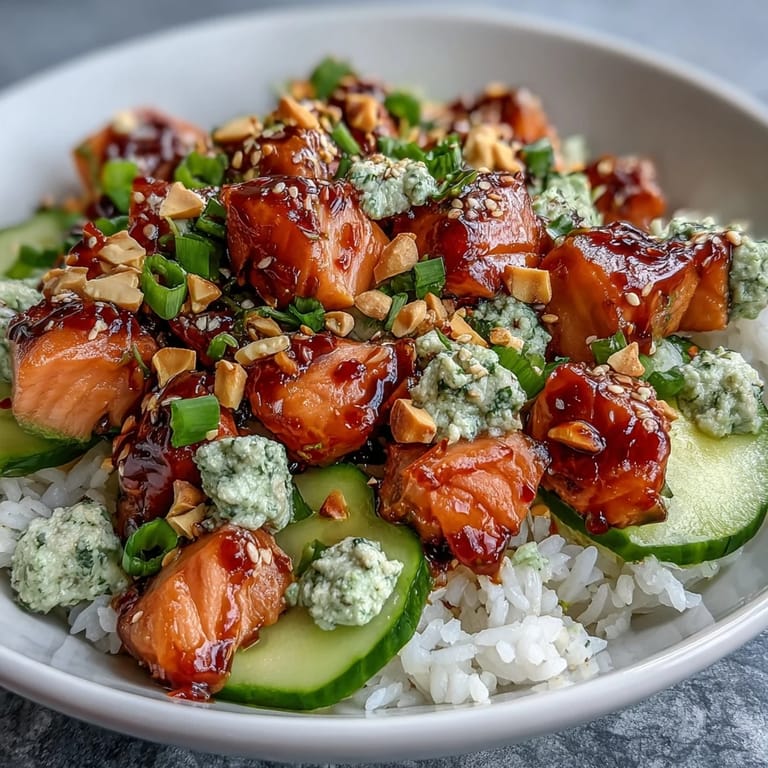
 This bowl has become my answer to the question of what to make when you want something that tastes restaurant-quality but doesn't require restaurant-level effort. More importantly, it's taught me that sometimes the best meals aren't about complex technique but about respecting good ingredients and giving them space to shine.
Recipe FAQs
- → Can I make this bowl ahead of time?
Prepare components separately up to 24 hours in advance. Store rice, toppings, and marinated salmon in individual containers. Assemble just before serving to maintain texture and freshness.
- → What other proteins work well?
Marinated tofu or tempeh make excellent vegetarian alternatives. You could also use cooked shrimp, diced chicken thigh, or even seared tuna cubes prepared similarly.
- → Is sushi rice essential?
While sushi rice provides the best sticky texture and authentic flavor, short-grain white rice or brown sushi rice work as substitutes. Avoid long-grain varieties which won't hold together as well.
- → How do I adjust the spice level?
Start with minimal chili oil and wasabi, then add gradually to taste. The heat builds quickly, so it's easier to add more than to compensate for too much spice.
- → Can I use raw salmon instead of marinated?
If using sushi-grade salmon, you can skip marinating and serve it raw. Otherwise, quickly sear the marinated cubes in a hot pan for 2-3 minutes per side before assembling bowls.